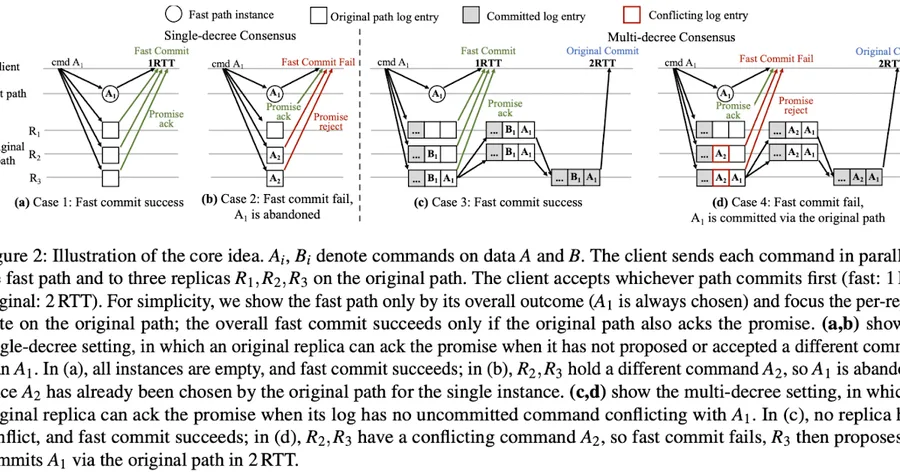
Aleksey and I are back to reading papers live. This paper, Jetpack(OSDI '26), attempts building a universal 1-RTT fast-path framework that bolts onto existing leader-based consensus protocols with minimal modification. Why would we want this? Classic consensus protocols like Raft, Paxos, or Zab require two round-trip times (2 RTT) to commit a command: one RTT from client to leader, and another to…
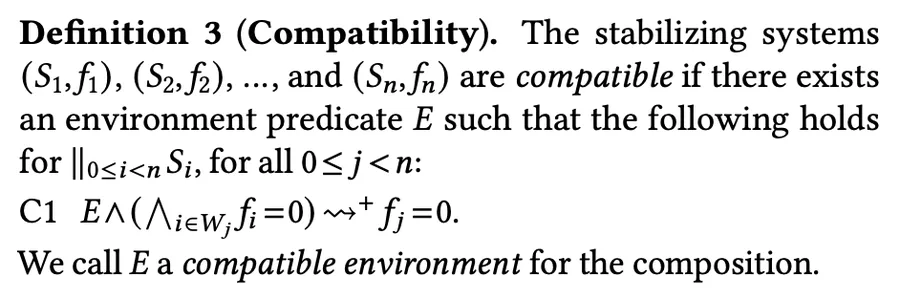
Last week I wrote about modular verification of systems through open TLA+ specs and rely-guarantee discharge. In this post, I apply the same approach to study the metastability mechanics of a retry storm. Through this modeling I show that when the system is metastable, it is due to some trigger/shock that displaced the system outside the rely-guarantee discharge conditions of its components. The …
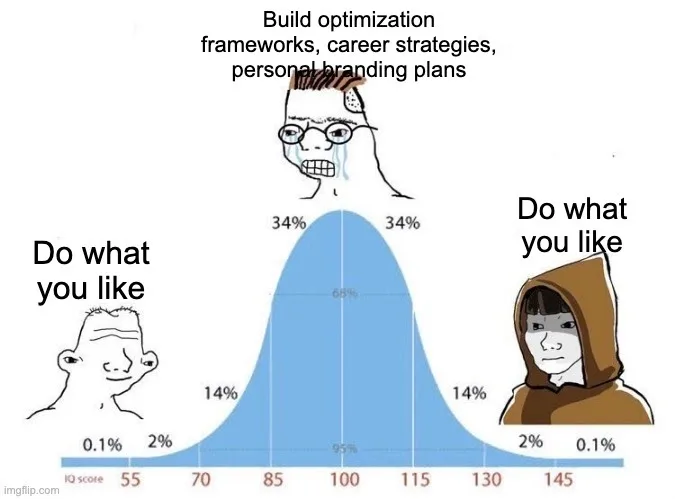
Today, tech folk are scrambling to change their workflows to meet newly inflated 5X productivity quotas, while getting pummeled under the cognitive debt of agent-generated code. With every new model release, the gap is widening and humans are becoming more of a bottleneck in the loop, approaching closer to obsolescence as "coders". While the programmer's job description is getting completely refa…
Preamble. This post came slowly, simmering over months really. So there is some stream of consciousness in here, and a lot of deliberating in public. The post is me learning modular verification and talking myself into it at the same time. Even pep-talking myself, because this is genuinely hard, and the field's standard advice is to avoid modular verification. But the advice is due for revision: …
I am a distributed systems researcher. I mostly read and write about distributed systems and lightweight formal methods. But as my blog definition says, the blog is about "distributed systems broadly defined and other curiosities". The last two years, LLMs were unavoidably the biggest part of those curiosities. However, I was still surprised how much I had written about them, when I went looking …
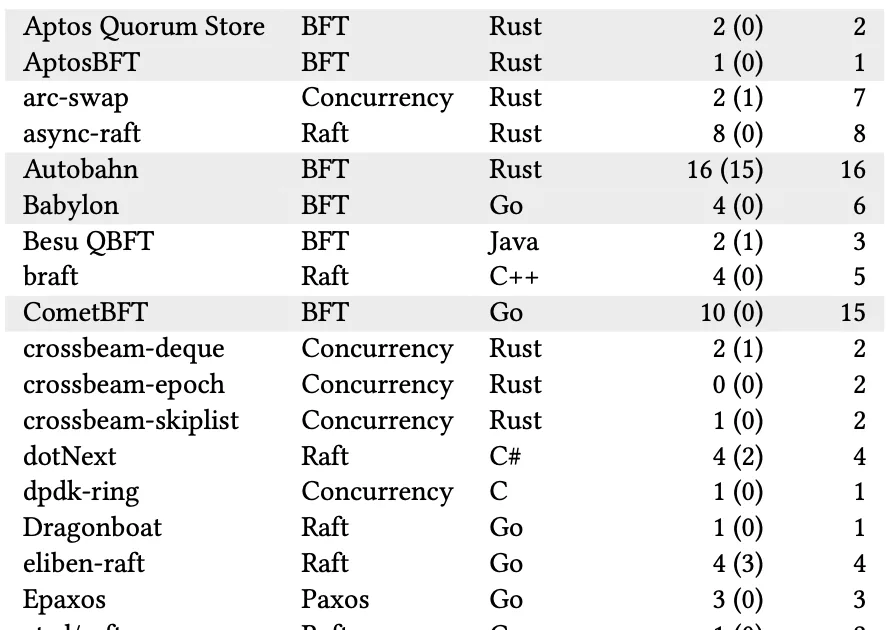
Specula is an agentic system that automates the process of software bug finding through authoring and model-checking a spec for the code. It derives TLA+ specifications automatically from the code, checks code-spec conformance through trace validation, model checks the spec to find concurrency bugs, and reproduces the bug at the code layer by writing integration tests with precise timing. I remem…
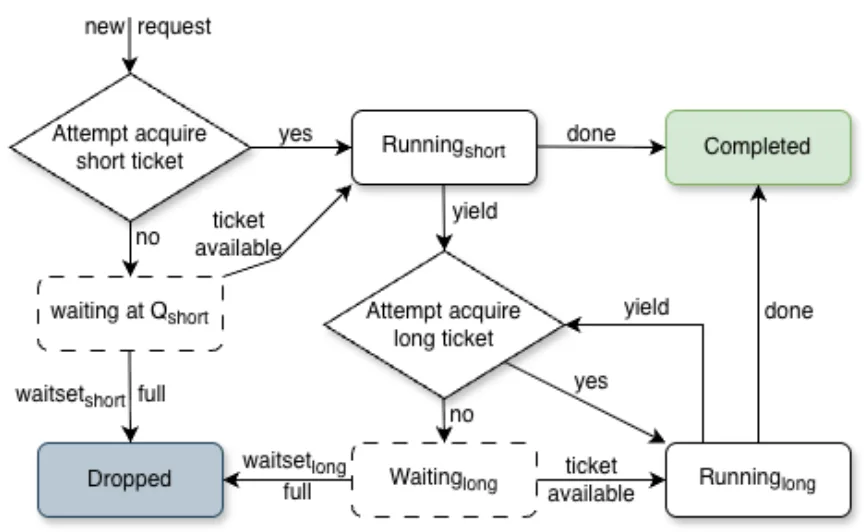
This week, I presented this paper at ICCCN'26. This is joint work with Aleksey Charapko (University of New Hampshire) and my MongoDB colleagues Matt Broadstone, Daniel Gomez Ferro, and Akshat Vig. The paper investigates how to build a metastability tolerant execution control system (ECS) for a database. Why? Modern databases are complex networked systems serving mixed workloads: short queries (th…
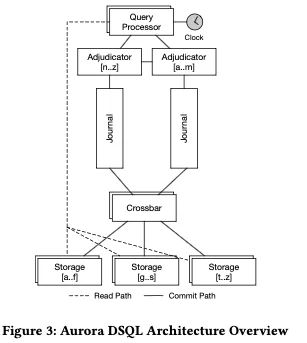
The Aurora DSQL paper finally dropped . Reading it yesterday was an interesting experience, because I spent two years (2022-23) working with the AWS team that designed and built Aurora DSQL. Since I have been very familiar with the architecture, the paper's overview description of the system didn't excite me much. And if I am being honest, reading the paper also felt a bit dry, most likely becaus…
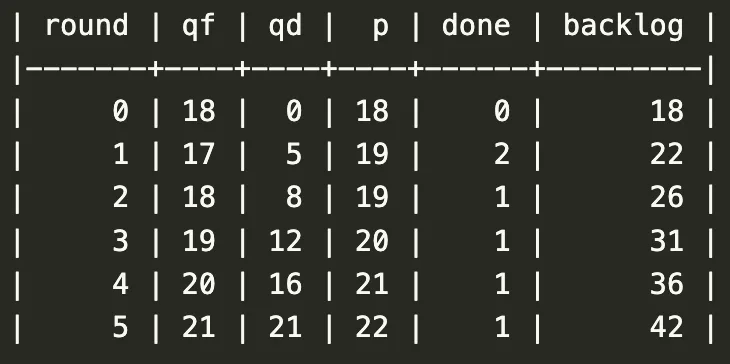
Metastability has been studied in previous work as a self-sustaining degradation in goodput that persists even after the trigger is gone. The degraded state loiters on entirely due to the system's own internal feedback loops (retries, queues), and there is no simple reset button to press in distributed systems. So this is not a rare exotic problem. Since production systems would have already been…
Moving is not for the faint of heart! The surgeon general should issue a warning against moving houses after age 50 . Coordinating our cross-country move was one of the hardest thing I had done. Selling our house in Buffalo, finding a suitable rental house in the Bay Area, figuring out the logistics of the move, getting rid of the furniture we wouldn't transport, boxing everything up, and then on…
Looking at my peak male physique, and my Keanu Reeves baby face, you would never suspect it, but I recently turned 50. As is the tradition, I thought about writing a post titled "50 Lessons at 50". Unfortunately, I don't have that kind of wisdom. The thing is, I still feel like I'm 18, same age as my son. Turns out this is the secret old guys have been hiding from us all along. You get older only…
In 1957, Parkinson postulated his "Law of Triviality" using a fictitious committee reviewing plans for a nuclear power plant. The reactor design gets 10 minutes because nobody understands it, so nobody argues. The bike shed gets 45 minutes because everyone has opinions about the paint color. I feel like we are living this committee meeting at scale every day. LLMs are already better engineers tha…
We spent 10 days in Italy in early April. It was a lot of fun. Back when I was a grad student, I stayed in Pisa for a month for a "summer school on mobile computing" in 2003. Mobile computing was the next "big" thing back then. (In retrospect, the research was misguided about the local/distributed approach to it, as most of mobile computing reconciled to cloud backends as that is often more effic…
Shortly after I joined MongoDB research, we ran a TLA+ workshop. It was a two-day ordeal. We had a 1.5 days of instruction on TLA+ and syntax, after which we tried to help people get started with modeling. People liked learning about TLA+ on the first day, but except for a person or two, we didn't get anyone onboarded with TLA+ modeling. It was too much to offload on people and ask them to level …
The transformative power of LLMs in coding has been irrefutable, and it feels like we are living through a magical computing renaissance. On the socials, we hear impressive numbers of lines of code generated, features delivered, and bugs fixed. But, the macroeconomic indicators seem to be still lagging. Heck, if you talk with an engineering manager, you find that their product shipping dates have…
As I mentioned in my previous post , I traveled to San Jose at the end of May for the ACM CAIS conference. On Day 0, I gave a very short talk at the Supporting our AI Overlords (SAO) workshop. This post is the promised summary of our paper, "A Case for Simulation-Driven Resilience in Agentic Data Systems" , joint work with Aleksey Charapko (University of New Hampshire) and Akshat Vig (MongoDB). M…
Last week, I traveled to San Jose to attend the ACM CAIS conference . On Day 0, I gave a short talk at the Supporting our AI Overlords (SAO) workshop . And yes, I promise to write a summary of our paper, " A Case for Simulation-Driven Resilience in Agent-First Data Systems " soon! To start with an overall impression of the conference: much of the work presented felt exploratory and anecdotal. Sin…
Chess is a lot trickier than it looks. It has so many rules: castling, en passant, pawn promotion, pinning, the discovered check, and the deadlock case of stalemate. It is a concurrent system, but with a very specific kind of concurrency: interleaved execution. More specifically, taking turns: white, then black, then white. You know what we do with concurrent systems here? Here we model them, and…
This is part of our series going through OSTEP book chapters. The OSTEP textbook is freely available at Remzi's website if you like to follow along. This chapter extends the CPU virtualization playbook to memory. It's the same recipe: let the program run directly on the hardware, but interpose at carefully chosen points so the OS retains control. For memory, this happens at every memory access. E…
I listened to this book as an audiobook through the Libby app, which basically brings your public library to your phone. The Thinking Machine is about Jensen Huang and the rise of Nvidia from graphics chips to AI dominance. The author, Stephen Witt, is a long-form tech journalist. His writing is nice and clear. But it does not have a distinctive voice. I kept thinking of Michael Lewis , whose bo…


 research.io