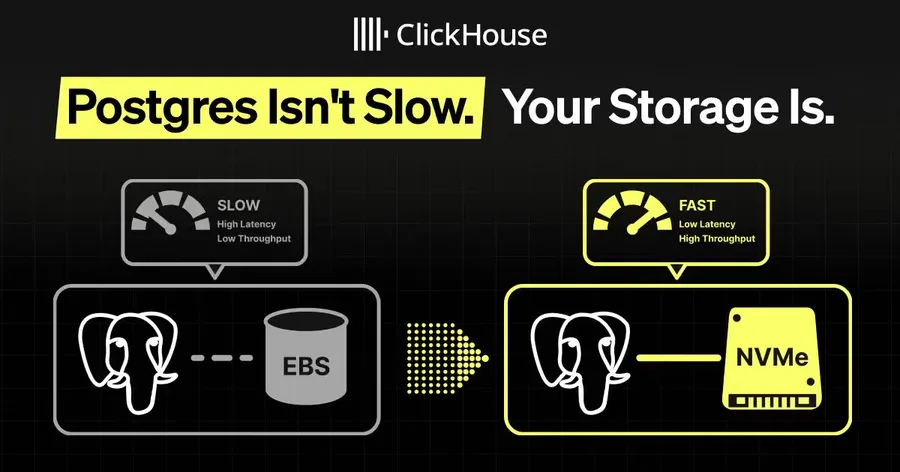
A recap of Sai Srirampur's POSETTE 2026 talk on storage performance in Postgres, with a local NVMe vs. EBS benchmark and the production setup behind it.
Sony LIV consolidated fragmented batch, Elasticsearch, and BigQuery workloads on ClickHouse Cloud, delivering sub-second analytics across billions of daily streaming events.
ClickStack and Hud now share trace IDs, pairing service-level observability with function-level runtime forensics so coding agents can assess risky changes before they ship, catch regressions right after deploy, and fix them with real production context.
iFood rebuilt its in-house security platform on ClickHouse Cloud, getting 9-16x faster queries at 40-50% of the cost and unlocking agentic threat hunts that cut a week of analyst work down to two hours.
bitdrift joins ClickHouse’s House Mates program with a mobile observability integration, bringing mobile-native telemetry, tracing, and debugging to ClickStack.
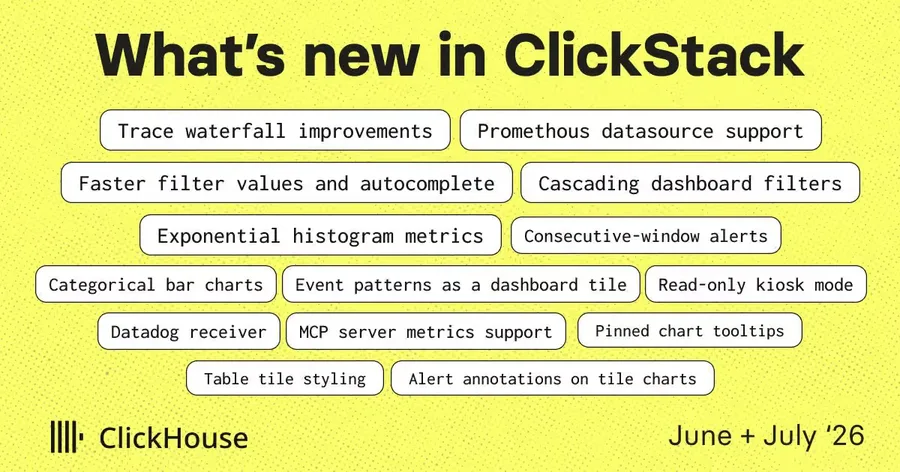
Explore ClickStack’s latest upgrades, from richer trace navigation and Prometheus connectivity to smarter dashboards, quieter alerts, faster filtering and support for exponential histogram metrics.
Musinsa migrated its audience engine from self-hosted ClickHouse to ClickHouse Cloud, cutting storage costs by 86.5% and total cost of ownership by up to 71.4% while simplifying real-time ingestion with ClickPipes.
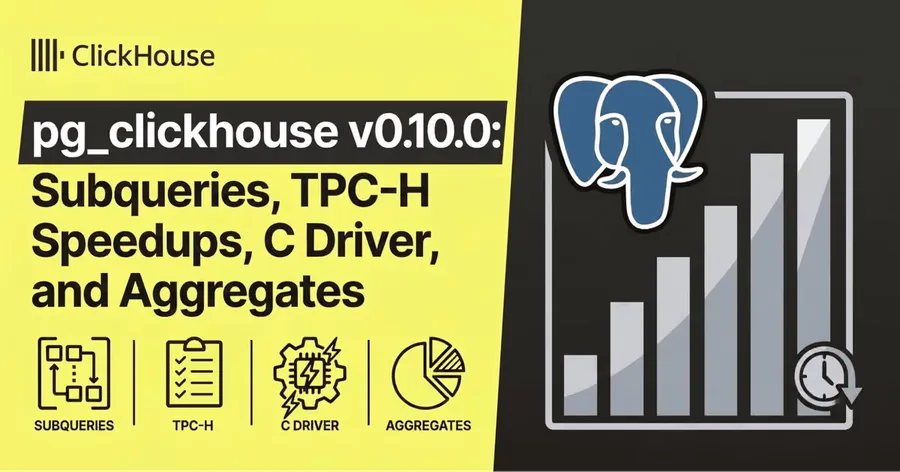
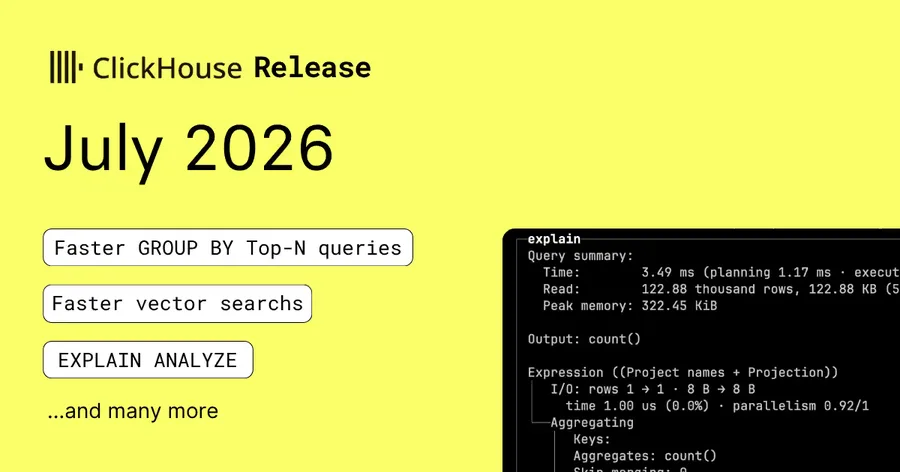
This release brings speedups for GROUP BY ... ORDER BY ... LIMIT, three JOIN improvements, four vector search improvements, position-aware phrase search, EXPLAIN ANALYZE, unified URL access, and more!
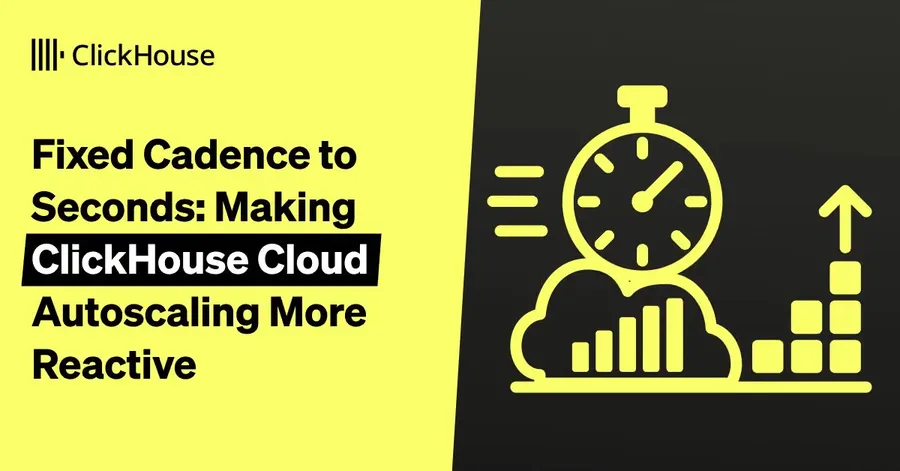
How we rebuilt ClickHouse Cloud's autoscaling orchestration on Kubernetes' controller-runtime and a ClickHouse-powered signals table, adding a reactive fast path that scales services up in seconds instead of waiting for the next scheduled pass.
How Mercado Libre rebuilt its observability platform on ClickHouse Cloud, cutting trace query times from over five minutes to about four seconds (a 50x speedup) with up to 89% compression while ingesting 400 million spans per minute.





 research.io