The IPKat has received and is
pleased to host this guest contribution from Katfriends Pedro Marcos Nunes
Barbosa (Pontifical Catholic University of Rio de Janeiro; Denis Borges Barbosa
Advogados) and Ryan Benjamin Abbott (University of Surrey; University of
California, Los Angeles; Brown, Neri, Smith & Khan, LLP), who explore some
questionable practices in Standard Essential Patent (SEP)
Following the release of G1/25, questions have been circling as to what the decision means for the pending referral in G 1/26 and what the consequences (good or bad) are for applicants and patentees. On G1/26, some of the questions have been answered, but arguably only because the EBA considers these questions already answered by G1/24. With respect to the consequences of G1/25 per se, this Kat
G 1/25, issued today, holds that the description must be adapted only where an “inconsistency” between the claims and description causes non-compliance with another requirement of the EPC. Legal basis for adaptation of the description, says the Enlarged Board of Appeal (EBA), can thus be found in the relevant EPC provision. The EBA defines our new word of the moment, "inconsistency", by reference
Back-to-school season has returned, bringing fresh notebooks, growing shopping lists and, perhaps, less time for IP news. This Kat, meanwhile, admired the aesthetic on Pinterest while catching up on the summer goals she had expertly procrastinated. Here is what you may have missed."What's school?"CopyrightKatfriend Alberto Godioli examined what the ODEE–Samherji dispute and its missed Strasbourg
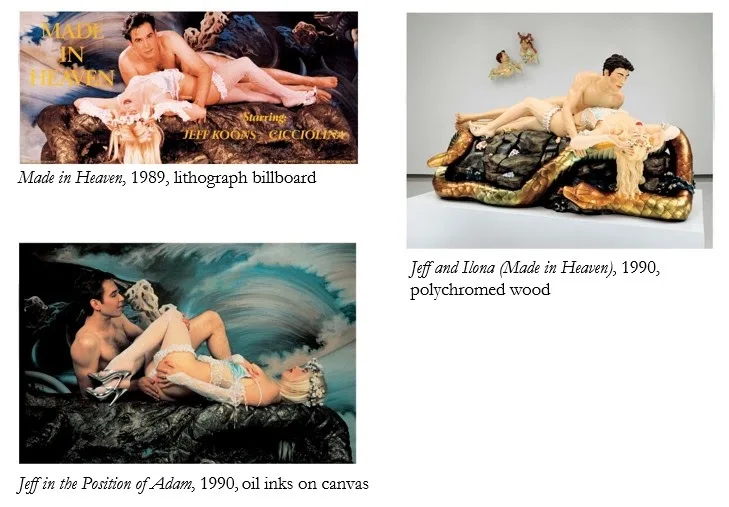
In a copyright law dispute between Michael Hayden (claimant) and Jeff Koons (defendant), the US Court of Appeals for the Second Circuit held that the claimant’s copyright infringement claim failed because of the statute of limitations: a ‘reasonable copyright owner’ would have learned of the alleged infringement and brought it before the court much earlier than Hayden did. BackgroundHayden is an
The list of courts willing to reach across
borders after BSH v Electrolux has a new entry. Katfriend Peter Ling
(Lenz & Staehelin) provides the following analysis of the Swiss Federal Patent
Court's first cross-border preliminary injunction decision, in which
jurisdiction was accepted over the foreign designations of a European patent
but the injunction was nonetheless refused on the merits.
A recent Australian Patent Office (APO) opposition decision,
voestalpine Rail Technology GmbH v Nippon Steel Corporation [2026]
APO 17, considered whether delivery of a product on consignment can
amount to novelty destroying prior use in Australia. This decision is a
useful reminder of the principles governing prior use and raises an important question
about when a consignment might make an
While others are enjoying a restful long weekend, the IPKat has been hard at work identifying the latest events and opportunities that might interest readers. Here are this week's updates:RSC SeminarImage by Ihtar via Pixabay.The Royal Society of Chemistry (RSC) Law Group is holding their annual Intellectual Property Law Seminar at the RSC, Burlington House, London on 5 October 2026. The speakers
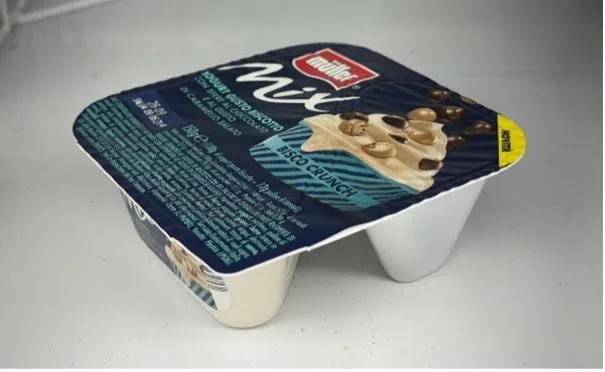
The IPKat has received and is pleased to host the following news item by Katfriend Edoardo Cesarini (GR Legal) regarding a recent first instance decision concerning the validity of a three-dimensional (3D) trade mark for a well-known yoghurt pot. Here’s what Edoardo writes:Mixing it up: Court of Rome invalidates Müller’s two-compartment yoghurt pot 3D trade markby Edoardo CesariniThe Court of
August may have felt fast, but life was definitely slow. The same cannot be said for IP news, which kept flooding in with no regard for the season. Here is what the Kats covered.CopyrightNever too late for a Kat nap.Oliver Fairhurst analysed the High Court's judgment in SHEIN v Temu, where SHEIN's large-scale copyright infringement claim largely fell apart at the title stage. The court held the
Let us start with a little quiz. For which concept(s) of trade mark law are the following conditions relevant: A reputation of the earlier mark, a link between the earlier mark and the contested trade mark and free-riding on the reputation of the earlier mark? (a) Trade marks with a reputation (Art. 8(5) and 9(2)(c) EUTMR) (b) Bad faith (Art. 59(1)(b) EUTMR) (c) Both (d) Neither According to a
The UK is negotiating a sanitary and phytosanitary (SPS) agreement with the EU, which seeks to ease the trade and movement of plants and other products. The latest update tells us that the SPS agreement may provide the option to protect varieties across the UK and EU through a single plant variety right (PVR) [Merpel: talk about "back to the future"!].Unitary prospectsImage by Oleksandr Dorohov
Contracts play a critical role in clarifying the
ownership and transfer of IP, but frequently define the IP with reference to
broad and non-specific terms. A recent Australian Patent Office decision in
ThermoChem Recovery International Inc. v FULC JV LLC [2026]
APO 14 highlights how inadequate evidence of the specifics of the contract
provisions and the contributors to the inventive concept can
The IPKat has received and is pleased to host the following guest contribution by Katfriend Alberto Godioli (University of Groningen), discussing the interplay between copyright protection and freedom of expression in the aftermath of the 2025 decision of the High Court of England and Wales in Samherji v. ODEE, and the recent inadmissibility decision by the European Court of Human Rights. Heres’s
Another hot week has come and gone. Here’s the IPKat at a glance:Trade Marks Marcel Pemsel reported on a CJEU referral concerning whether a geo-blocked website can still infringe a national trade mark. Copyright Katfriend Sarath Ninan Mathew reviewed “Copyright, Contract, and Video Games: Terms of Play” written by Amy Thomas.Georgina Jenkins analysed Anthropic’s $ 1.5 billion copyright settlement
With the European summer gradually winding down, the IP world shows no signs of slowing. From a new minister responsible for intellectual property in the UK to upcoming conferences and the latest Lisbon System bulletin, here is a selection of developments that caught our attention this week. Job Opportunities Copyright Litigation Specialist (remote, EU) Sumfinity is looking for a
A recent opposition decision by the New Zealand Patent
Office in Resmed Pty Ltd v Fisher & Paykel Healthcare Limited [2026] NZIPOPAT 6
provides a useful reminder of how divisional patent practice in New Zealand differs from that
in Australia, and the traps unsuspecting applicants can fall into in both
jurisdictions.While not the substance of the Resmed decision, the
Assistant Commissioner
Kat-approved networkingThe Katfriends at Kisaco Research wish to inform IPKat readers that the Life Science Legal Strategy Summit is relocating to Frankfurt for 2026, taking place at the Frankfurt Marriott Hotel on 13-14 October. The agenda is available here.Now in its 5th edition, the Life Science Legal Strategy Summit unites together in-house counsel with law firms, regulators, judges and more
Art by Riana HarveyMercury is finally out of the microwave, just as summer reaches its peak. The IPKat, meanwhile, has found the perfect balance between business and pleasure, keeping one paw firmly on the latest IP developments while still making the most of the season. Here is what you may have missed.Copyright Katfriend Seun Lari-Williams examined the recent parliamentary scrutiny of Nigeria's
research.io
Sign up to keep scrolling
Create your feed subscriptions, save articles, keep scrolling.













 research.io