


To reach the level of robustness the Physical AI community aspires to, namely generalist policies deployable zero-shot on unfamiliar objects in unfamiliar settings, dataset sizes must grow by several orders of magnitude. To give a sense of scale, extending the logic to LLM-scale data volumes, on the order of 10¹², would require roughly 80 million robots operating continuously for three years . The field is therefore bottlenecked not only by compute or model architecture, but more fundamentally by the rate at which high-quality, real-world manipulation data can be generated. For a CFO or engineering leader, the implication is direct. The route forward is higher information density per episode rather than more robots running for more hours. A single tactile-augmented trajectory carries more training signals than several vision-only runs, particularly for contact-rich and insertion tasks.
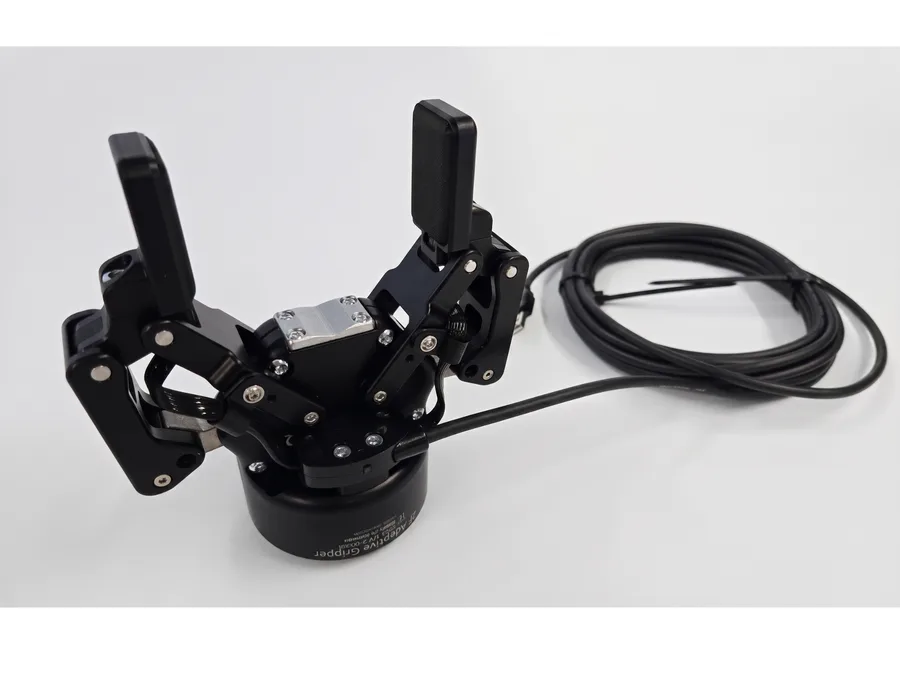
The economics of Physical AI: Why data quality beats scale
nicolas@robotiq.com (Nicolas Lauzier)