If you run a Robotiq gripper in the Robot Operating System (ROS) 2 workspace today, you are almost certainly running PickNik Robotics' ros2_robotiq_gripper . As of today, there is an official Robotiq-maintained package, and it is a drop-in replacement: same package names, same launch files, same controller interfaces.
As physical AI moves from research into real applications, developers need a solid primitive that meets them where they work: control loops that decide, hundreds of times per second, when to close, how fast, and with how much force.
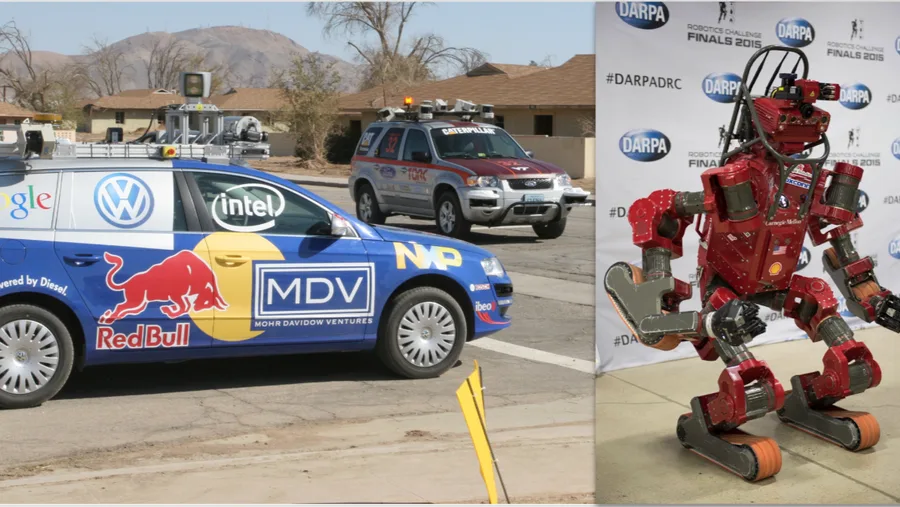
The DARPA challenges offer a useful playbook for physical AI. They show how an impressive technical demonstration can help create an industry. But they are not a timeline. The first DARPA Grand Challenge for autonomous vehicles took place in 2004. DARPA launched the Robotics Challenge eight years later, in 2012, with the Finals taking place in 2015. It is tempting to conclude that physical AI is …
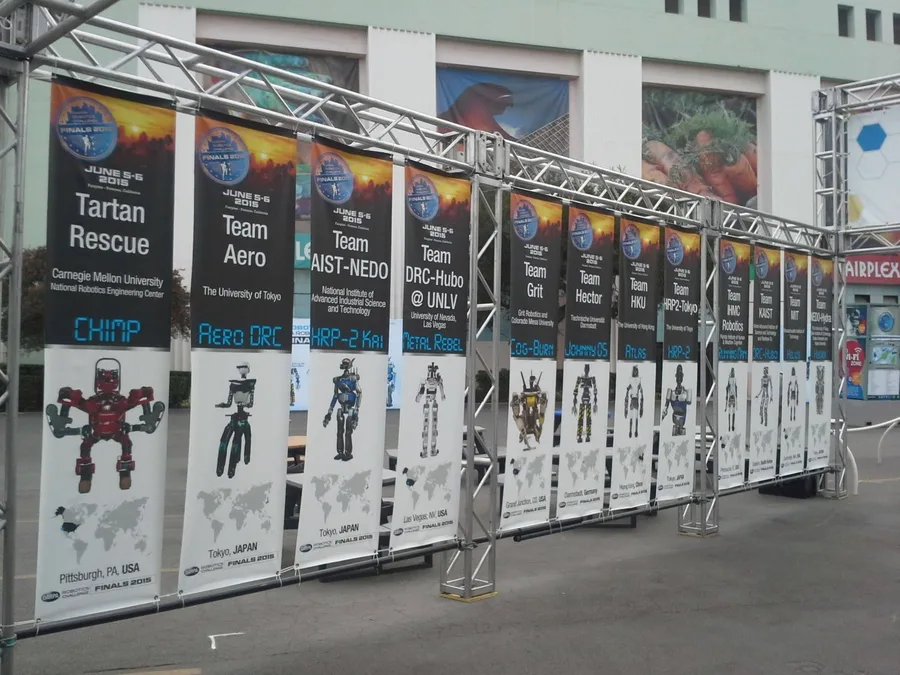
Part 1 of 2, Physical AI: The DARPA Legacy & the Road Ahead. What the DARPA Robotics Challenge Actually Built—and Why It Still Matters In March 2011, a massive earthquake and tsunami triggered a nuclear disaster at the Fukushima Daiichi power plant in Japan. Radiation and structural damage made parts of the facility too dangerous for people to enter, yet the available robots could do little more …
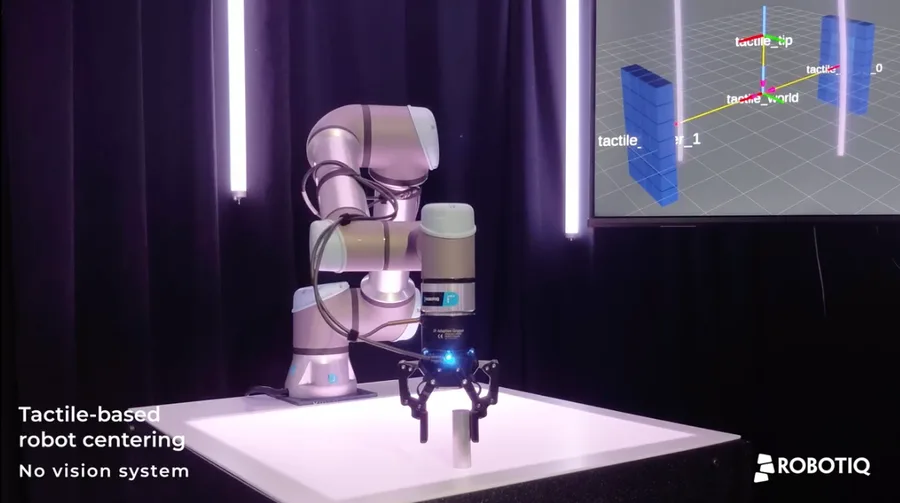
A robot does not always grip a part exactly where intended. Vision may guide the gripper close, but camera calibration, part presentation, and positioning errors add up, causing the fingers to close slightly off the object’s center. The grasp may appear secure until the robot begins to lift. An offset between the grasp and the part’s center of mass creates a moment that can rotate the object with…
If you've been using Hand-E Adaptive Gripper on your production line, you already know why it's earned its reputation: a sealed, precise, dependable gripper that just works, shift after shift. Now that same gripper is available in a new 100 mm configuration, enabling customers to handle a wider range of parts without changing fingers, extenders, or grippers.
In the heart of Provence, a small French bottling company is proving that automation isn't just for large manufacturers. Bulles Création, based in Valréas, has doubled its production cadence and lifted the physical strain off its operators by deploying a Robotiq PE20 Palletizing Workcell at the end of its bottling line.
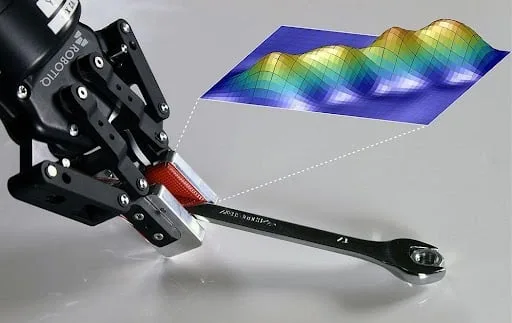
Read the full technical article from Jennifer Kwiatkowski on Tech Brief. For teams building contact-rich manipulation, tactile sensing is shifting from a useful addition to a defensible requirement. Vision-only manipulation has hit a wall, tactile-augmented policies outperform vision-only baselines on contact-rich tasks, and better sensing beats brute-force data scale on cost. The reasons contact…
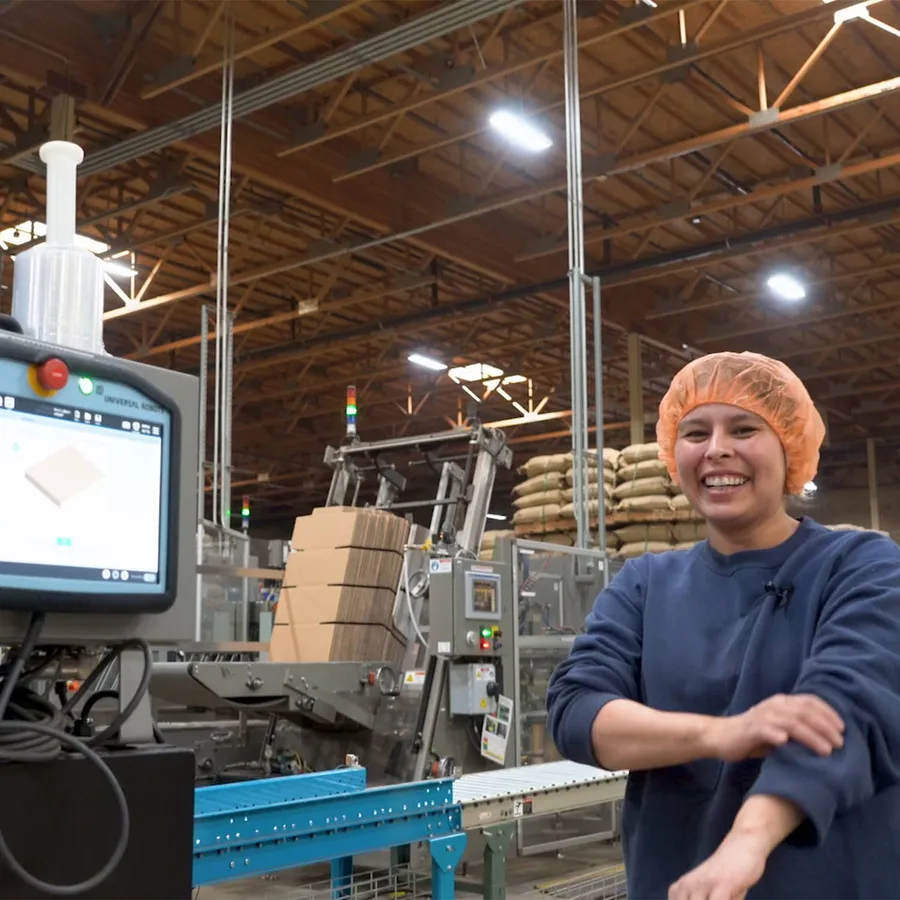
Manual palletizing is one of the most common, and most overlooked, inefficiencies in food manufacturing. It happens at the end of every packaging line, shift after shift, and because it has always been done by hand, it rarely gets flagged as a problem worth solving. But the costs are real. Operators performing repetitive lifting throughout an entire shift develop chronic back pain. Throughput is …
What does it look like when a single cobot workcell solves a real problem, earns full ROI in under a year, and quietly grows into a 27-station automation program? That's exactly what happened at Schweitzer Engineering Laboratories (SEL) after they deployed Robotiq Cobot Components and the Screwdriving Workcell on their assembly line. SEL designs, develops, and manufactures digital products and sy…
Getting a palletizing project done right has always depended on having the right information at the right time. Product specs, floor constraints, financial targets: when any of it is missing or wrong, the project pays for it later. IQ is the platform Robotiq built to change that. It captures the information behind a palletizing project, structures it, and generates a validated Workcell design bas…
Most manufacturers who want to automate palletizing face the same problem. Getting a straight answer on whether it fits their operation, what it costs, and how long it takes has always required weeks of back-and-forth, engineering hours, and a site visit before anyone commits to anything. That is the problem Robotiq built IQ to solve.
Palletizing automation is one of the clearest wins in end-of-line operations. The ROI is real, the labor savings are immediate, and the technology is mature. Yet many manufacturers stall out, spending months on projects that should take weeks, or deploying systems that work in the demo but struggle on the production floor. The good news: most of these failures follow predictable patterns. Here ar…
To reach the level of robustness the Physical AI community aspires to, namely generalist policies deployable zero-shot on unfamiliar objects in unfamiliar settings, dataset sizes must grow by several orders of magnitude. To give a sense of scale, extending the logic to LLM-scale data volumes, on the order of 10¹², would require roughly 80 million robots operating continuously for three years . Th…
Vision-language-action models are the current state of the art in robotic manipulation. They still cannot pick up a potato chip without crushing it. That is the result published earlier this year by the team behind the Video Tactile Action Model (VTAM). On a potato chip pick-and-place task — a task that demands high-fidelity force awareness, where vision alone cannot distinguish a crushing grasp …
The best palletizing solution depends on your production volume, budget, available space, and need for flexibility . You can go with a fully engineered system, a cobot, or a plug-and-play setup. Each comes with tradeoffs. The key is picking what actually fits your floor, your throughput, and the return you expect. This quick guide compares the most common palletizing solutions so you can make an …
In 2016, I said something that went against where robotics was heading at the time: vision alone doesn’t work for grasping. Not “it needs improvement.” Not “the tech isn’t there yet.” It doesn’t fit the problem. Grasping is physical. Contact, force, friction. Vision can guide the approach. It can’t feel what happens next. Back then, we saw it in the lab. Tactile vibration data predicted grasp fai…
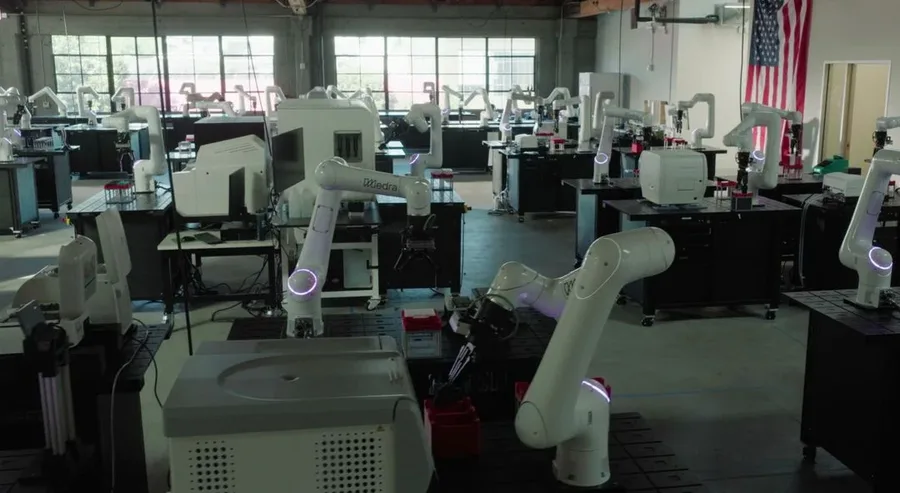
Medra Lab 001 is the largest autonomous AI-driven laboratory in the United States, operating continuously with robotics, AI, and adaptive grippers. Medra Lab 001 never sleeps. It reads the literature, designs experiments, runs them, analyses the results, and decides what to try next — continuously, without a human at the bench. Built across 38,000 square feet in under 90 days , it is already runn…
Pharmaceutical manufacturers are under pressure to increase output, maintain strict compliance, and protect their workforce, all within tightly controlled environments. Yet many facilities still rely on manual palletizing at the end of the line, where variability and risk are hardest to control. As a result, more pharmaceutical manufacturers are adopting robotic palletizing as a standard part of …

 research.io