


Elizabeth Shewark’s lab looks more like a daycare than a research facility — but that’s kind of the point. The Childhood and Adolescence Resilience (CARE) Lab in Corbett Family Hall is where Shewark and her team observe families and children at play, hoping to learn how different factors impact children’s social, emotional, and academic development over time. “Their lives are happening outside of this lab,” Shewark said. “But we’re bringing them in to get snapshots of their lives so we can better understand how to promote healthy development.” This feature is part of a College of Arts & Letters story series called “Office Hours,” which provides a glimpse into the personal and professional lives of Arts & Letters faculty through their workspaces around campus. This installment highlights Shewark, an assistant professor in the Department of Psychology and the William J. Shaw Center for Children and Families Collegiate Chair. In this interview, Shewark discusses her lab and the tools and personal touches that make her research possible. Her answers have been edited for clarity and conciseness. Q: Why does your lab have a room full of toys? A: It’s part of the research. We bring families and children into the lab, and we do some observational tasks with them. We have activities called “free play,” during which the only instructions children get are, “play as if you were at home.” This is really great because it can give us a lot of information about parent-child and sibling dynamics. When there are no restrictions, we get to see a bit more closely how they interact at home. We realize we’re not going to get totally there because we’re not at home, but by letting them free play, we’re able to get at the family dynamic. We have fun things for them to play with, like Paw Patrol toys and a Bop It. This grocery store is really popular; they can put on an apron, and it comes with a little fake credit card. We also have a kitchen so they can play-make different meals. And we...
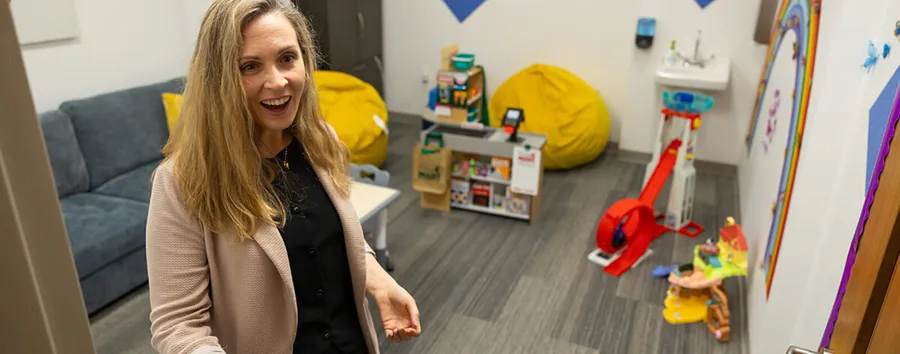
Office Hours: Developmental psychologist Elizabeth Shewark on the toys, decor, and people behind her research
Adah McMillan
8 min read