

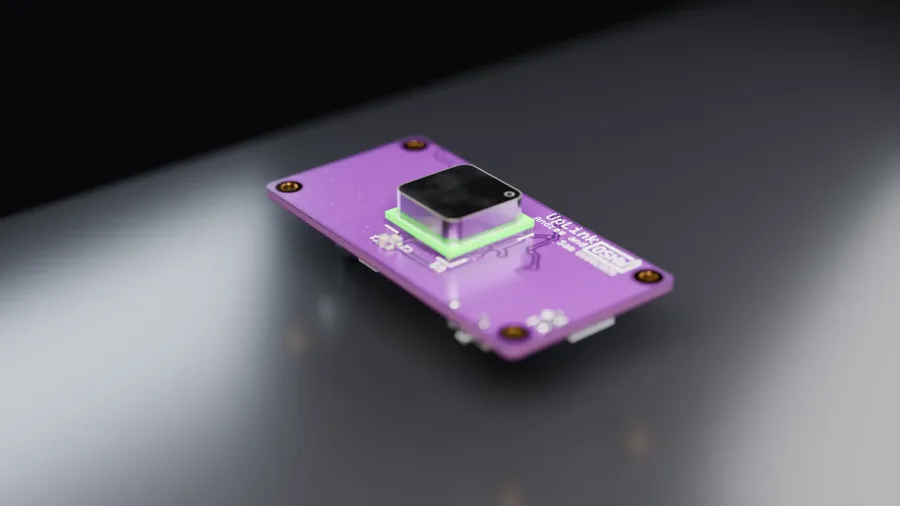

We chased a weather balloon across Montana and never found it In June of 2025, I worked with New England Sci-Tech as a part of Apex to launch StratoSpore: my first ballooning project. I used this opportunity to use algae as a biosensor for altitude, and I learned a lot in the process. Wanting to experiment in the stratosphere again, I worked with Sam Flynn to make a reliable and flight-ready payload. I had a few goals with this payload from what I learned from last year:
- Have redundancy for tracking systems
- Send images to the ground with actual details
- Last payload sent pictures 18x10 pixels
- Use a more reliable GPS module
- Implement more elaborate radio functionality
- Use my amateur radio license?
- Use more efficient data packing techniques for telemetry My plan for this post is to cover how I implemented these changes, along with documenting my learning process in hopes to inform my future launches. The Experiment(s) StratoSpore last year had two goals: examine how altitude/UV exposure affects algae fluorescence, and send images to the ground over a radio link. UpLink, our payload this year, follows a similar style and did two things:
- Test how 3D printing filaments (foaming PLA vs. non-foaming) affects payload insulation
- Send high-resolution images over a radio link Testing Payload Insulation Historically, most high-altitude research teams use styrofoam boxes for payload enclosures. There is a reason most teams avoid experimenting with other types of enclosures: styrofoam provides excellent thermal insulation and is easy to manipulate. Despite their popularity, they have a few disadvantages:
- They come in predefined sizes which mandate a certain weight allowance
- They cannot be flexible for your specific payload, making it hard to be efficient with payload layout
- They are expensive compared to more custom solutions The entire payload (parachute, flight line, electronics, enclosures) we sent up weighed 491 grams. A traditional foam...