


Key Points: MRL 5–8 alignment is non-negotiable for defense EMI programs: process repeatability, material traceability, and inspection protocol documentation must be established well before production. FIP gasket dispensing requires documented process controls: bead geometry tolerances, cure cycle parameters, and start/stop zone management all feed directly into MRL criteria. Material qualification is a gate, not a formality: conductive elastomers, RF absorbers, and shielding compounds must be characterized under the environmental conditions your platform will actually see. Tolerance stack-up determines shielding effectiveness: Modus holds ±0.127 mm (±0.005") on die-cut parts — tighter than industry standard — and that precision directly affects whether a gasket compresses to spec in the field. Vertical integration compresses qualification timelines: a partner who controls dispensing, machining, and assembly under one roof reduces inter-vendor risk, simplifies audit scope, and cuts schedule risk at every MRL gate. Why Manufacturing Readiness Determines Whether EMI Shielding Actually Works Defense electronics programs don't fail at the physics. They fail at the transition from prototype to production. EMI shielding and RF components — gaskets, absorbers, shielded enclosures — look straightforward on a drawing. In practice, they're among the most process-sensitive elements in a system.
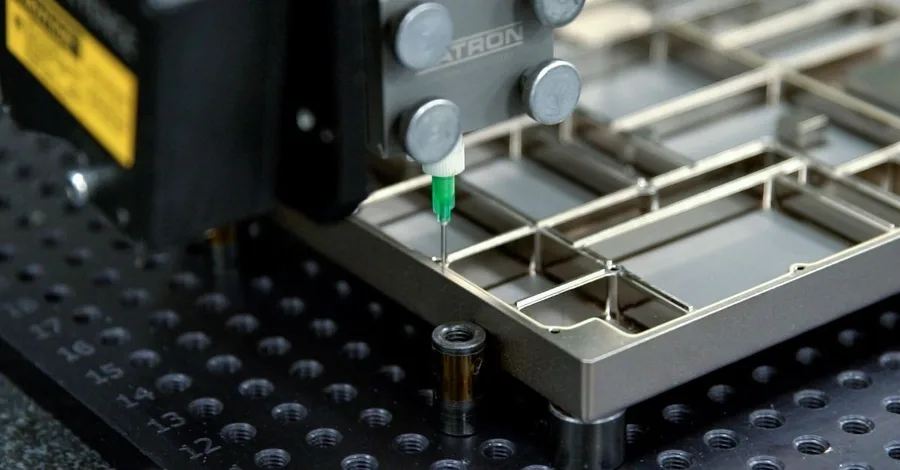
EMI Shielding and RF Components: Meeting Manufacturing Readiness Requirements for Defense Electronics
Modus Engineering Team