


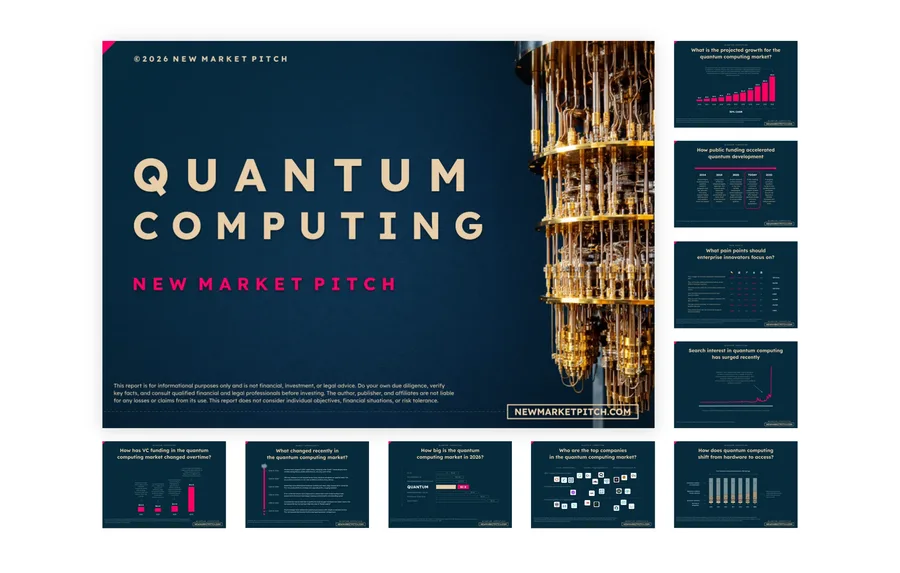
Neutral atom quantum computing: which startup is ahead? Last updated: 31 July 2026 In our quantum computing market deck , you will find everything you need to understand the market SUMMARY QuEra is ahead in neutral-atom quantum computing today, but only narrowly: Atom Computing is closing the technical gap fast, while Pasqal already leads the commercial race. The top three are not winning the same contest. QuEra has the broadest fault-tolerance record, Atom offers the largest gate-based machine sold as a product, and Pasqal has delivered the most systems to paying institutions. Fault-tolerant progress deserves the most weight because raw atom counts can be misleading. A large array matters far less if it cannot repeatedly detect errors, replace lost atoms and preserve logical information through useful operations. QuEra’s lead comes from technical completeness rather than one record. Its published work combines below-threshold error correction, logical teleportation, magic-state distillation, atom movement and continuous reloading inside a coherent architecture. Atom Computing has the strongest chance of changing the ranking. Its AC1000 starts with more than 1,200 physical qubits, and its latest toric-code work shows repeated correction and atom replacement over deep cycles rather than a single clean demonstration. Pasqal is further ahead as a business than its third-place ranking suggests. It has audited commercial revenue, seven installed QPUs, three more in production and named customers using machines inside industrial and supercomputing environments. Customer access splits the field in another way. QuEra is the easiest platform to try through Amazon Braket, while Pasqal has the strongest record of dedicated on-premises deployments; Atom’s commercial promise still depends heavily on the QuNorth installation working as intended. Funding no longer settles the argument. Infleqtion and Pasqal have the largest reported capital pools, yet QuEra and Atom have converted less disclosed capital into stronger evidence on the central technical problem. The most defensible moat belongs to QuEra because its advantage spans hardware architecture, control methods, fault-tolerance experiments, public cloud access and years of outside use. Copying one experiment is possible; reproducing the whole stack is much harder. Our ranking is QuEra first, Atom Computing second, Pasqal third, Infleqtion fourth and planqc fifth. The order could change quickly, but Atom needs peer-reviewed and customer-operated logical performance, while Pasqal needs digital fault-tolerance results that match its commercial execution. Neutral atom quantum computing: which startup is ahead? QuEra is ahead overall today, with Atom Computing second and Pasqal a very close third. Which neutral-atom quantum computing startups are really in the race? QuEra, Atom Computing, Pasqal, Infleqtion and planqc are the five companies we would compare today. All five build complete quantum-computing systems based on individually controlled neutral atoms. We leave out businesses focused mainly on lasers, software, quantum networking, clocks or sensors, unless they also operate a full computing platform. The comparison needs one qualification. Infleqtion is now publicly listed and sells clocks, sensors and software alongside quantum computers. Pasqal is also pursuing a public listing. Both still belong in the competitive field because their neutral-atom computing operations remain central to their technology plans. Funding figures are especially easy to misuse here. A completed venture round, government contract, proposed convertible financing and SPAC proceeds do not carry the same certainty. We therefore show what has been publicly disclosed and explain the main caveat. Startup Main neutral-atom approach Disclosed capital Important caveat QuEra Rubidium systems spanning analog simulation, gate-based computing and fault tolerance At least 17 million launch funding and later financing of more than 300 million announced The total includes a planned 550 million raised or committed, according to its investor presentation The figure includes committed convertible financing linked to its proposed listing Infleqtion Cesium computers, quantum software and a wider atom-based product portfolio At least 9.5 million in first-quarter revenue, up 14%, and raised its full-year guidance to at least 11 million in revenue when it emerged from stealth in 2021, but it has not released comparable recent figures. Atom has confirmed the sale of its first commercial on-premises computer to QuNorth without disclosing the price. Planqc has large government-backed contracts, including a €29 million DLR program, although these remain development projects rather than repeat product sales. If you want more recent data on this point, please see our latest quantum computing market report . This chart, included in our quantum computing market deck , looks at IonQ’s strategy in quantum computing Which neutral-atom startup is gaining ground fastest now? Atom Computing is the fastest-rising challenger right now. During its recent run, Atom demonstrated repeated toric-code error correction, raised a 100 million from the U.S. Department of Commerce and moved its first sold machine toward installation. The company also added collaborations with Cisco, NVIDIA, Nu Quantum and Phasecraft. These developments support one coherent strategy. Atom is building large gate-based machines, improving their logical performance and preparing to connect several processors when one machine becomes too small. The Nu Quantum work, for example, focuses on optical links that could join separate Atom processors. Pasqal is accelerating fastest commercially. Its revenue expansion, new customer agreements and production pipeline show that its installed systems are creating a real sales operation. The company has also hired a former Hewlett Packard Enterprise HPC and AI sales leader to push deployments across Europe, the Middle East and Asia-Pacific. QuEra remains highly active. It expanded its AWS relationship, introduced a 2028 fault-tolerant product and published a new architecture with Los Alamos designed to reduce the hardware needed for early fault-tolerant simulations. Atom still trails QuEra on the breadth of its published fault-tolerant stack and Pasqal on delivered systems, but it has narrowed both gaps faster than any other challenger. Which startup has the best neutral-atom quantum customers and partners? Pasqal has the strongest list of actual hardware buyers, while QuEra and Atom Computing have secured the most influential technology-platform partners. Pasqal has placed machines with organizations including Aramco and CINECA. Its CINECA system contains more than 140 qubits and is designed to work alongside the Leonardo supercomputer. Aramco hosts a Pasqal computer in its data-center environment, giving the company a foothold with one of the world’s largest industrial groups. Pasqal has also moved beyond early finance experiments with Crédit Agricole CIB. Their latest agreement focuses on operational use in capital-markets activities after several years of joint research. LG Electronics, EDF, Thales, Sumitomo and CMA CGM add further industrial credibility. QuEra’s strongest relationships sit closer to the computing stack. AWS distributes Aquila and plans to make the future Libra system available through Amazon Braket. Google, NVIDIA, AIST, Los Alamos and DARPA give QuEra access to hardware expertise, supercomputing environments and advanced research programs. Atom’s partnership with Microsoft is arguably the most valuable single technical relationship in the category. Microsoft provides the logical-qubit software and enterprise platform around Atom’s hardware. QuNorth gives Atom a real customer installation, while Cisco and Nu Quantum support its longer-term distributed-computing plans. Infleqtion has strong government customers, including NASA and the UK’s National Quantum Computing Centre. Planqc’s deepest relationships are with Germany’s DLR, the Leibniz Supercomputing Centre, Airbus and ESA. This chart, included in our quantum computing market deck , illustrates yearly funding for quantum computing startups Who can actually manufacture and deliver neutral-atom quantum computers at scale? Pasqal is currently the only startup delivering neutral-atom quantum computers at something close to an industrial rhythm. Pasqal’s installed base spans several countries and different customer environments. Its three additional systems in production show that deliveries are overlapping rather than occurring as isolated multiyear projects. The machines work inside standard data and supercomputing centers, according to Pasqal, and consume less than four kilowatts. Each deployment still requires specialized optics, vacuum equipment, calibration and support, but Pasqal has repeated that process more often than its competitors. The company has also taken a fresh step upstream. Pasqal now coordinates Q-PLANET, a €50 million European pilot line involving 11 countries. The program aims to industrialize chip-scale components used in neutral-atom computing, sensing and communications. That should help Pasqal secure components and standardize parts of its production process. QuEra used its large financing round to expand manufacturing infrastructure and doubled its global workforce during 2025. Its continuous-reloading work also tackles a major operating bottleneck. The company still discloses fewer customer installations than Pasqal. Atom’s AC1000
Neutral atom quantum computing: which startup is ahead?
NewMarketPitch Team