


Key Points: MRL gaps cost time: Most programs stall between MRL 4–6 because manufacturing assumptions made during design haven't been validated — DFM reviews close that gap early. Early engagement compounds: A DFM review at MRL 4–5 surfaces tolerance conflicts, material constraints, and process limitations before they become Engineering Change Orders at MRL 7–8. Redesign risk is front-loaded: The cost of a design change at MRL 5 is a fraction of the same change at MRL 8, where tooling, process qualifications, and supply chain commitments are already in place. Vertical integration accelerates progression: A manufacturing partner who controls material selection, conversion, FIP dispensing, and machining under one roof can validate manufacturability across the full process stack simultaneously. MRL advancement is a team sport: Programs that treat their converter as a partner — not just a vendor — consistently compress time between readiness levels. There's a moment in almost every defense or aerospace program where the engineering team realizes their design is perfectly functional but not yet manufacturable. The geometry is tight. The material stack looks clean on paper. The tolerances were drawn by someone who understood the application. But when the part hits production, the process reveals what the model couldn't: a feature that requires a fixture workaround, a tolerance band that makes yield unpredictable, a material that behaves differently at scale than it did in the lab.
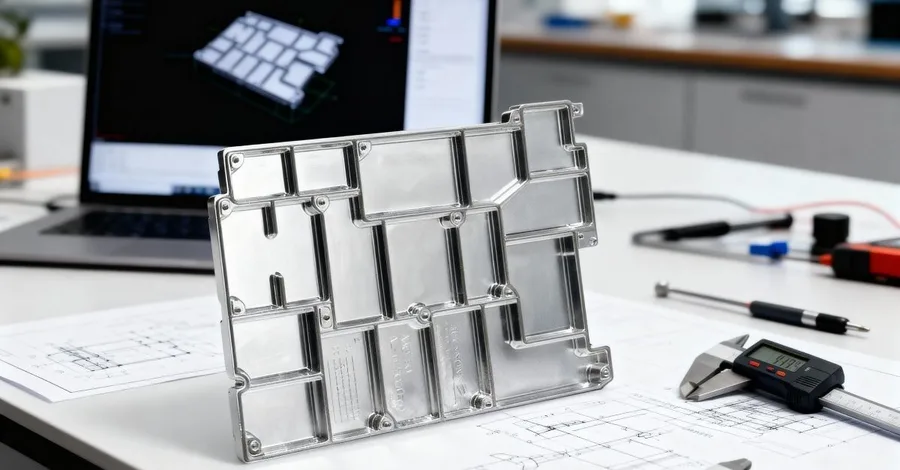
How Design for Manufacturability Reviews Accelerate MRL Advancement
Modus Engineering Team