


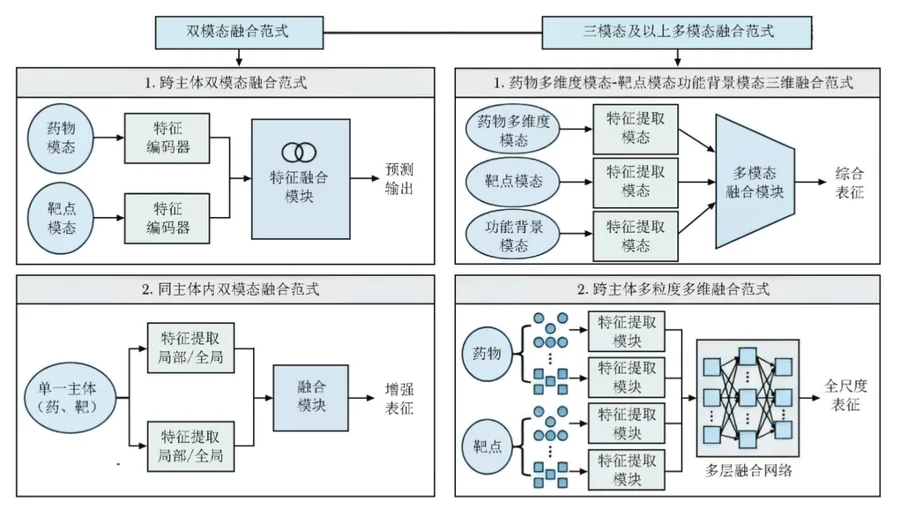
Artificial intelligence is reshaping one of drug discovery's most consequential questions: which compounds interact with which biological targets, and how strongly. A new review maps the fast-moving landscape of artificial intelligence (AI)-driven drug-target interaction (DTI) prediction, showing how the field has progressed from hand-crafted molecular features to deep learning, graph-based models, pretraining and multimodal fusion. The authors organize the review around data foundations, model architectures, benchmark resources and evaluation practices that determine whether predictions are trustworthy. They also argue that future progress will depend less on simply building larger models and more on improving data quality, cross-dataset robustness, mechanistic interpretability and links to experimental testing.
AI Maps a Clearer Path to Drug-Target Discovery
Chinese Academy of Sciences