


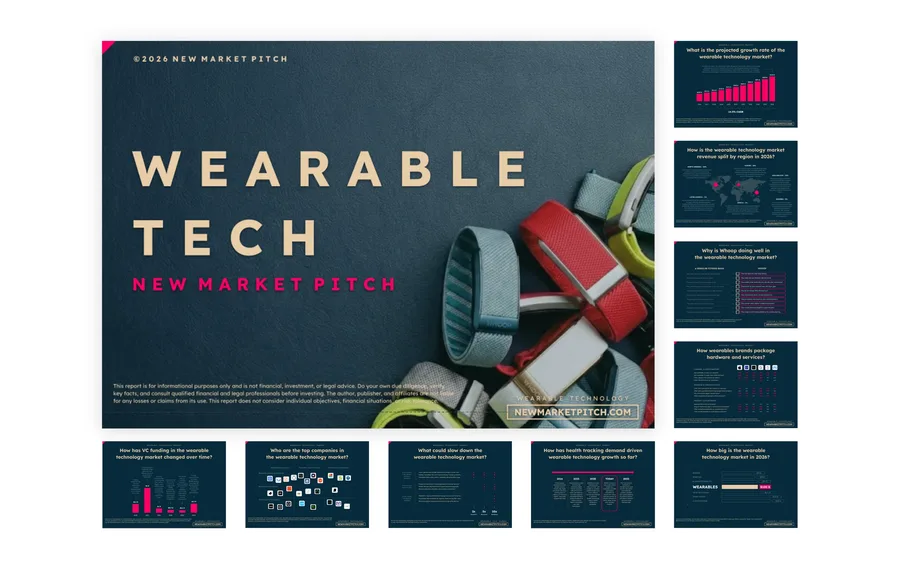
Smart rings: which startup is ahead? Last updated: 31 July 2026 In our wearable technology market deck , you will find everything you need to understand the market SUMMARY Oura is clearly ahead in smart rings. It has the largest customer base, the strongest product and app, the deepest research record, and a commercial lead that no independent rival is close to closing today. The market is more concentrated than the crowded product shelves suggest. Omdia estimated that Oura captured 74% of global smart-ring shipments in the first half of 2025, while Ultrahuman and Samsung each held about 9% and RingConn about 5%. Ultrahuman is the only independent challenger with enough growth to become genuinely dangerous. Its reported revenue rose 5.4 times to about 1.5 billion, including its recent 100 million. Happy Health has raised around 1.5B Ultrahuman Consumer ring connected with blood tests, glucose and broader health data About 10M, with uncertainty Happy Health Clinically oriented ring used for continuous monitoring and sleep testing About 30M in tracked rounds Circular Consumer ring offering ECG and general health tracking Institutional total unclear; about 500 million in revenue in 2024 and was reported to have reached approximately 64 million in operating revenue during its latest reported financial year. The difference becomes clearer when we look at the amount of new revenue created. Oura appears to have added around 64 million. That implies a previous comparable figure of around 500 million to approximately 299, while the lighter Gen 2 Air costs about 479, but users do not need an ongoing membership to see their basic data. Optional health services and software modules can add recurring costs. Oura's latest ring starts at approximately 5.99 monthly membership after the trial period. Over three years, the total cost reaches about 299 over the same period. Oura customers receive a better application, deeper health interpretation and frequent feature updates. First-year membership renewal has reportedly remained above 80%, which suggests that many users still see enough value to keep paying. For someone who wants the most complete smart-ring experience, Oura can justify its higher cost. For someone mainly interested in sleep, recovery and overnight health trends, RingConn delivers most of the essential functions for around half the three-year price. Product Approximate starting price Compulsory subscription Approximate three-year cost RingConn Gen 2 Air 199 RingConn Gen 2 299 Circular Ring 2 349 Ultrahuman Ring PRO 479 Oura 615 This chart, included in our wearable technology market deck , illustrates yearly funding for wearable technology startups Which smart-ring startup has the best app? Oura has the clearest and most useful smart-ring app, while Ultrahuman is building a broader but more complicated health platform. Oura takes a large amount of overnight data and turns it into a few understandable scores for sleep, readiness and activity. It then connects those scores with stress, cardiovascular fitness, illness warnings and women's-health patterns. The app's strength comes from consistency. Users can quickly understand whether their sleep, recovery or stress is moving in the wrong direction without reading dozens of separate charts. Independent reviewers regularly describe the Oura experience as easier to understand than rival apps. Ultrahuman wants to collect a much wider range of information. Its platform can connect the ring with continuous glucose monitors, blood tests, home environmental sensors, cycle data and optional software modules. Its newer AI system, Jade, is designed to find patterns across these different sources. That wider approach could eventually become more powerful than a ring-centred app. Right now, it also creates more complexity. Many buyers simply want to know whether they slept well, recovered properly and should train hard today. RingConn's app has improved through health alerts, sleep-regularity analysis, cycle tracking and fitness estimates. It remains easier to recommend for hardware value than for software depth. Circular's app continues to be its biggest weakness, with complaints about syncing, clutter and inconsistent functions. Who leads women's health and medical smart rings? Oura leads women's health among consumer smart rings, while Happy Health has moved furthest into medical sleep testing. Oura combines overnight temperature data with cycle predictions, pregnancy insights and menopause-related features. Its integration with Natural Cycles also gives the ring a role in fertility awareness that most competitors cannot match at the same scale. Ultrahuman has recently become a more serious challenger. It acquired viO HealthTech, launched Cycle and Ovulation Pro and partnered with Clue. These moves connect the ring with a wider set of reproductive-health tools rather than treating cycle tracking as a minor extra feature. Happy Health leads the clinical side. The Happy Ring received FDA clearance for multi-night at-home testing related to obstructive sleep apnea, insomnia and other sleep conditions. It is used within a service that can involve physicians, diagnosis and treatment. Movano also achieved FDA clearance for the EvieMED Ring's pulse-oximetry function. Its original Evie Ring was designed specifically around women's health, but limited sales and financial pressure have prevented the company from building a large consumer position. The category has two different leaders. Oura reaches far more women in everyday life, while Happy Health has the strongest medical use case. If you want more recent data on this point, please see our latest wearable technology market report . This chart, included in our wearable technology market deck , compares the main business model options for wearable technology brands Which smart-ring startup can actually manufacture at scale? Oura is the only smart-ring startup that has proved it can manufacture and support millions of devices. By the end of 2025, Oura said it had sold more than 5.5 million rings across more than 150 countries. Producing at that level requires much more than a factory. The company must manage multiple sizes, curved batteries, titanium bodies, replacements, charging equipment, sizing kits and retailer inventory across many markets. Ultrahuman is building the clearest manufacturing challenge. Its Texas manufacturing
Smart rings: which startup is ahead?
NewMarketPitch Team