The problem addressed in this study was it was not known how Texas early childhood special education (EGSE) teachers and early childhood general education (ECGE) teachers use collaboration to identify, place, and support students with disabilities (SWDs). Framed by Colby’s collaboration theory, the purpose of this basic qualitative study was to explore the experiences of Texas ECSE and ECGE teach…
IntroductionStudents who are Hard of Hearing (SHH) have distinct sensory, communicative, and academic needs that differ markedly from those of Deaf students, yet AI educational technologies have largely been developed for Deaf learners or hearing populations, leaving a critical gap for this population in mainstream settings.ObjectiveThis study aimed to identify the required functions of AI techno…
This study examined the effectiveness of a linguistically and culturally adapted Applied Behavior Analysis (ABA) intervention targeting lexical-semantic language development in preschool children with Autism Spectrum Disorder (ASD) in Kazakhstan. Sixty children aged 3-6 were allocated to an experimental group receiving the adapted ABA program or a control group receiving routine high-intensity VB…
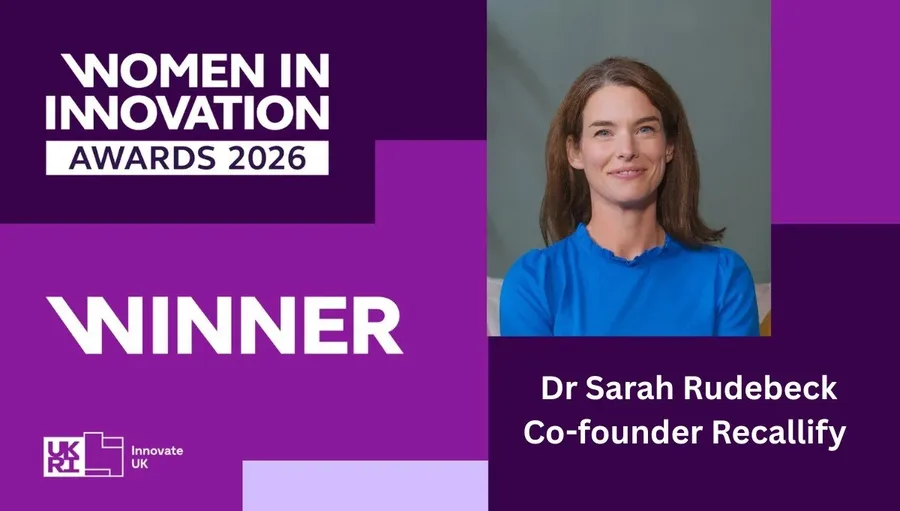
Recallify Classroom will be co-designed with students and education staff before a secondary school pilot in Surrey. Dr Sarah Rudebeck has received a £75,000 Innovate UK Women in Innovation Award to develop and test Recallify Classroom. Dr Sarah Rudebeck, Co-Founder of Recallify and a senior UK NHS clinical psychologist, has won a £75,000 Innovate UK Women in Innovation Award to adapt the company…
Individualized education program (IEP) transition plans are required to be based on student interests and strengths, and use age-appropriate transition assessments, yet limited guidance exists on how to prioritize these elements. Despite decades of transition planning research and policy development, students with disabilities continue to experience poor postsecondary transition outcomes, special…
BackgroundAutism Spectrum Disorder (ASD) presents important challenges in inclusive education, requiring teachers to have adequate knowledge, positive perceptions, confidence, and appropriate classroom support skills. Despite the growing emphasis on inclusive education in Saudi Arabia, gaps remain in teachers’ ASD-related knowledge, professional training, and preparedness for supporting students …
In the advent of modern technologies used in educational systems, stakeholders in academic institutions are also scrutinizing the use of advanced technologies in special education supervision. Driven by the fact that advanced technologies, such as artificial intelligence (AI), have empirically improved the learning process of students and the monitoring of general systems, it is also highly likel…
The problem that was addressed through this study is that preschool special educators are not consistently integrating role-play strategies when teaching language development to children with autism spectrum disorder (ASD) at ABC district (a pseudonym), a district in the southeastern United States. Grounded in Vygotsky’s social learning construct, the purpose of this study was to explore the perc…
When Accommodations Exist but Access Doesn’t: A Middle School Reality Check
contributed by Pramod Polimari, middle school special education strategist
In middle school classrooms across the country, accommodations are in place.
IEPs are written.
Support plans are documented.
Students are technically “included.”
And yet, many students still struggle to access learning in meaningful ways.
This disc…
With graduation season just around the corner, many families are looking forward to celebrating their high school and college seniors in lively graduation ceremonies. But the graduation season and upcoming vocational transitions can be challenging for autistic people and their families, who may struggle with participating in a traditional ceremony, accessing resources after graduation and […] The…
By Dr Prithvi Perepa, Associate Professor in Autism Studies, University of Birmingham
The Institute for Public Policy Research (IPPR) have recently published their recommendations for reducing the number of children who are losing learning due to school exclusions or parents electively home educating their children. According to their report, the number of school exclusions has risen by a third i…
Disciplines
Disability and Equity in Education | Special Education and Teaching
Publication Date
2021
Document Type
Article
DOI
10.25778/3v8r-nb42
Abstract
We conducted a review of the literature on articles published between 1990 and 2020 that measured the effects of progressive time delay (PTD) on skill acquisition in students with autism spectrum disorder (ASD). In all, 11 experimental researc…
WestEd's Rorie Fitzpatrick recommends three actions state and local education agencies can take to support students with disabilities through school closures and the transition back to school settings.
The Center for Disabilities Studies, in partnership with other education centers at the University of Delaware and the Delaware Department of Education (DDOE), will offer the state’s first special education-specific leadership training program starting in 2020. Called the Special Education Administrative Leadership (SEAL) program, it will be supported by a five-year, $1 million grant from the U.S…