Ninety-two percent of healthcare data breaches occur because of misconfigurations in the storage layer, yet most engineers I interview still think "encryption at rest" is the end of the conversation. If you think your S3 bucket policy is enough to satisfy an auditor, you’re about to have a very bad quarter. In the world of HIPAA-compliant data engineering, the "security by obscurity" mindset is n…
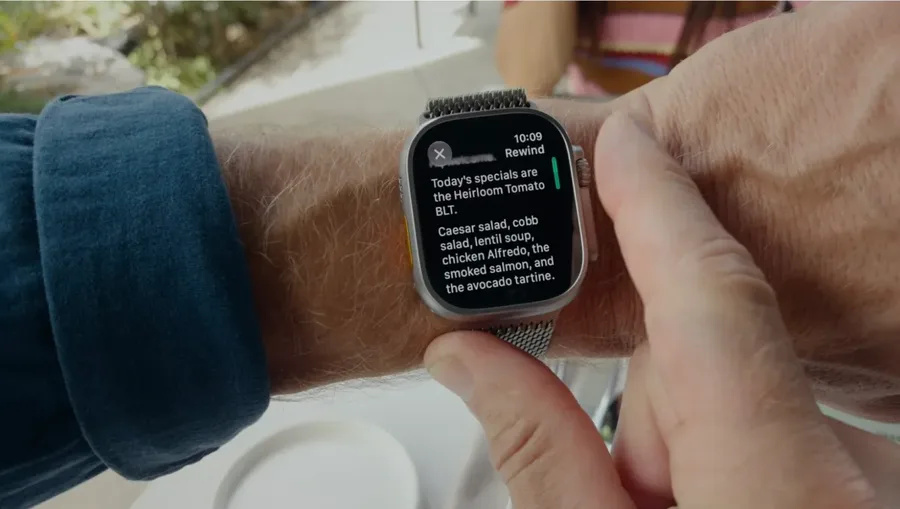
Apple says its new watches won’t save raw audio, but features that can transcribe recent speech and summarize ambient conversations raise new questions about consent, privacy, and how people behave when they know they could always be recorded.
ZECpad is an early-stage market and launch infrastructure project being built around the Zcash ecosystem. The product is not publicly available yet. The website currently displays a “TOO SOON” page while development, security planning, and market design continue in the background. There is no token sale, investment solicitation, or return promise associated with this post. Why build on Zcash? Mos…
A couple years ago, GM made waves by saying that soon, all their new cars would be completely free of Apple's CarPlay and Android Auto support, instead opting for the "Android Automotive OS" in their cars.
Admittedly, I'm a huge fan of CarPlay for basic safety reasons and how it lets you hear or send texts without ever having to look at or touch your phone, so I was not happy to hear this news. I…
The Domain Name System (DNS) was conceived with reliability, speed, and scalability in mind, with limited consideration for privacy. Different solutions have been proposed to make DNS more privacy preserving, mostly focusing on confidentiality in transit and networking approaches to achieve unlinkability. However, DNS queries are still observable in plaintext during processing.
In this work, we …
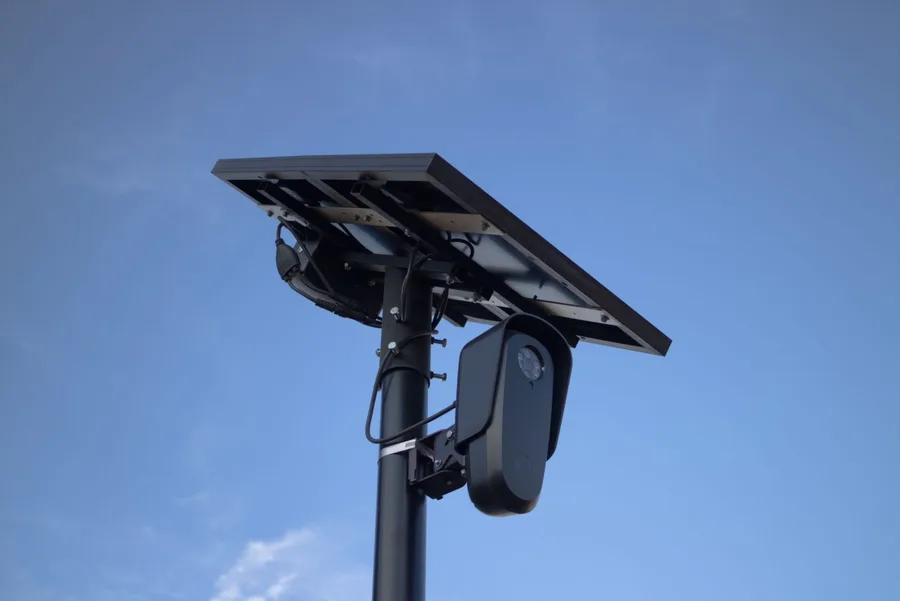
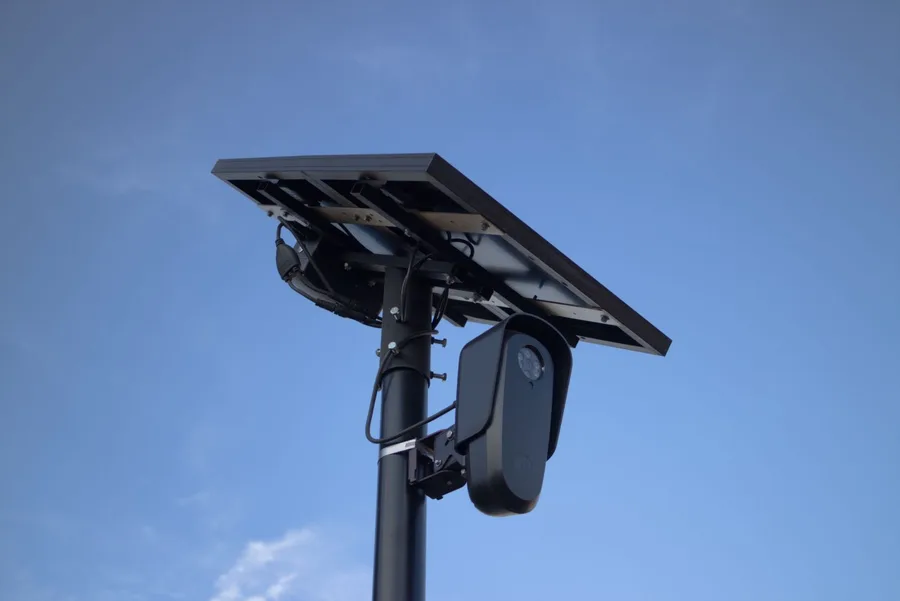
A new kind of camera system for reading license plates has expanded the potential for law enforcement to track vehicles and at the same time has raised concerns about violations of privacy. Common parlance refers to these devices as "Flock cameras," but in fact Flock is a brand name, and Flock Safety is just one of several companies that sell and operate similar security systems.
A new kind of camera system for reading license plates has expanded the potential for law enforcement to track vehicles and at the same time has raised concerns about violations of privacy. Common parlance refers to these devices as "Flock cameras," but in fact Flock is a brand name, and Flock Safety is just one of several companies that sell and operate similar security systems.
Sooner or later an AI tool will take something back. A feature you used gets retired on a deadline , a plan you were on gets restructured, or you simply decide to leave — and you go looking for the export button so you can carry your history, your chats, the reports and images the thing made for you, somewhere else. Often, there isn’t one. And when you reach for the law instead, you find somethin…
(Nature) – Technologies that promise better-than-usual sleep could improve people’s performance and health but also turn the need for rest into an auditable obligation. Ethical norms and regulations are needed. As employers learn more about the productivity and safety costs … Read More
Subtitle (Medium): The engine never sees your documents. 1.3.1 is the rule, in public — go run it. Tags: privacy · ai · javascript · database · opensource Canonical: https://moaaz-i.github.io/FLASH/guide/do-this-first Paste from the --- block on DEV.to. On Medium, paste from the title down (omit the DEV frontmatter). --- title: flash-zk : a server-blind encrypted database for private AI published…
Yashwant Shailendra Soni, Mahatma Gandhi Kashi Vidyapeeth ABSTRACT An artificial intelligence-based technique known as "deep-fake technology" creates or modifies audio-visual information while raising serious privacy issues. Deep-fake technology allows very lifelike representations of people in inappropriate circumstances while causing negative effects through election interference and disinforma…
arXiv:2608.20351v1 Announce Type: cross Abstract: We ask whether stereotype-loaded queries about culturally marked people leak more personal information from a retrieval-augmented generation (RAG) system than otherwise-equivalent neutral queries. We pre-register a four-culture audit (en-Anglo, es-LATAM, Arabic, Hindi) on a synthetic English PII corpus, comparing five query arms we call the Stereo…
Multi-party private set intersection (MPSI) enables multiple parties to securely compute the intersection of their private datasets without revealing any information beyond the intersection itself. However, as the number of participants scales, the performance of multi-party PSI protocols is significantly influenced, with the number of interaction rounds emerging as a critical bottleneck. In this…
Pratibha Jha, The Institute of Company Secretaries of India (ICSI) ABSTRACT The recognition of privacy as a fundamental right by the Supreme Court of India in Justice K.S. Puttaswamy (Retd.) v. Union of India marked a constitutional transformation in the understanding of individual autonomy, dignity and informational privacy. The Digital Personal Data Protection Act, 2023 (DPDP Act) subsequently …
Amardeep, PhD Research Scholar, Rajiv Gandhi National University of Law, Patiala ABSTRACT The Digital Personal Data Protection Act, 2023 is commonly presented as the statute that gives effect to the right to informational privacy recognised in Justice K.S. Puttaswamy v. Union of India. This article tests that presentation against a practice the Act is poorly equipped to govern, namely the use of …




 research.io