Neurotechnology raises many high-stakes ethical questions. Setting ground rules could help protect workers and ensure that tasks are adapted to the person, rather than the other way around.
Brain-computer interface devices have the potential to boost users’ autonomy, especially for people who experience paralysis. But that comes with risks, as well.
Invasive, semi-invasive, and non-invasive brain-computer interfaces (BCI) are playing an increasingly important role in mental healthcare. They play a central role in all the stages of neuro-behavioural interventions, both by the care providers and the caretakers of a patient. The novelty of the technology and its rapid development create complex ethical challenges that must be balanced against t…
Clinical trials involving deep brain stimulation (DBS) are challenging to implement due to invasiveness and complexity of the therapy, substantial barriers to participant recruitment and retention, and difficulties translating emerging technologies into routine clinical practice. The 2023 Brain Research Through Advancing Innovative Neurotechnologies® (BRAIN) Workshop on Patient Recruitment in DBS…
Increased racial and ethnic diversity in population neuroscience research is widely understood to facilitate better identification of subgroup effects and more generalizable findings. Consistency in reporting race and ethnicity population descriptor variables would allow the research community to better assess progress toward more representative datasets. One important lever for ensuring robust a…
As advanced medical technology gets closer to hitting consumer markets, the need for guardrails on protected usage should increase. What might begin as a neural implant to aid in communication could become a device used to police one’s innermost thoughts. Intrigued by the far-reaching benefits and risks of neural implants, Rachel Sava, a PhD candidate […]
Ayush Sharma, Jagannath University, Jaipur Shivina Rathore, Jagannath University, Jaipur ABSTRACT Neuroscience and law has introduced transformative growing development among the judicial system worldwide. Neuroscience is the form of scientific study of the nervous system and the brain cells which is majorly being used in the courtrooms to evaluate the criminal responsibility, intention, sentence…
From the age of legal adulthood to the concept of "profound autism", policy-makers are turning to neuroscience to help shape laws and policies, but the science simply isn't ready
Headlines about brain-computer interfaces tend to fall into one of two categories. Either the technology is described as a near-miracle that will soon let anyone upload their thoughts, or it is described as a surveillance device waiting to be hacked, with the wires already starting to fail. Neither version is especially useful if you are trying to understand what the actual data says. The honest …
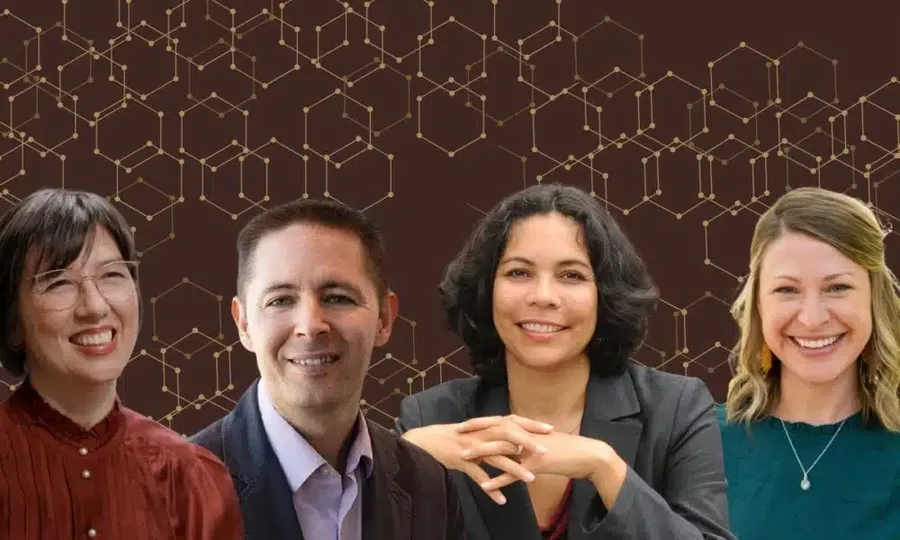
On June 1, 2026, the International Brain Initiative (IBI) and the World Women in Neuroscience (WWN) hosted the second session of the event series, NeuroFuture: Conversations on Women Advancing Neuroscience Worldwide, on brain, technology, and ethics. The webinar featured panelists Drs. Jennifer A. Chandler (University of Ottawa, Canada), Laura Y. Cabrera (Pennsylvania State University, USA), […] …
Essay I explores brain machine interface technologies. These make direct communication between the brain and a machine possible by means of electrical stimuli. This essay reviews the existing and emerging technologies in this field and offers an inquiry into the ethical problems that are likely to emerge. Essay II, co-written with professor Sven-Ove Hansson, presents a novel procedure to engage t…
First Page
1121
Recommended Citation
John M. Conley & Rami Major,
Overview: Neuroscience and the Law,
104
N.C. L. Rev.
1121
(2026).
Available at:
https://scholarship.law.unc.edu/nclr/vol104/iss5/2
1121
John M. Conley & Rami Major,
Overview: Neuroscience and the Law,
104
N.C. L. Rev.
1121
(2026).
Available at:
https://scholarship.law.unc.edu/nclr/vol104/iss5/2
“Engaging multi-perspective groups in neurotechnology discovery, innovation, and research fosters ethical problem solving, epistemic justice, governance implementation… and cultural sensitivity and reflexivity.” — Karen Rommelfanger The post How Georgia Tech’s Institute for Neuroscience, Neurotechnology, and Society is integrating lived experience into research and education appeared first on Civ…
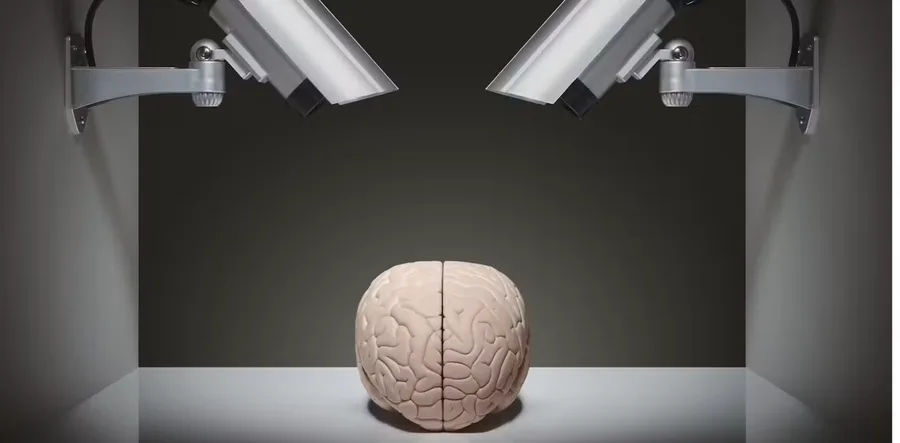
(Politico) – A battle is looming not just over privacy, but the future of the human species. Ownership of extensive neural data can be used to do anything from serve extremely targeted ads to surveil or manipulate consumers’ behavior. The … Read More


 research.io