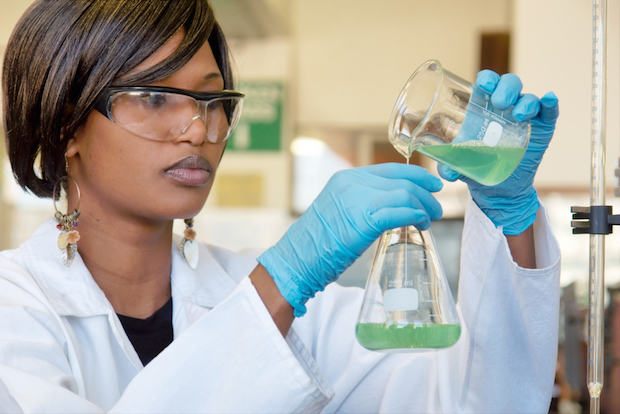
A sleepless night severely impairs your ability to form new memories. But a recent study shows that a 20-minute workout or a 90-minute nap can both protect memory after sleep loss, using completely different brain mechanisms.
I'm interested in whether the scale of processes that occur in the brain is small enough to be affected by quantum mechanics. For instance, we ignore quantum mechanics when we analyze a game of tennis because a tennis ball is much too large to be affected by quantum mechanics. However, signals in the brain are mostly (all?) electrical, carried by electrons, and electrons are definitely 'small' en…
Key Takeaways The gap is ten orders of magnitude, not a close call. Tegmark’s 2000 calculation puts a superposition inside a microtubule at ten to the minus thirteen seconds and one across a neuron at ten to the minus twenty. Neurons work on timescales between a ten thousandth of a second and a second. The […]
Mainstream theories of consciousness largely address what Chalmers calls the easy problems and do not explain, from first principles, why a complete third-person description cannot recover first-person experience. Starting from three axioms (finite resources, non-equilibrium persistence, and discrete input) and arguing by eliminative convergence, this paper forms an Information Capacity Frame and…
We present a unified framework for resolving the Hard Problem of Consciousness using
the Ibaguner Fractal Operator (IFO). The Hard Problem asks how physical matter (neurons,
synapses, electrochemical signals) gives rise to subjective experience (qualia). We reformulate this as a resonance-completion problem. The IFO combines an expansive hyperbolic sum (objective neural computation) with a confin…
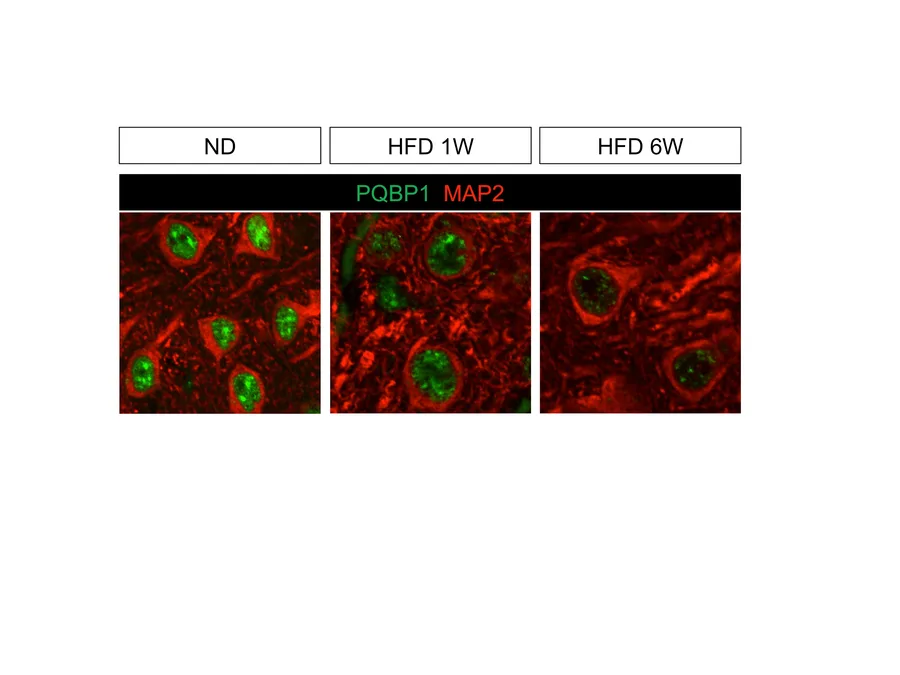
The study revealed that the high-calorie-diet-induced decrease of PQBP1 inhibits the RNA splicing of synapse-related molecules to cause abnormalities in synapse-related proteins and ultimately leading to a reduction in synapse numbers and functional impairment.
A longitudinal study reveals that playing fast-paced action games and turn-based strategy games can enhance memory and attention. Brain scans indicate that action games lead to stronger and longer-lasting structural changes in the brain’s neural networks.
For centuries, Japanese homes have used tatami flooring to create quiet, simple living spaces. Now scientists are studying whether the natural material covering traditional tatami mats may do more than give a room its familiar look and smell. Researchers at Kyushu University found that sitting on mats made from Japanese Igusa, also known as rush […] The post Traditional Japanese Mats May Improve …
AI reveals a striking two-speed cleanup system that helps the sleeping brain clear away harmful waste. During deep sleep, a waterlike fluid moves through and around the brain, helping remove metabolic waste associated with disorders including Alzheimer’s disease. This cleanup process is known as the glymphatic system. It was first described in 2012 by Maiken [...]
Nature Communications, Published online: 12 September 2026; doi:10.1038/s41467-026-76876-8 Oxytocin receptor signaling in the nucleus accumbens supports pair bonding, but its role in attachment-related neural activity is unclear. Here, the authors show that Oxtr loss sex-specifically alters pair bonding and nucleus accumbens activity in prairie voles; in males, early activity predicts partner pre…
A new UCLA study has found a connection between how quickly the brain ages and the bacteria and chemical byproducts found in the gut, offering a clue to what drives brain aging long before symptoms appear. Researchers have long used brain scans to estimate a person’s “brain age,” a measure that can differ from someone’s […]
People with autism often come at life from a different angle—seeing details others miss, focusing on patterns rather than faces, experiencing heightened or dimmed physical sensations. Although researchers have tracked some of the many ways the neurodevelopmental disorder alters perception of the world, the precise brain mechanisms involved remain obscure, says Boston University researcher Benjami…
The brain is a black box of densely packed neurons, blood vessels and immune cells, all locked away in a sealed skull. Washington University in St. Louis’ Song Hu has dedicated his career to unlocking that puzzle box by developing new ways to “see” inside, and his team’s newest innovation could give researchers a new view of how brain cells and blood vessels work together and what happens when th…


 research.io