ecology-and-vegetation-dynamics-studies

Around 58 of Indonesia's Tapanuli orangutans were crushed or buried alive by landslides brought on by the climate-change-fueled Cyclone Senyar.

Among the strangest animals in the ocean, this rarely seen shark has long remained out of reach. New observations have finally brought it into view.

In a vast underwater region rarely seen by human eyes, scientists used new technology to investigate species that have long escaped close observation.

Scientists have calculated the staggering extent of underground fungal networks to be 700 million times the distance from Earth to the Sun. The research, conducted by the Society for the Protection of Underground Networks (Spun) and published in the journal Science, mapped what is often called the "wood wide web" – the hidden fungal systems linking plant roots across the globe. They revealed the …
Ecological restoration can effectively boost soil fertility and microbial activity in degraded ecosystems. Yet, its impact on the relationship between soil-specific enzyme activity (SSEA) and microbial necromass carbon in barren sandy soils is still poorly understood. Therefore, we aimed to analyze the effects of ecological restoration on the SSEA per unit of soil organic carbon (SOCE) and SSEA p…
IntroductionSoil microbial communities play a central role in material cycling and energy transformation within grassland ecosystems. Alterations in their community structure, diversity, and function directly influence soil ecological functions and ecosystem stability. Global warming exerts persistent environmental pressure on soil microbial communities by modifying soil water and thermal conditi…
Colon cancer (CC) exhibits substantial heterogeneity between right-sided colon cancer (RCC) and left-sided colon cancer (LCC) in terms of embryological origin, molecular characteristics, immune microenvironment, and therapeutic response. Increasing evidence suggests that spatial heterogeneity of the gut microbiota may contribute to these site-specific differences through interactions with local i…
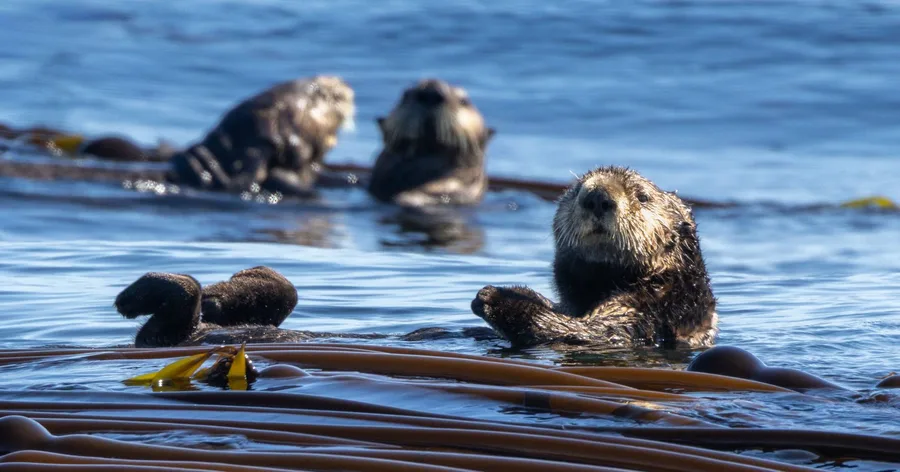
Cardiff: I still remember my first otter sighting, on a bog in the mid-90s. This, in a lab on a stainless steel table, is something else Otter No 4,888 was found at the side of the road near the River Cefni on Anglesey in November 2024. The collector froze her body and sent it, as every dead otter in the UK should be , to Cardiff University’s Otter Project for a postmortem. The vast majority of t…

More than 20,000 votes cast in Butterfly Conservation’s poll of 60 native species to find nation’s favourite for first time The votes are in on Britain’s favourite butterfly, and it is one of the most ubiquitous yet spectacular backyard beauties that has flown to victory. With its lavender, yellow and maroon eye spots and luscious rusty red and black colouration, the peacock butterfly is both bea…

When grandparents help raise their grandchildren, who decides how much care to provide? A new study tracking thousands of older couples reveals that the grandmother's physical and mental health ultimately dictates the caregiving schedule for both partners.
A new map of global mycorrhizal fungi details the massive scope of the vital systems The post Hidden Fungal Networks Could Stretch from the Earth to the Sun a Billion Times Over appeared first on Nautilus .
New research shows that wildlife reacts differently to human presence than to human-made landscapes. For centuries, people have transformed landscapes, forcing wildlife to adjust to a rapidly changing world. New research suggests that animals are not only responding to altered habitats, but also to the direct presence of humans. Researchers from UC Santa Barbara, the [...]

Hundreds of camera-trap records from Bolivia and Peru suggest the short-eared dog (Atelocynus microtis), one of the world’s least-known canids and one of Latin America’s least-known carnivores, may be thriving in intact upland forests. The post Amazon’s Elusive Short-Eared Dog May Be More Common than Researchers Once Thought appeared first on Sci.News: Breaking Science News .
Chronic wasting disease (CWD) is generally associated with animals. But a new study by researchers from the University of Calgary and international collaborators explored the potential for CWD to spread from deer, elk and other cervid (hooved, plant-eating) animals to other species.
Our soils are teeming with networks of fungi, and we're starting to understand how important they are
research.ioSign up to keep scrolling
Create your feed subscriptions, save articles, keep scrolling.