From sleepless nights and overheated homes to disrupted work and caring responsibilities, we want to hear how the extreme heat is affecting your daily life Temperatures are soaring across Europe, with forecasters warning that June heat records could be broken this week. Temperatures are set to reach 44C in some areas and authorities warning of risks to health, travel and public services. How are …
How Saudi Arabia’s state-owned oil giant is embedding fossil fuels as a crucial part of the world’s biggest sport If you have watched the World Cup, you may have seen the big signs announcing Aramco as the tournament’s “energy partner”. This Saudi Arabian fossil fuel company also happens to be the world’s single largest corporate polluter while Saudi Arabia has, for decades, been the greatest stu…
Rail services, schools and sports events hit, with deaths of three elderly people in France partly blamed on intense heat Western Europe is enduring a ferocious heatwave forecast to break temperature records, with half of France on red alert, rail services in Belgium disrupted and sports events in Spain and Germany cancelled or postponed. French authorities on Monday placed 49 of the country’s 96…
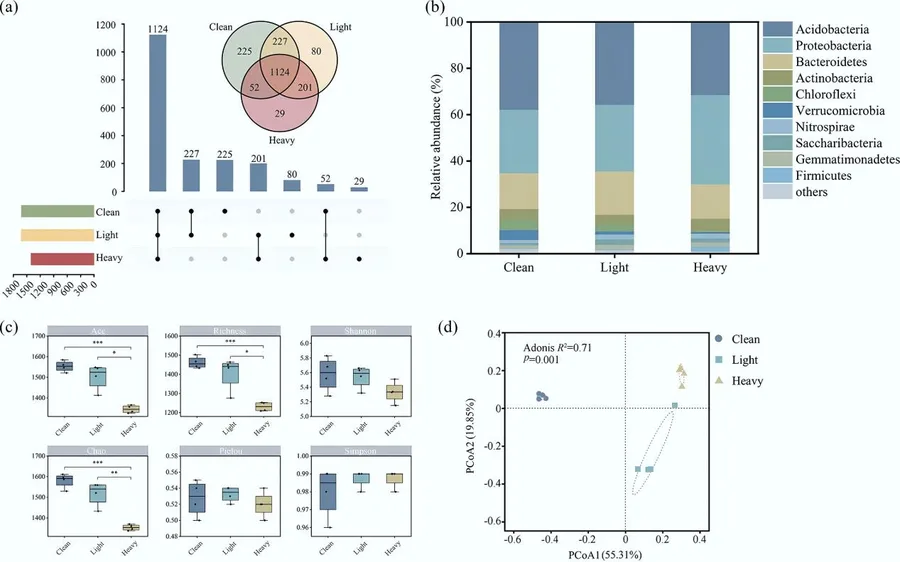
A research team has found that arsenic-contaminated soils around a typical shut-down brick kiln in Anhui, China, show clear shifts in bacterial diversity, community structure, metabolic pathways, and detoxification genes.
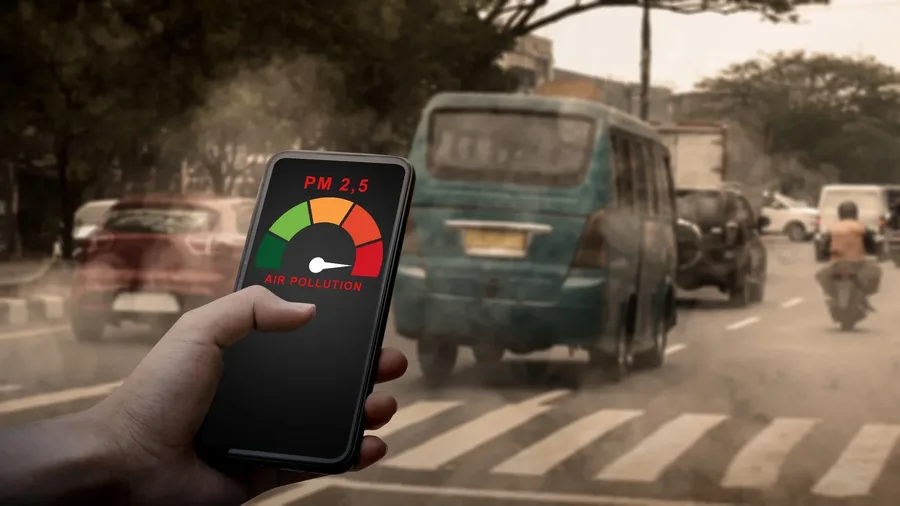
A natural quasi-experiment in Suba, Bogotá, found that more stringent COVID-19 mobility restrictions were associated with larger reductions in PM₁₀ and PM₂.₅ air pollution. The findings suggest targeted traffic and emissions controls could improve urban air quality, although ozone responses were more complex, and the results may not generalize beyond this high-traffic district.
Plastic products are part of daily life for most people. We store food in plastic containers, use cosmetics packaged in plastic, and rely on many medical and household products made from plastic materials. Because these products are so common, few people think about the chemicals they may contain. However, a new study suggests that some […] The post Everyday Plastics May Cause Heart Disease Death…
Every year, people around the world drink enormous amounts of coffee, leaving behind more than 10 million tons of used coffee grounds. Most of this waste ends up in landfills or is burned, contributing to greenhouse gas emissions and environmental pollution. However, used coffee grounds contain a significant amount of energy. The problem is that […] The post Scientists turn wet coffee grounds int…
Scientific Reports, Published online: 20 June 2026; doi:10.1038/s41598-026-57469-3 Environmental sustainability in Somalia: the role of clean cooking energy and remittances on ecological footprints
Microplastics are everywhere. They are tiny pieces of plastic that form when larger plastic items, such as bottles, food containers, plastic bags, and packaging materials, slowly break down over time. These particles are so small that people often cannot see them with the naked eye. Scientists have found microplastics in rivers, oceans, soil, drinking water, […] The post Tiny Plastic Particles Co…
Lanchester Wines in north-east England uses heat from a disused coalmine to maintain wine temperatures and with 23,000 flooded mines in the UK, there’s huge potential for more businesses and homes to follow its lead Shove them in a fridge, stash them in a cellar – this is how most people store their favourite bottles of wine. But if you have warehouses full of thousands of vintages, you have to t…
Scientific Reports, Published online: 20 June 2026; doi:10.1038/s41598-026-59084-8 Efficiency of a microplastic removal system from synthetic wastewater using a chemical process combined with simple filtration
Microplastics – tiny bits of degraded polymers that are ubiquitous in our air, water and soil – have lodged themselves throughout the human body, including the liver, kidney, placenta and testes, over the past half century. Now, University of New Mexico Health Sciences researchers have found microplastics in human brains, and at much higher concentrations […]
ABSTRACT Recent advances in additive‐assisted plastic biodegradation have revealed multiple pathways—oxidative, hydrolytic, enzymatic, and microbial—that accelerate polymer breakdown in environmental conditions. Innovations in pro‐oxidant, hydrolysis‐promoting, microbial nutrient, enzyme‐releasing, and surface‐activating additives have expanded the toolkit for enhancing polymer degradation throug…












 research.io