Sean Carroll

Heilborn Lectures, Northwestern April 22 - April 24 Three lectures at Northwestern University: - Physics seminar, “Explaining the Arrow of Time,” Weds 4/22, 4pm, Tech L211 - Physics seminar, “Extracting the Universe from the Wave Function,” Thurs 4/23, 2pm, Tech L211 - Public lecture, “The Many Worlds of Quantum Mechanics,” Fri 4/24, 4pm, Ryan Auditorium, Technological Institute

physicsquantum-physics

There is something special about gravity. After decades of effort, there is still no convergence on the right way to reconcile Einstein's theory of general relativity with the framework of quantum mechanics. But a number of intriguing ideas have arisen along the way, including black hole radiation, the wave function of the universe, the AdS/CFT correspondence, and the role of quantum information …

physicsquantum-physics

"Lamarkism" is a term often attached to a seemingly discredited idea in evolutionary biology: that one organism could acquire characteristics (e.g., becoming stronger through exercise) that would then be inherited by its descendants. This is a different story than the one ultimately told by the modern synthesis of evolutionary biology, according to which inheritance passes through our genome (whi…

biologyevolution

Intelligence is a many splendored thing, especially when it comes to comparisons between species. Chimpanzees are better than humans at some numerical tasks, but less good at understanding what numbers actually mean. One window on the ways that species differ is how they play amongst themselves. I talk with anthropologist and cognitive scientist Erica Cartmill about modes of play and other social…

biologycognitive-neuroscience

Behaving rationally involves facing up to conditions of uncertainty; we never navigate the world with perfect confidence. Sometimes we are uncertain about the way the world is, but we can also be uncertain about our place within the world. This kind of situation arises in cosmology (where the relevant world can extend very far in space or time), and also in quantum mechanics (where new worlds mig…

astronomycosmologyphilosophyphilosophy-of-science

It's possible to look at the course of history over the past few centuries and discern a movement toward increasing democracy, freedom, and individual rights -- "liberalism," in the political-philosophy sense of the term. But such movement isn't inevitable or irreversible, and in very recent times there have been both intellectual arguments explicitly pushing back against the liberal consensus, a…

philosophypolitical-philosophy

At any given moment, an uncountable number of events are happening, but only some of them matter to us. What does it mean for something to matter, and more importantly, what does it mean for us to matter -- to ourselves as well as to others? The need to matter can be motivation to do great things, but it can also be a reason for people to come into conflict. Philosopher/novelist Rebecca Newberger…

philosophyphilosophy-of-mind

It's become increasingly clear that the Turing Test -- determining whether human interlocutors can tell whether a conversation is being carried out by a human or a machine -- is not a good way to think about consciousness. Modern LLMs can mimic human conversation with extraordinary verisimilitude, but most people would not judge them to be conscious. What would it take? Is it even possible for a …

philosophyphilosophy-of-mind

- Local Institutions - University of Chicago Physics - U of C Astronomy and Astrophysics - Enrico Fermi Institute (UofC) - Center for Cosmological Physics (UofC) - Particle Theory Group (UofC) - Fermilab - Fermilab Theoretical Physics Group - Fermilab Theoretical Astrophysics Group - Argonne Theoretical High Energy Group - Northwestern Physics and Astronomy - Northwestern High-Energy Theory - Mid…

astronomycosmologyparticle-physicsphysics

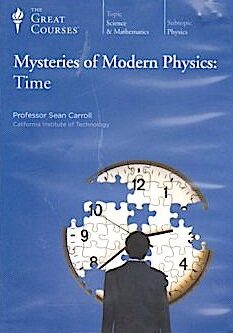
Mysteries of Modern Physics: Time Mysteries of Modern Physics -- Time is a set of 24 half-hour lectures, available on DVD or audio from The Great Courses. See also my other courses: Dark Matter, Dark Energy, and The Higgs Boson and Beyond. Buy it: The Great Courses These are a series of twenty-four professionally produced pedagogical lectures on DVD or audio-only, discussing how scientists think …

physicsrelativity

Anthony Bartolotta, Sean Carroll, Stefan Leichenauer, and Jason Pollack, 2015 arxiv:1508.02421 [cond-mat.stat-mech] Abstract: We derive a generalization of the Second Law of Thermodynamics that uses Bayesian updates to explicitly incorporate the effects of a measurement of a system at some point in its evolution. By allowing an experimenter’s knowledge to be updated by the measurement process, th…

physicsthermodynamics

Sean Carroll, California Institute of Technology The Blackwell Companion to Science and Christianity, ed. James B. Stump and Alan G. Padgett, forthcoming. “In the beginning, God created the heavens and the earth.” In many religious traditions, one of the standard roles of the deity has been to create the universe. The first line of the Bible, Genesis 1:1, is a plain statement of this role.[1] Muc…

philosophyreligion

Quantum Mechanics III (Physics 125c) Spring quarter, 2017 Announcements - Final exam for seniors and graduate students will be available at noon on Weds 6/7, due at noon on Fri 6/9. For non-senior undergraduates, the exam will be available at noon on Tues 6/13, due at noon on Thurs 6/15. Description Physics 125c is the third quarter of the upper-level undergraduate/graduate quantum mechanics sequ…

physicsquantum-physics

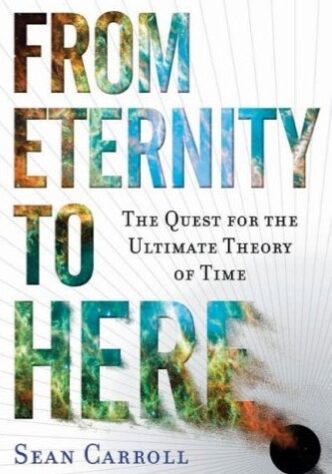
From Eternity to Here The Quest for the Ultimate Theory of Time From Eternity to Here is a popular-level book on cosmology and the arrow of time, published by Dutton in January, 2010. "For anyone who ever wondered about the nature of time and how it influences our universe, this book is a must read. It is beautifully written, lucid, and deep." -- Kip Thorne, Feynman Professor of Theoretical Physi…

astronomycosmology

This pie chart is a rather prosaic representation of a truly impressive accomplishment: an inventory of the relative amounts of the different substances comprising our universe. Yellow is ordinary matter — atoms, molecules, dust, stars, planets, both visible and invisible — or what cosmologists call “baryons” (since most of the mass of ordinary matter comes from the protons and neutrons inside at…

astronomycosmology

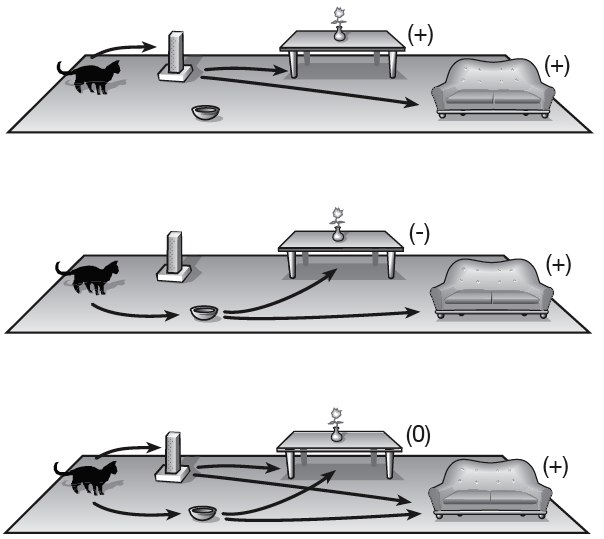
From Eternity to Here The Quest for the Ultimate Theory of Time Chapter 11, “Quantum Time” — Read as a PDF Sweet is by convention, bitter by convention, hot by convention, cold by convention, color by convention; in truth there are but atoms and the void. — Democritus[i] Many people who have sat through introductory physics courses in high school or college might disagree with the claim, “Newtoni…

physicsquantum-physics

General Relativity (Physics 364) Winter quarter, 2005 (black hole at the center of galaxy NGC 7052, from Astronomy Picture of the Day) Description Physics 364 is the graduate course in general relativity, Einstein’s theory of gravitation as the curvature of spacetime, a subject which has become an increasingly necessary part of the graduate curriculum. Aside from being a fundamental pillar of mod…

physicsrelativity

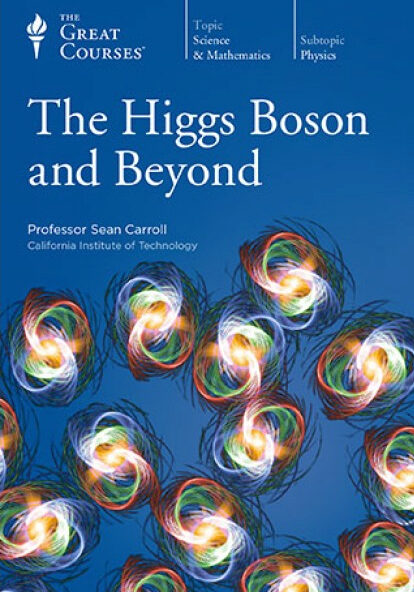
The Higgs Boson and Beyond The Dark Side of the Universe The Higgs Boson and Beyond is a set of 12 half-hour lectures, available on DVD from The Great Courses. See also my other courses: Mysteries of Modern Physics: Time, and Dark Matter, Dark Energy. Buy it: The Great Courses The search for, and ultimate discovery of, the Higgs boson is a triumph of modern physics—a global, half-century effort w…

particle-physicsphysics

Skip to content - Collections - Cosmology - “The Cosmological Parameters 2005,” Ofer Lahav and Andrew R Liddle, astro-ph/0601168 - “TASI Lectures: Cosmology for string theorists,” Sean Carroll, hep-th/0011110 - “TASI Lectures: Introduction to Cosmology,” Mark Trodden and Sean Carroll, astro-ph/0401547 - “Introduction to Cosmology,” David H Lyth, astro-ph/9312022 - “Cosmology at the Millennium,” M…

astronomycosmology

The Biggest Ideas in the Universe 2020 Video Series In Summer 2020, as the COVID-19 pandemic shut down the world, I had the idea of creating a series of informal videos explaining the main ideas of modern physics. I thought it would be useful to dig into the details just a bit, revealing the equations that really make physics go. The series ended up covering 24 topics, each with a followup Q&A vi…

physicsquantum-physics
research.ioresearch.io

Sign up to keep scrolling

Create your feed subscriptions, save articles, keep scrolling.

Already have an account?