OBC is delighted to introduce our Editor’s Choice collection! This collection showcases some of the best articles published in the journal, handpicked by our Associate Editors and Editorial Board members. This month we have a selection of recent OBC articles chosen by our Associate Editor Xiaohua Liu.   Meet the Editor   Xiaohua Liu obtained her BSc degree […]
OBC is delighted to introduce our Editor’s Choice collection! This collection showcases some of the best articles published in the journal, handpicked by our Associate Editors and Editorial Board members. This month we have a selection of recent OBC articles chosen by our Associate Editor Jeroen Dickschat. Meet the Editor Jeroen S. Dickschat studied Chemistry at TU Braunschweig […]
We are delighted to welcome our new Associate Editor, Professor Shigeki Matsunaga to the Organic & Biomolecular Chemistry Editorial Board!
Shigeki Matsunaga received his BSc (1998), MS (2000), and PhD (2003) under the supervision of Professor Masakatsu Shibasaki from the University of Tokyo, Japan. He started his academic career in 2001 as an Associate Professor at the University of Tokyo and was…
We are delighted to welcome our new Associate Editor, Professor Jeroen Dickschat to the Organic & Biomolecular Chemistry Editorial Board!
Jeroen S. Dickschat studied Chemistry at TU Braunschweig and obtained his PhD under the supervision of Stefan Schulz in 2004, followed by postdoctoral stays with Rolf Müller at Saarland University and with Peter Leadlay at the University of Cambridge (UK). In 2…
We are delighted to welcome our new Associate Editor, Professor Huan Wang to the Organic & Biomolecular Chemistry Editorial Board!
Professor Wang graduated from Peking University (2005). He obtained his PhD from University of Maryland at College Park (2010), and conducted post-doctoral research work at University of Illinois at Urbana-Champaign (2010-2014). Wang started at Nanjing University in 2…
Call For Papers: Chemoenzymatic Synthesis
Guest edited by Hiroki Oguri, Hongzhi Cao & Suvarn Kulkarni
We are delighted to announce a call for papers for our latest online themed collection in Organic & Biomolecular Chemistry on Chemoenzymatic Synthesis guest edited by Professor Hiroki Oguri (University of Tokyo, Japan), Professor Hongzhi Cao (Ocean University of China, China) and Professor Suvarn…
2023 marks twenty of Organic & Biomolecular Chemistry publications. As part of the celebrations, OBC has invited some of the most prominent authors across our history to give their thoughts on the last twenty years of their career alongside their predictions for the next two decades.
The next entry to the series comes from Professor Peter Langer at the University of Rostock who first published wi…
We are delighted to welcome our new Associate Editor, Dr Cristina Trujillo to the Organic & Biomolecular Editorial Board! Dr Cristina Trujillo is a Lecturer in Computational & Theoretical Chemistry at The University of Manchester. She has expertise in highly fundamental topics within Computational Organic Chemistry such as asymmetric catalysis, computationally-led catalysis design, mechan…
In this month’s Editor’s Collection, Associate Editor Santanu Mukherjee highlighted ‘Beyond osmium: progress in 1,2-aminooxygenation of alkenes, 1,3-dienes, alkynes,and allenes’ by Brett N. Hemric as one of his personal favourite recent Organic & Biomolecular Chemistry articles. Here, we catch up with Brett to find out a little bit more about his research.
In this month’s Editor’s Collection, Associate Editor Lei Liu highlighted ‘DNAzymes for amine and peptide lysine acylation’ by Yao, Przybyla, Silverman et al. as one of his personal favourite recent Organic & Biomolecular Chemistry articles. Here, we catch up with some of the authors to find out a little bit more about their research.
In this month's Editor's Collection, Associate Editor Xiaohua Liu highlighted 'Chemoselective Activation of Ethyl vs Phenyl Thioglycosides: One-pot Synthesis of Oligosaccharides' by Mc Carthy and Zhu as one of her personal favourite recent Organic & Biomolecular Chemistry articles. Here, we catch up with the authors to find out a little bit more about their research
In this month's Editor's Collection, Associate Editor Christian Hackenberger highlighted 'The curious yellow colouring matter of the Iceland poppy' by Jonathan Sperry and Rory Devlin as one of his personal favourite recent Organic & Biomolecular Chemistry articles. Here, we catch up with the authors to find out a little bit more about their interest and research in the area
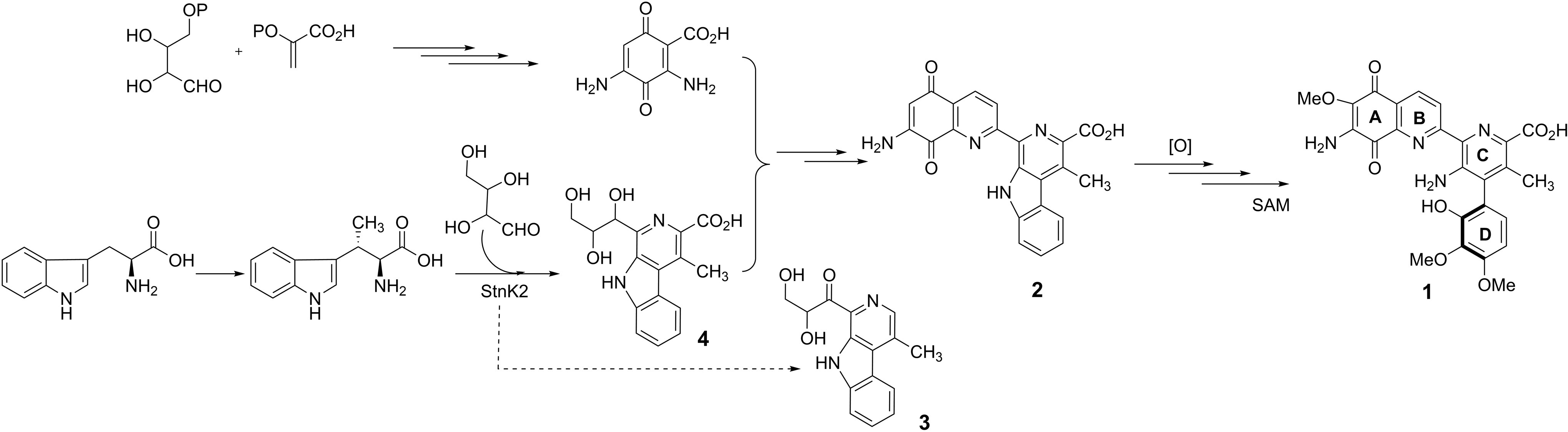
Nature is unrivaled in its ability to produce structurally complex molecules with high biological potency. Natural products have been used medicinally for centuries and have provided a profitable source of potential drug leads. Developing efficient strategies for their total synthesis, as well as the production of analogues, has always been challenging. In a recent OBC publication, Professor […]
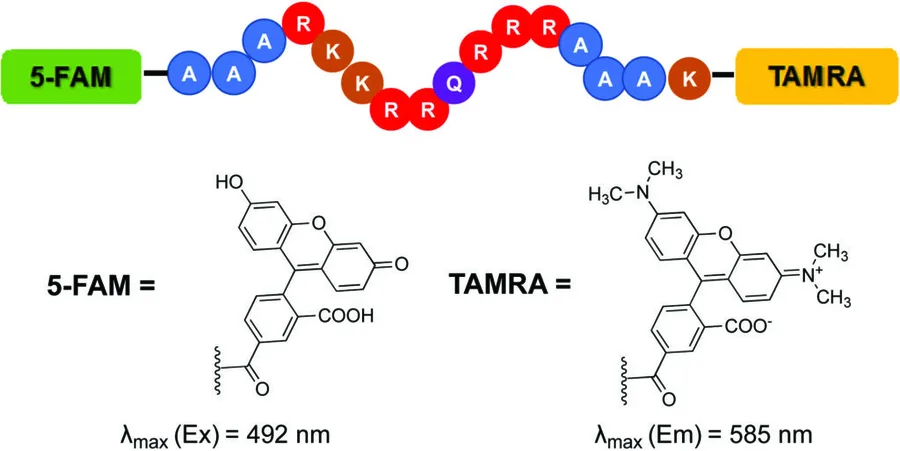
Recent advances in our understanding of RNA have expanded its role beyond just a carrier of genetic information. Modern views of RNA encompass a diverse range of molecules, which play a central role in modulating a number of important biological processes, including the progression of various cancers and nontumorigenic diseases. In her recent OBC publication, […]
Developing efficient crop fertilisation has become an ever-growing concern given the increasing demand for global food production. Slow-release fertilisers have been developed as a strategy to increase the efficiency of crop production while minimizing nutrient waste, reducing negative environmental impacts and enhancing crop yield. Mechanisms for controlled nutrient diffusion include semi-solubl…
The risks associated with excessive exposure to ultraviolet (UV) radiation are well studied and many national healthcare initiatives have been pushing for large-scale sun protection programs. Despite this drive for a broader public awareness, recent studies have disclosed that skin cancers, such as melanoma, basal cell carcinoma, and squamous cell carcinoma, have become the most […]
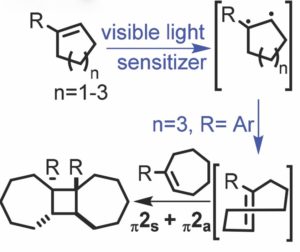
The cyclobutane ring is a unique structural element found in a wide variety of biologically active natural products and synthetic molecules. Although cyclobutanes have been known for centuries, as a result of inherent ring strain, their application in synthesis has only become more popular in the last 40-50 years. The photochemical [2+2] cycloaddition of alkenes […]
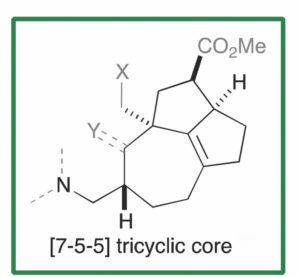
To date, more than 320 new alkaloids have been isolated from the evergreen plants of the Daphniphyllum genus. In ancient times, extracts of the bark and leaves of Daphniphyllum plants were used in Chinese herbal medicines to cure minor ailments and treat pain. Recent studies have discerned that the Daphniphyllum class of alkaloid displays significant […]












 research.io