The effect varies for different people. Take a moment and look at this. Some people don’t see anything special: just a blue iris in a red eye. For me though, there is an incredibly strong depth illusion – the blue and the red appear as if they are at different distances. I can enhance the effect by blinking rapidly, turning the brightness up on my screen and viewing in a dark room. Sometimes it d…
Mind Hacks
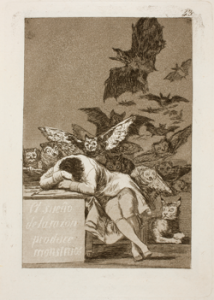
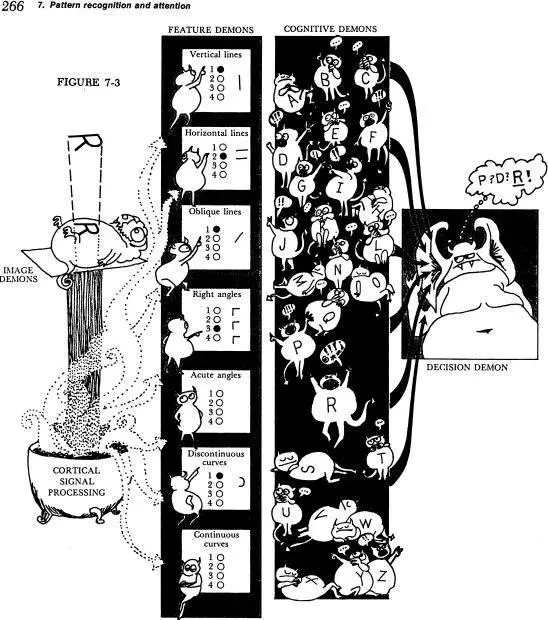
Oliver Selfridge was an early pioneer of artificial intelligence, and in 1959 wrote a classic paper outlining a system by which simple units, each carrying out a specialised function, could be connected together to perform complex, cognitive tasks. This ‘pandemonium architecture‘ inspired research in neural networks, which in turn led to modern machine learning about which we hear so much these d…
aimachine-learning
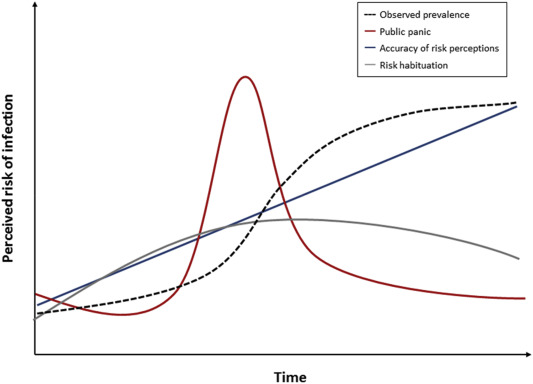
The Guardian recently published an article saying “People won’t get ‘tired’ of social distancing – and it’s unscientific to suggest otherwise”. “Behavioural fatigue” the piece said, “has no basis in science”. ‘Behavioural fatigue’ became a hot topic because it was part of the UK Government’s justification for delaying the introduction of stricter public health measures. They quickly reversed this…
public-healthsocial-science
A project I’ve been working on a for a long time has just launched: By talking to the @ChoiceEngine twitter-bot you can navigate an essay about choice, complexity and the nature of our minds. Along the way I argue why the most famous experiment on the neuroscience of free will doesn’t really tell us much, and discuss the wasp which made Darwin lose his faith in a benevolent god. And there’s this …
This thread started by Ekaterina Damer has prompted many recommendations from psychologists on twitter. Here are most of the recommendations, with their recommender in brackets. I haven’t read these, but wanted to collate them in one place. Comments are open if you have your own suggestions. (Iris van Rooij) “How does it work?” vs. “What are the laws?” Two conceptions of psychological explanation…
behavioral-sciencecognitive-psychologypsychology

Open science essentials in 2 minutes, part 4 Before a research article is published in a journal you can make it freely available for anyone to read. You could do this on your own website, but you can also do it on a preprint server, such as psyarxiv.com, where other researchers also share their preprints, which is supported by the OSF so will be around for a while, and which allows you to find o…
I have a guest post for the Research Digest, snappily titled ‘People who think their opinions are superior to others are most prone to overestimating their relevant knowledge and ignoring chances to learn more‘. The paper I review is about the so-called “belief superiority” effect, which is defined by thinking that your views are better than other people’s (i.e. not just that you are right, but t…
cognitive-psychologypsychology
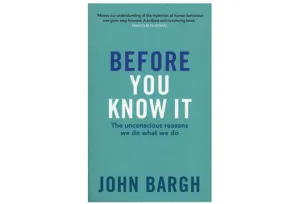
I have a review of John Bargh’s new book “Before You Know It: The Unconscious Reasons We Do What We Do” in this month’s Psychologist magazine. You can read the review in print (or online here) but the magazine could only fit in 250 words, and I originally wrote closer to 700. I’ll put the full, unedited, review below at the end of this post. John Bargh is one of the world’s most celebrated social…
psychologysocial-psychology
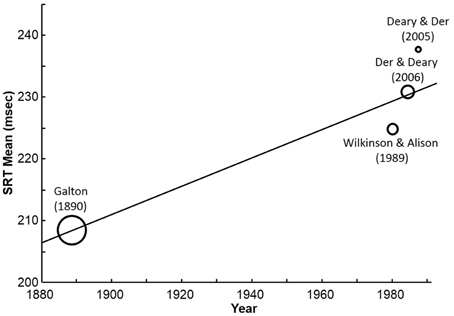
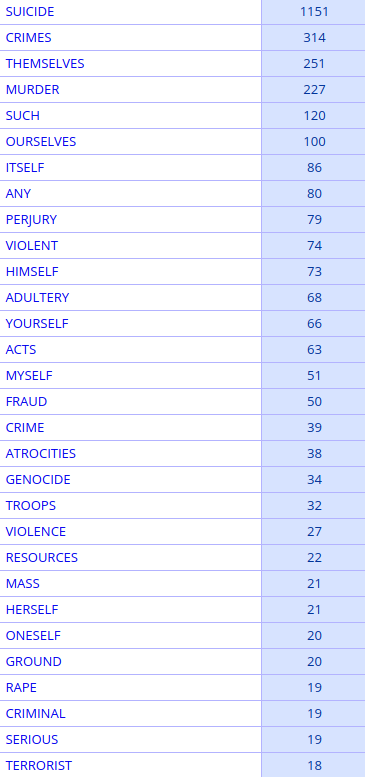
Psychologists have been measuring reaction times since before psychology existed, and they are still a staple of cognitive psychology experiments today. Typically psychologists look for a difference in the time it takes participants to respond to stimuli under different conditions as evidence of differences in how cognitive processing occurs in those conditions. Galton, the famous eugenicist and …
cognitive-psychologypsychology
Spaced repetition is a memory hack. We know that spacing out your study is more effective than cramming, but using an app you can tailor your own spaced repetition schedule, allowing you to efficiently create reliable memories for any material you like. Michael Nielsen, has a nice thread on his use of spaced repetition on twitter: He covers how he chooses what to put into his review system, what …
educationlearning-science
The contrast sensitivity function shows how our sensitivity to contrasts is affected by spatial frequency. You can test it using gratings of alternating light and darker shade. Ian Goodfellow has this neat observation: By looking at this image, you can see how sensitive your own eyes are to contrast at different frequencies (taller apparent peaks=more … Continue reading "A graph that is made by p…
Nicky Case (of Explorable Explanations and Parable of the Polygons internet fame) has a fantastic essay which picks up on the theme of my last Cyberselves post – technology as companion, not competitor. In How To Become A Centaur Case gives blitz history of AI, and of its lesser known cousin IA – Intelligence Augmentation. … Continue reading "How To Become A Centaur"
aiai-ethicsmachine-learning
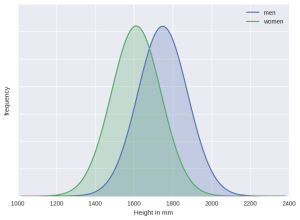
A talk I gave titled “Debating Sex Differences in Cognition: We Can Do Better” now has a home on the web. The pages align a rough transcript of the talk with the slides, for your browsing pleasure. Mindhacks.com readers will recognise many of the slides, which started their lives as blog posts. The full series … Continue reading "Debating Sex Differences: Talk transcript"
The backfire effect is when correcting misinformation hardens, rather than corrects, someone’s mistaken belief. It’s a relative of so called ‘attitude polarisation’ whereby people’s views on politically controversial topics can get more, not less, extreme when they are exposed to counter-arguments. The finding that misperception are hard to correct is not new – it fits … Continue reading "The bac…
cognitive-psychologypsychology
Open science essentials in 2 minutes, part 3 Let’s define it this way: reproducibility is when your experiment or data analysis can be reliably repeated. It isn’t replicability, which we can define as reproducing an experiment and subsequent analysis and getting qualitatively similar results with the new data. (These aren’t universally accepted definitions, but they … Continue reading "Open Scien…
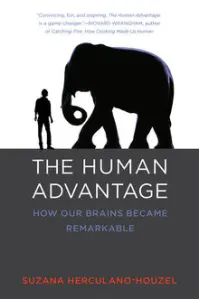
In ‘The Human Advantage: How Our Brains Became Remarkable’, Suzana Herculano-Houzel weaves together two stories: the story of her scientific career, based on her invention of a new technique for counting the number of brain cells in an entire brain, and the story of human brain evolution. Previously counts of neurons in brains of humans … Continue reading "The Human Advantage"
cognitive-neuroscienceneurogeneticsneuroscience

A review called ‘The Psychology of Conspiracy Theories‘ sets out a theory of why individuals end up believing Elvis is alive, NASA faked the moon landings or 9/11 was an inside job. Karen Douglas and colleagues suggest: Belief in conspiracy theories appears to be driven by motives that can be characterized as epistemic (understanding one’s … Continue reading "Conspiracy theories as maladaptive co…
cognitive-psychologypsychology
We’re happy to announce the re-launch of our project ‘Cyberselves: How Immersive Technologies Will Impact Our Future Selves’. Straight out of Sheffield Robotics, the project aims to explore the effects of technology like robot avatars, virtual reality, AI servants and other tech which alters your perception or ability to act. We’re interested in work, play … Continue reading "Cyberselves: How Imm…
aitechnologyvirtual-reality
The Kardashian index is a semi-humorous metric invented to the reveal how much trust you should put in a scientist with a public image. In ‘The Kardashian index: a measure of discrepant social media profile for scientists‘, the author writes: I am concerned that phenomena similar to that of Kim Kardashian may also exist … Continue reading "Scientific Credibility and The Kardashian Index"
Open science essentials in 2 minutes, part 2 The Open Science Framework (osf.io) is a website designed for the complete life-cycle of your research project – designing projects; collaborating; collecting, storing and sharing data; sharing analysis scripts, stimuli, results and publishing results. You can read more about the rationale for the site here. Open Science … Continue reading "Open Scienc…
edtecheducation
research.ioSign up to keep scrolling
Create your feed subscriptions, save articles, keep scrolling.
Already have an account?