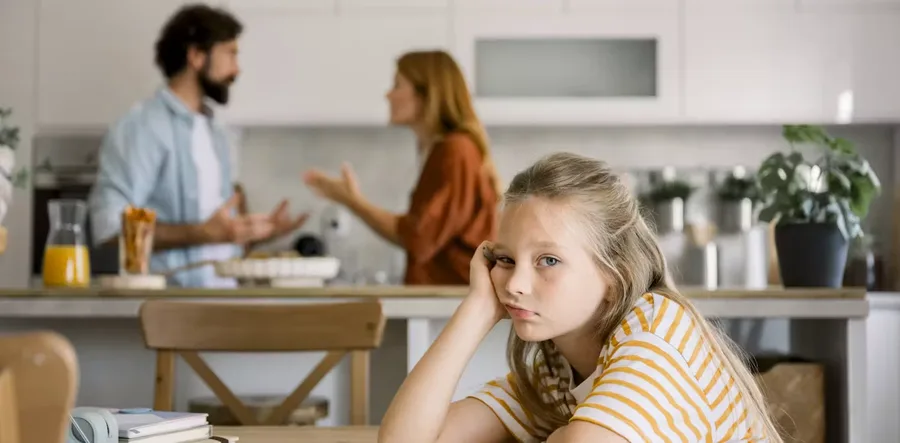
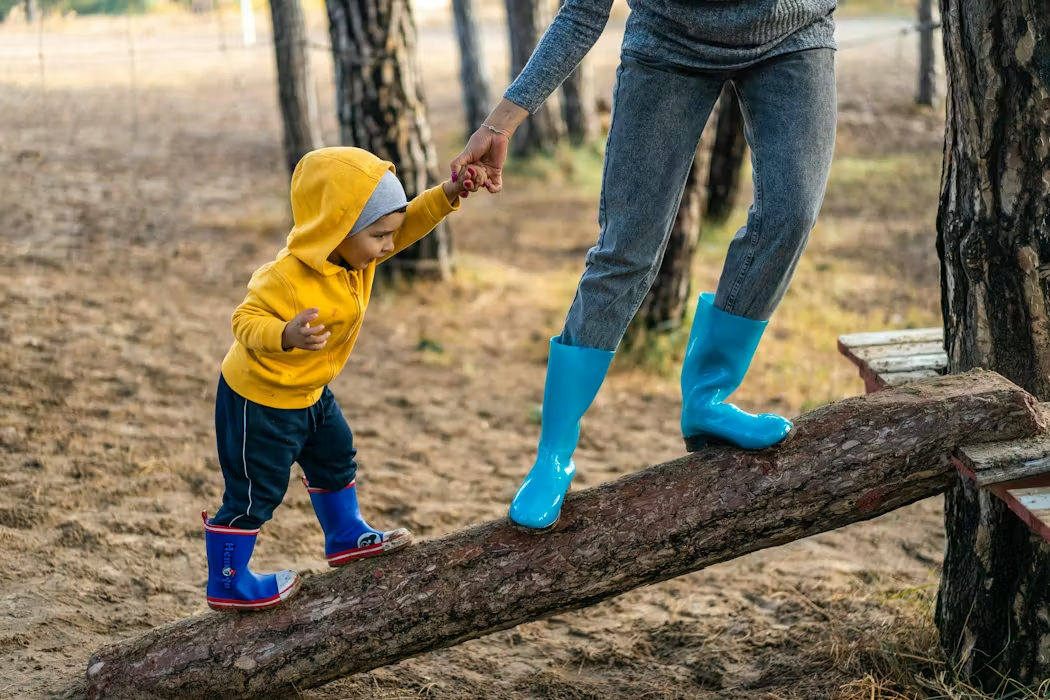
Observing how grown-ups operate provides children with information on how they can shape their worlds to get what they want and avoid what they don’t want.
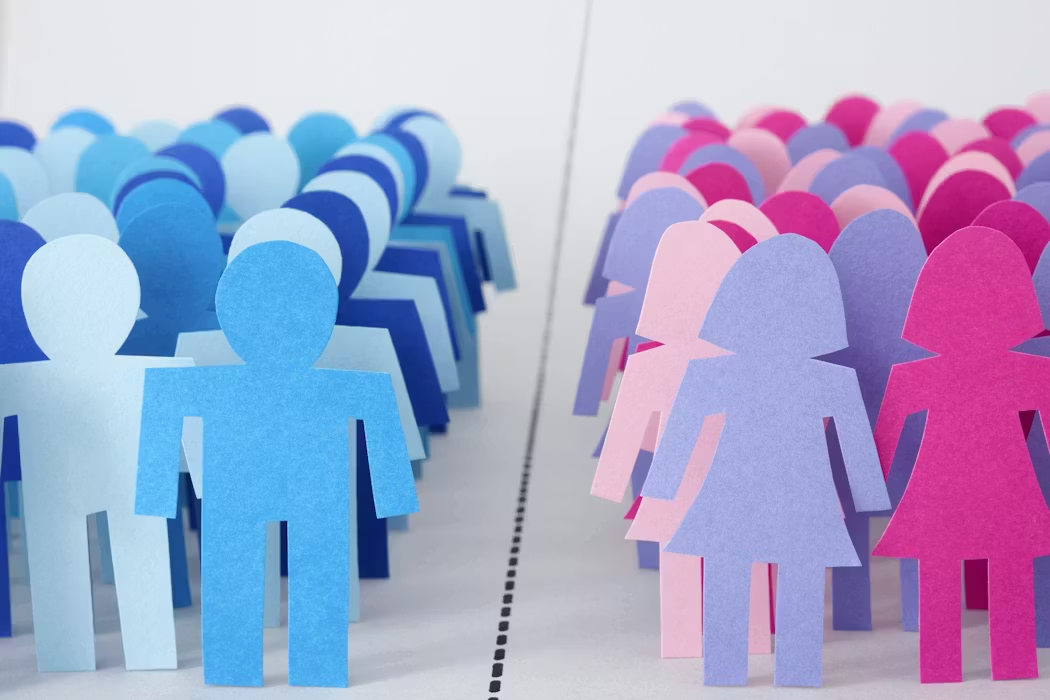
Many people have felt the subtle pressure to be “man enough” or “woman enough” in the eyes of others. And research has shown this pressure can have personal and social consequences.
When men feel their manhood is challenged, they can respond with compensatory aggression and other harmful behaviors. When women step outside stereotypical femininity – or even just consider doing so – they often rece…
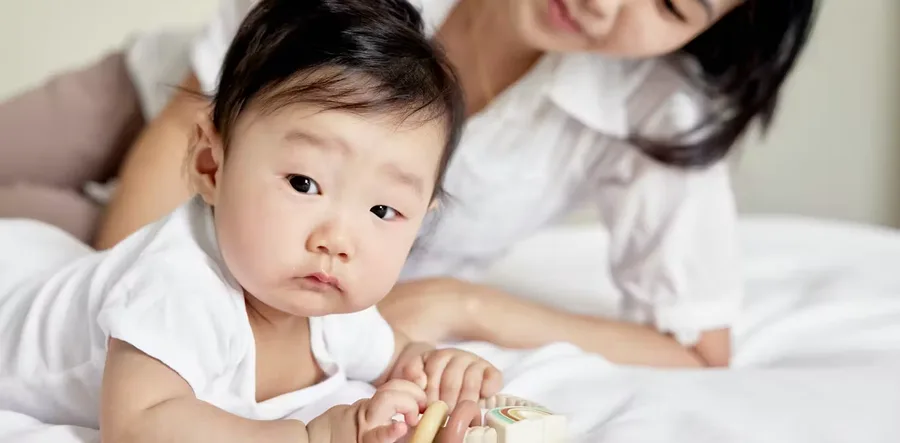
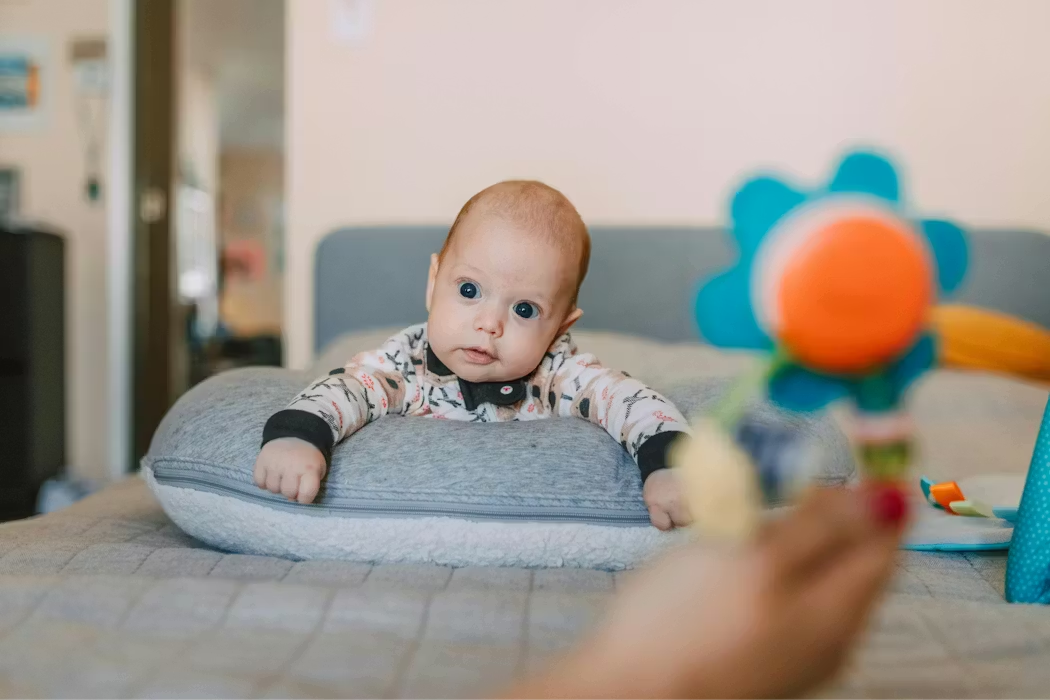
Anyone who has spent time with a baby knows how unpredictable the first year can feel. One week a baby suddenly seems to “get” something new. The next week, that same response may disappear.
Parents often describe this as progress coming in bursts rather than in a straight line. These changes can be exciting to watch, but they can also raise questions. Did my baby forget? Did something go wrong?
…
It happens in slow motion. Your six-year-old daughter is sprinting across the playground at school drop-off time when her toe catches on uneven ground. She goes down hard.
The playground goes silent. She freezes and looks up, straight at you. In that split second she scans your face for data. Should she be terrified?
I’ve been there. I’d like to tell you that my pain scientist brain kicks in imme…
Detroit is seeing declines in violent crime, but 33% more young people were victims of gun violence in the city so far in 2025 compared with the previous year, according to local police.
Mayor Mike Duggan and the Detroit Police Department responded by introducing the Summer Teen Safety Violence Prevention Plan in July 2025. As part of the plan, city leaders promised to increase curfew enforcement…
I’m in a coffee shop when a young child dumps out his mother’s bag in search of fruit snacks. The contents spill onto the table, bench and floor. It’s a chaotic – but functional – solution to the problem.
Children have a penchant for unconventional thinking that, at first glance, can look disordered. This kind of apparently chaotic behavior served as the inspiration for developmental psychologist…
Empathy is not just a “nice-to-have” soft skill – it is a foundation of how children and adults regulate emotions, build friendships and learn from one another.
Between the ages of 6 and 9, children begin shifting from being self-centered to noticing the emotions and perspectives of others. This makes early childhood one of the most important periods for developing empathy and other social-emotio…
As a professor of child development and family science, every year I witness college students heading home for the holidays after a few months of relative independence. Anecdotally, most students express excitement about returning home and say they’re looking forward to relaxing with family and friends.
However, it also can present a challenge for parents and their grown children. Parents may won…
You’ve probably seen the word mindfulness everywhere these days, from the news, to magazines, to social media.
Mindfulness is sometimes packaged as a mental health cure-all, and studies do suggest that mindfulness-based therapies support mental health. Your friends or family may even have told you that mindfulness has changed their lives.
But if you have tried mindfulness and feel like it isn’t w…
“Charlie” is an eight-year-old child with autism. Her parents are worried because she often responds to requests with insults, aggression and refusal. Simple demands, such as being asked to get dressed, can trigger an intense need to control the situation, fights and meltdowns.
Charlie’s parents find themselves in a constant cycle of conflict, trying to manage her and their own reactions, often u…
Michelle Cowley-Cunningham·...·Dublin City University
12/18/2023
As Christmas approaches, many children experience the “gimme-gimmes” and write a list of toys that they hope Santa will bring. This is to be expected. Toys give children a chance to learn and be curious, engage their imaginations in play and become socialised with others.
Unfortunately, 80% of all toys end up in landfills, incinerators or the ocean. The toy industry uses 40 tonnes of plastic for …
Imagine a sudden rustle in the tall grass. A ripple of alarm passes through the group of early humans who live together amid ancient, rugged terrain. In the center of the encampment, a 3-year-old child – let’s call her Raina – stumbles and falls, her eyes wide with fear.
Without hesitation, her mother sweeps her up into her protective arms, while her grandmother quickly gathers herbs and leaves t…
Margaret Echelbarger·...·Stony Brook University (The State University of New York)
7/12/2023
The Research Brief is a short take about interesting academic work.
The big idea
From expressing gratitude to surprising someone with a mug of hot chocolate on a cold day, adults tend to underestimate how positively others will respond to their random acts of kindness. I’m a behavioral scientist who teamed up with my research partner Nicholas Epley on research that showed how children and teens s…
If you could be one age for the rest of your life, what would it be?
Would you choose to be nine years old, absolved of life’s most tedious responsibilities, and instead able to spend your days playing with friends and practicing your times tables?
Or would you choose your early 20s, when time feels endless and the world is your oyster – with friends, travel, pubs and clubs beckoning?
Western cul…
Parents are dealing with huge demands on their time and energy. Children may not be attending school or involved in regular activities. As the pandemic continues to wreak havoc on families, routines have collapsed, patience is wearing thin and self-care is a distant memory.
Decades of research have taught us that adversity during childhood has damaging effects on health and development. Many stud…
“Can’t I just go see one friend?”
“I need to hang out with my friends.”
“You are being overprotective and unreasonable!”
Social distancing is both necessary and hard. If my Facebook news feed and anecdotal experience in my own family are at all representative of larger trends, adolescents are especially feeling the pain. Separating from others goes against basic human needs for companionship and …
In the wake of COVID-19 social distancing and stay-at-home orders, young couples may find themselves spending more time with each other than ever before.
As a developmental psychologist who conducts research on adolescent and young adult relationships, I’m interested in understanding how young people’s everyday social interactions contribute to their health. Past research shows that people who ha…
This is the second of two essays exploring key theories – cognitive load theory and constructivism – underlying teaching methods used today.
Constructivism is an educational philosophy that deems experience as the best way to acquire knowledge.
We truly understand something – according to a constructivist – when we filter it through our senses and interactions. We can only understand the idea of …









 research.io