European Astrobiology Institute
Moral habitability for human space exploration Dr. Evie Kendal, Associate Professor Head of Ethical, Legal and Social Implications of Emerging Technologies (ELSIET) research group Swinburne University of Technology, Australia LIVE…
LIVE SEMINAR: Tuesday 24th March 2026 16:00 CET Oxygenic photosynthesis generates both atmospheric and surface biosignatures, making it a primary target in the search for life beyond Earth. The release of atmospheric oxygen and the distinctive reflectance spectra produced by photosynthetic pigments represent two potentially detectable indicators of biological activity on exoplanets. Because many …
LIVE SEMINAR: Tuesday 24th February 2026 16:00 CET When will we detect the first incontrovertible set of biomarkers in the atmosphere of an exoplanet? How and when will we do it? (or, rather, how and when will YOU do it?) Which techniques will be used? Which facilities? Which will be the targeted planets? In this seminar of the European Astrobiology Institute, Jose will provide guidance on how to…
LIVE SEMINAR: Tuesday 10th February 2026 16:00 CET Deeply fractured rocks within meteorite impact structures have been hypothesized as hot spots for microbial colonization on Earth and other planetary bodies, owing to their characteristic long-term heat flow, impact-generated hydrothermal (IGH) systems with geochemical and thermal gradients, and pore space enabling microbial colonization. Biosign…
LIVE SEMINAR: 27 January 2026 16:00 CET Venus has not traditionally been considered a promising target for Astrobiological exploration. Yet, Venus should be central to such an exploration program for several reasons. Venus is the only other Earth-sized terrestrial planet that we know of, and certainly the only one we will have the opportunity to explore in the foreseeable future. Understanding th…
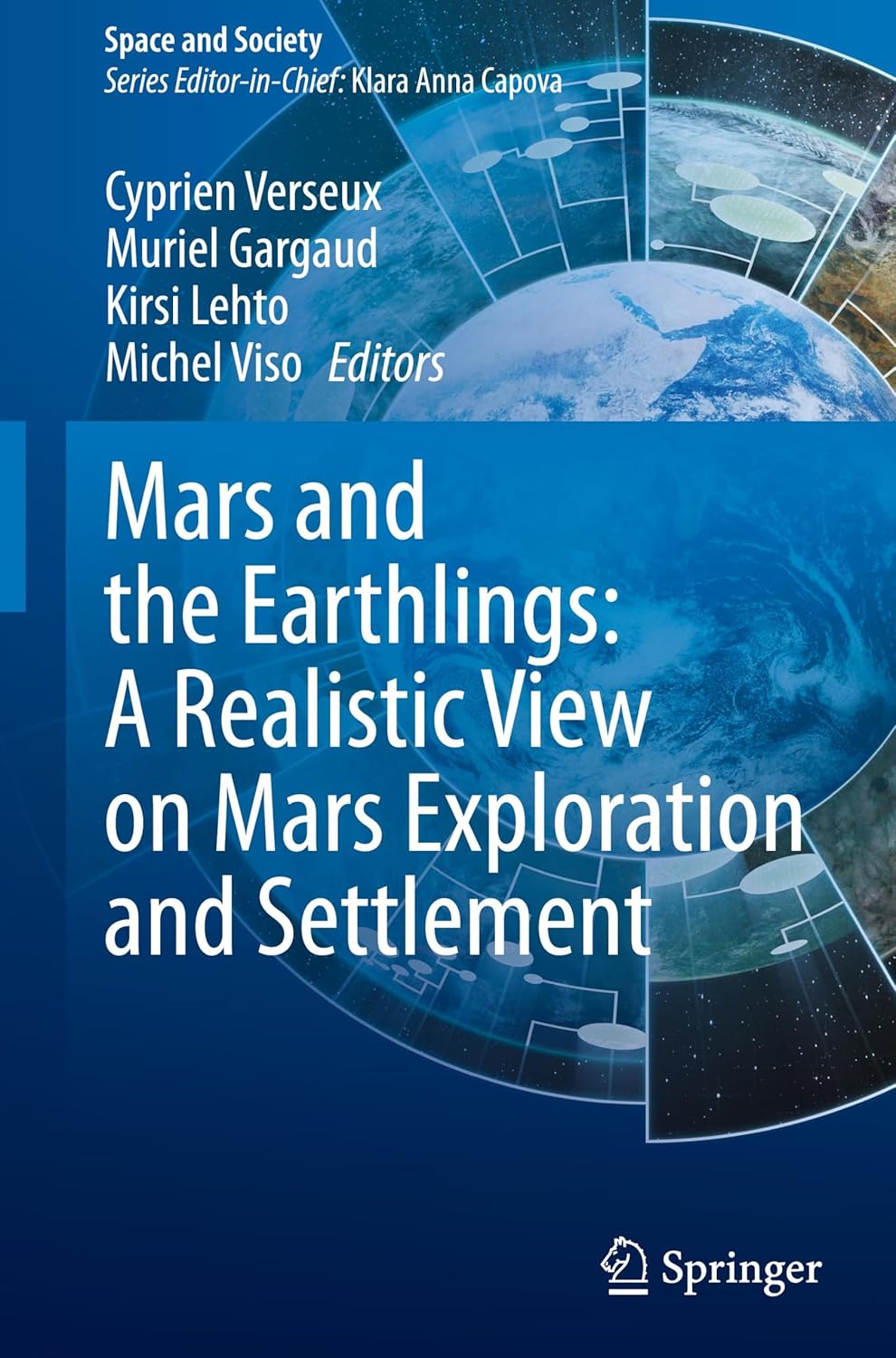
The EAI Project Team on Mars exploration has published Mars and the Earthlings: A Realistic View on Mars Exploration and Settlement (Springer, 2025), the first major outcome of its work. The book provides a thorough, interdisciplinary analysis of Mars missions, from near-term robotic exploration to the long-term prospects of human settlement and terraforming, through a distinctly European lens. D…
LIVE SEMINAR: 7 May 16:00 CEST The formation histories of planets are shaped by the physical characteristics of their native disk environments, which in turn are connected to those of the host stars. Both the mass and accretion rate of protoplanetary disks are known to be proportional to the stellar mass. The stellar metallicity determines the maximum dust-to-gas ratio of disks. The balance betwe…
LIVE SEMINAR: 27 May 2025 16:00 CEST Diverse microorganisms adapted to life at high salt concentrations are found in globally distributed hypersaline environments that comprise ~50% of continental waters. The abundance of prokaryotes increases with salinity, reaching values even higher than 108 cells per milliliter at salinities above 25%. These microbial communities are frequently dominated by m…
LIVE SEMINAR: 13 May 2025 16:00 CEST Exoplanetary habitability is commonly defined as the potential of a planet to maintain liquid water on its surface - a necessary, though not sufficient, condition for life as we know it. Identifying environments that fulfill this criterion represents the essential first step - still unmet - toward the detection of potential biosignatures, which constitutes a c…
LIVE SEMINAR: 29 April 16:00 CEST With JWST and Ariel, the era of chemical characterisation of exoplanets is truly beginning. Data on the composition of solar system objects is also steadily improving. The origin of all this planetary chemical diversity lies in planet-forming disks. I will review our work on characterising the main reservoirs of the astro- and bio-chemically important “CHNOPS” el…
LIVE SEMINAR: 1 April 2025 16:00 CEST Despite its complexity, terrestrial life is built from relatively small precursor molecules containing carbon, oxygen, hydrogen, and nitrogen. To date, more than 330 different molecular species have been discovered in the interstellar medium, some of which could have served as building blocks for prebiotic chemistry. To determine whether these molecules playe…
What makes a planet "giant" ? Ravit Helled - Dept. of Astrophysics, University of Zurich, Switzerland LIVE SEMINAR: 18 March 16:00 CET EAI Zoom The formation history of giant planets,…
The effects of low-energy cosmic rays and solar particles on pristine organic matter Riccardo Giovanni Urso - INAF-Osservatorio Astrofisico di Catania, Italy LIVE SEMINAR: 4 March 16:00 CET EAI Zoom…
Seminar: Life at a stellar scale: clues of stellivores through metabolism, navigation and propulsion
Life at a stellar scale: clues of stellivores through metabolism, navigation and propulsion Clément Vidal - Vrije Universiteit Brussel, Belgium LIVE SEMINAR: 18 February 16:00 CET EAI Zoom Astrobiology is…
Taphonomy of organic matter and microbial structures in a mid-Proterozoic and Paleoarchean siliciclastic succession. Brooke Johnson - Université of Liège, Belgium LIVE SEMINAR: 4 February 16:00 CET EAI Zoom In…
Astrobiological Interest of the Dark Biosphere Ricardo Amils - Centro de Astrobiología (INTA-CSIC) and Centro de Biología Molecular Severo Ochoa (UAM-CSIC), Madrid, Spain LIVE SEMINAR: 21 January 2025 16:00 CET…
Solar System Formation in the Context of Exoplanets Sean Raymond - CNRS, Bordeaux, France LIVE SEMINAR: 14 January 16:00 CET EAI Zoom The past decade of exoplanet observations has confirmed…
The European Astrobiology Institute is delighted to announce that the planetarium show “Dark Biosphere” has won multiple prestigious awards, further solidifying its impact on the global stage of fulldome filmmaking.…
The European Astrobiology Institute (EAI) is delighted to announce that the planetarium show “Dark Biosphere” has won the Best Film Award at the highly regarded Full Dome Festival in Brno.…
research.ioSign up to keep scrolling
Create your feed subscriptions, save articles, keep scrolling.