Botany One
If you were at Kew Gardens this week, you would have had the chance to see, and smell, the Titan Arum, Amorphophallus titanum, also known as the Corpse Flower. Some people say that it’s the biggest flower in the world. They’re wrong, that would be Rafflesia tuan-mudae, but it does have the largest unbranched inflorescence in the world, which means that it’s not an unreasonable mistake to make. Bu…
This week we're hunting in New South Wales. Autumn has definitely come to the Southern Hemisphere, but a quick look at Hot Botany shows that there's plenty to see. This is one of the weeks where the info boxes beneath the game area could each be an essay in its own right. We have a plant with two smells, fairy petticoats with invisible guardians and a plant that looks like PacMan after he's eaten…
Here's a round up of the top 20 papers you've been sharing this week on Bluesky. Papers behind a paywall are marked 💰otherwise they're free to access at time of checking. How this works We scan posts by people on the Botany Auto list and pull out the entries with links to papers. Every time a paper gets a post written about it it gets 4 points. It gets 3 points for a repost and 1 point for a like…
Today is first Saturday in May and so it is World Naked Gardening Day, as declared by someone who probably has fewer thistles in their garden than me. In this spirit, today's Sudoku Garden is clothing optional. How to Play Six plants fill each row each column, each box of six no bloom may repeat Tap an empty cell then choose your plant from below watch the garden grow Or pick a plant first then t…
Once upon a midnight dreary, while I pondered, weak and weary, Over many a quaint and curious volume of forgotten lore— While I nodded, nearly napping, suddenly there came a tapping, As of some one gently rapping, rapping at my chamber door. “’Tis some visitor,” I muttered, “tapping at my chamber door— Only this and nothing more.” – The Raven, Edgar Allen Poe And for Edgar Allen Poe – the visitor…
Tent-roosting bats are the unsung "nocturnal gardeners" of the Lacandon Rainforest. New research reveals they disperse up to 79.8 million large seeds annually, carrying fruits weighing up to 250% of their own body mass to help regenerate mature forests.
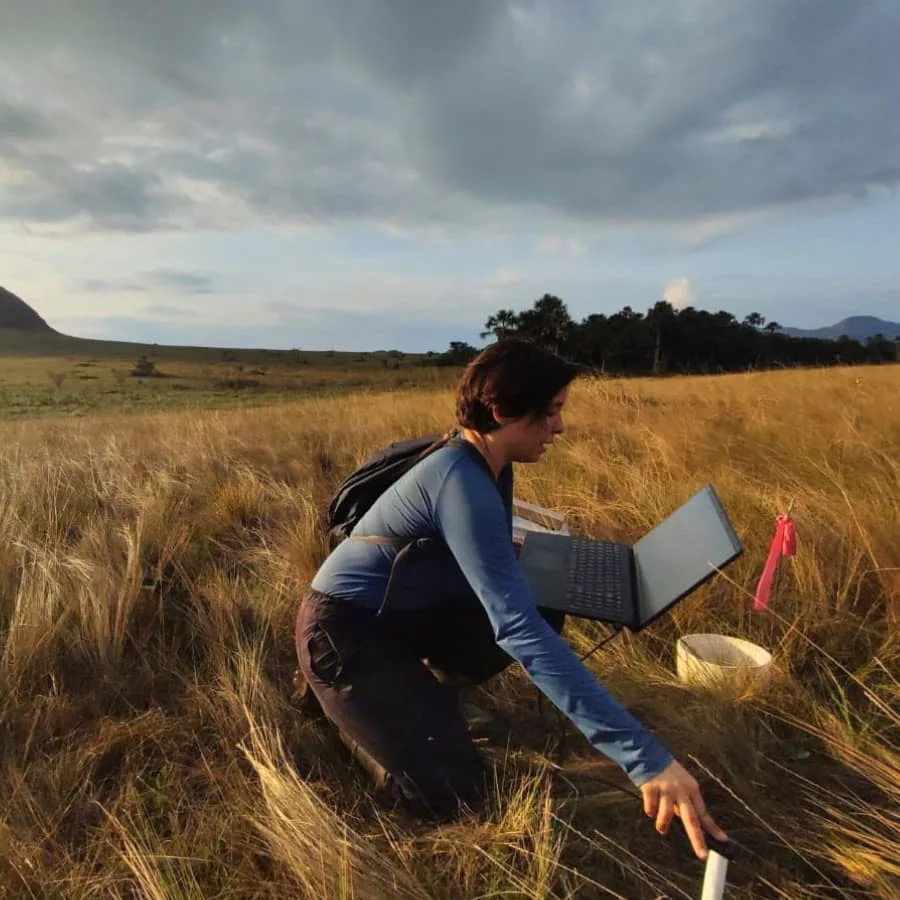
Botany One interviews Pedro Firme da Cruz-Júnior, a PhD student who aims to understand how smoke and water stress shape seed germination and early plant development in one of the world’s most diverse savannas.
Newly revealed peatlands in the Cerrado hold millennia of carbon, but shifting water and climate regimes could turn them from allies into threats.
New research on Central African orchids reveals that even the smallest seeds can preserve clues about how plants evolved and adapted over time.
Michael Caine once described himself as “calm, like a duck, on the surface, but paddling like hell underneath.” What would be the botanical equivalent? I wondered if it could be this week’s plant, Parinari capensis. It doesn’t seem to have a lot going on above the surface, but there’s a lot hidden beneath. Parinari capensis is a geoxyle, an underground tree. I thought that most trees had a good p…
It's Freedom Day in South Africa tomorrow, the anniversary of the first free elections all races could participate in. The date has become a broader celebration of national heritage, identity, and the country's diversity, and it's diversity that's the big draw for botanists to the nation. South Africa sits at the meeting point of several biomes and is one of the most botanically rich countries in…
Today is the anniversary of the Carnation Revolution, marking the start of the end of Portugal's Estado Novo, leading to withdrawal of Portugal from many overseas territories and democracy in Portugal. The revolution gained its name from the carnations put in the barrels of soldiers' rifles during the coup d'etat. How to Play Six plants fill each row each column, each box of six no bloom may repe…
Researchers found that ageing Brassica napus seeds lose not only vigour, but also microbial diversity, raising new questions about how we store seeds for the future.
By tracing the plants featured in local literary traditions, researchers have uncovered new clues to the controversial history of tropical savannas in India—offering a widened biocultural perspective to better inform conservation policies.
Botany One interviews Dr Jeanmaire Molina, a plant biologist fascinated with "plants that challenge the definition of plant life", specially the record-breaking Rafflesia.
Plants actively manage the water flowing through their limbs – and leaves of all shapes and sizes play a central role. Indeed, plants are known to tailor their leaves to optimize water use in different environments. For example, conifers produce shorter leaves in dry soils, higher elevation and at the tops of trees. Until now, most studies assumed that when pine trees grow shorter needles it's be…
Mosses from Brazil's rocky savannas are quietly doing something we usually associate with shrubs and trees: taking up and safely storing aluminium from the soil.
A garden plant called Kalanchoe × houghtonii is spreading along Mediterranean coasts and may be pushing out native plants that normally grow there.
New research suggests that gardens and green spaces may quietly reshape how we feel about animals, including species many people overlook or dislike.
research.ioSign up to keep scrolling
Create your feed subscriptions, save articles, keep scrolling.