Agentic AI / Generative AI – NVIDIA Technical Blog

Neural network techniques are increasingly used in computer graphics to boost image quality, improve performance, and streamline content creation. Approaches...
Creative and visualization teams today produce more assets, in more formats, with leaner teams. Generative AI can accelerate that work – compressing tasks...
The subsurface industry is at a critical point in its digital evolution. For decades, unlocking reservoir potential has relied on experts performing essential...

Agentic systems often reason across screens, documents, audio, video, and text within a single perception‑to‑action loop. However, they still rely on...
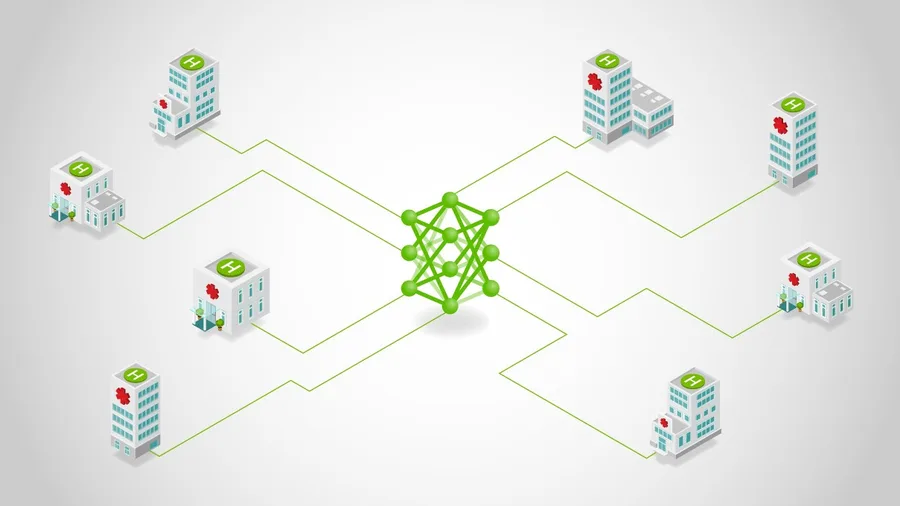
Federated learning (FL) is no longer a research curiosity—it’s a practical response to a hard constraint: the most valuable data is often the least movable....
DeepSeek just launched its fourth generation of flagship models with DeepSeek-V4-Pro and DeepSeek-V4-Flash, both targeted at enabling highly efficient...
In March 2026, three LLM agents generated over 600,000 lines of code, ran 850 experiments, and helped secure a first-place finish in a Kaggle playground...
Higher-order optimization algorithms such as Shampoo have been effectively applied in neural network training for at least a decade. These methods have achieved...
AI tools are significantly accelerating software development and changing how developers work with code. These tools serve as real-time copilots, automating...
As LLMs transition from simple text generation to complex reasoning, reinforcement learning (RL) plays a central role. Algorithms like Group Relative Policy...
Coding agents are starting to write production code at scale. Stripe’s agents generate 1,300+ PRs per week. Ramp attributes 30% of merged PRs to agents....
Agents are evolving from question-and-answer systems into long-running autonomous assistants that read files, call APIs, and drive multi-step workflows....
NVIDIA Ising is the world's first family of open AI models for building quantum processors, launching with two model domains: Ising Calibration and Ising...
The release of MiniMax M2.7 adds enhancements to the popular MiniMax M2.5 model, built for agentic harnesses,...
In algorithmic trading, reducing response times to market events is crucial. To keep pace with high-speed electronic markets, latency-sensitive firms often use specialized hardware like FPGAs and ASICs. Yet, as markets grow more efficient, traders increasingly depend on advanced models such as deep neural networks to enhance profitability. Because implementing these complex models on low-level ha…
The Gemmaverse expands with the launch of the latest Gemma 4 multimodal and multilingual models, designed to scale across the full spectrum of deployments, from NVIDIA Blackwell in the data center to Jetson at the edge. These models are suited to meet the growing demand for local deployment for AI development and prototyping, secure on-prem requirements, cost efficiency, and latency-sensitive use…
In the AI era, power is the ultimate constraint, and every AI factory operates within a hard limit. This makes performance per watt—the rate at which power is converted into revenue-generating intelligence—the defining metric for modern AI infrastructure. AI data centers now operate as token factories tied directly to the energy ecosystem, where access to land, power, and shell determines deploym…
Developing new protein-based therapies and catalysts involves the challenging task of designing protein binders, or proteins that bind to a target protein or small molecule. The search space for possible amino acid sequence permutations and resulting 3D protein structures for a designed binder is vast, and achieving strong, specific binding requires careful optimization of the interactions betwee…
In production Kubernetes environments, the difference between model requirements and GPU size creates inefficiencies. Lightweight automatic speech recognition (ASR) or text-to-speech (TTS) models may require only 10 GB of VRAM, yet occupy an entire GPU in standard Kubernetes deployments. Because the scheduler maps a model to one or more GPUs and can’t easily share across GPUs across models, expen…
research.ioSign up to keep scrolling
Create your feed subscriptions, save articles, keep scrolling.