Look up at the night sky and it is difficult not to wonder: are we alone? Astrobiology turns that ancient question into a scientific investigation. It brings together astronomy, biology, chemistry, geology, planetary science, oceanography, atmospheric science, and even philosophy to explore life as a cosmic phenomenon. Rather than simply imagining extraterrestrials, astrobiologists ask testable ……
The natural process by which life arises from non-living matter, such as simple organic compounds. (Further reading: “Genesis: The Scientific Quest for Life’s Origin” by Robert M. Hazen)
The natural process by which life arises from non-living matter, such as simple organic compounds. (Further reading: “Genesis: The Scientific Quest for Life’s Origin” by Robert M. Hazen)
Greetings fom Earth,
Astrobiologist
What is Astrobiology?
Astrobiology is the science that arose to answer questions about the origin, presence, and influence of life in the universe. It has to do with you, with us, and with why and how we got here.
There is a long way to go, and even if there are numerous unknowns, we are on the way to answering some of the most crucial questions of the century:…
Greetings fom Earth,
Astrobiologist
What is Astrobiology?
Astrobiology is the science that arose to answer questions about the origin, presence, and influence of life in the universe. It has to do with you, with us, and with why and how we got here.
There is a long way to go, and even if there are numerous unknowns, we are on the way to answering some of the most crucial questions of the century:…
An Introduction to Astrobiology,
David Rothery, Iain Gilmour and Mark Sephton Astrobiology Cambridge University Press 01 May, 2018How did life on Earth begin? How common is it elsewhere in the Universe? Written and edited by planetary scientists and astrobiologists, this undergraduate-level textbook provides an introduction to the origin and nature of life, the habitable environments in our solar…
The natural process by which life arises from non-living matter, such as simple organic compounds. (Further reading: “Genesis: The Scientific Quest for Life’s Origin” by Robert M. Hazen)
The natural process by which life arises from non-living matter, such as simple organic compounds. (Further reading: “Genesis: The Scientific Quest for Life’s Origin” by Robert M. Hazen)
Life’s story is a tale of rising complexity, an intricate dance directed by the forces of evolution. From the earliest unicellular organisms to the vast biodiversity we witness today, the evolution of complexity provides a fascinating lens through which to understand our biological world.
The Seeds of Complexity: Life’s Humble Beginnings
Life’s journey towards complexity began with the simplest o…
As we gaze upon the universe, contemplating our place in its vast expanse, we grapple with questions about our future. One visionary concept that explores the potential of technological and societal growth is the theory of Kardashev Civilizations. Let’s delve into this fascinating model and consider what it might reveal about the destiny of civilizations, both terrestrial and extraterrestrial.
Ka…
Perspectives in Astrobiology
Perspectives in Astrobiology: SETI and Civilisations
About the blog
If you have ever wondered why life is the way it is, where do we come from, or what the future holds for us and our planet, then our blog is the ideal space for you.
Here you can either read news, stories, creative content and stay up to date with the latest discoveries, or take a step forward and wri…
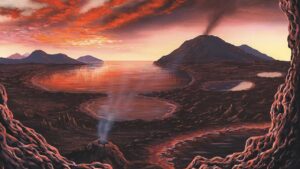
The cosmos is abundant, teeming with elements, compounds, and reactions. Among these, one process piques the interest of astrobiologists and chemists worldwide – prebiotic chemistry. This burgeoning field, merging the boundaries of chemistry, biology, and astronomy, offers insights into the origins of life, the “primordial soup” that brewed on Earth, and potentially, other planets.
A Glimpse into…
The cosmos is abundant, teeming with elements, compounds, and reactions. Among these, one process piques the interest of astrobiologists and
Perspectives in Astrobiology
Perspectives in Astrobiology: Origins of Life
About the blog
If you have ever wondered why life is the way it is, where do we come from, or what the future holds for us and our planet, then our blog is the ideal space for you.
He…
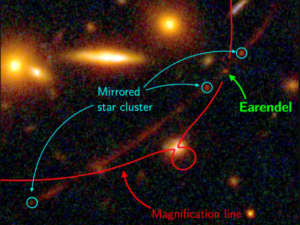
When the light we see from the star Earendel was emitted, the universe was less than a billion years old. But, during the almost 13 billion years it took the light to reach us, the universe has expanded so that it is now a staggering 28 billion light-years away!
Perspectives in Astrobiology
Hubble spots the most distant star ever detected!
Share this post
Related articles
As we gaze upon the univ…
Perspectives in Astrobiology
Perspectives in Astrobiology: News
From NASA’s successful missions on the Red Planet, to more distant potentially habitable worlds like to Jupiter’s moon Europa and
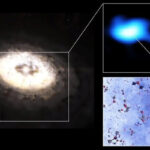
The detection of a complex organic molecule, dimethyl ether, in the disk around an infant star suggests prebiotic chemistry starts
Saturn’s moon Mimas could have a buried underground ocean beneath its surf…
From NASA’s successful missions on the Red Planet, to more distant potentially habitable worlds like to Jupiter’s moon Europa and Saturn’s moon Titan, and even to developing techniques to look for biosignatures; read more about NASA’s Astrobiology Program here!
Perspectives in Astrobiology
State of NASA Astrobiology 2022
Share this post
Related articles
As we gaze upon the universe, contemplating…
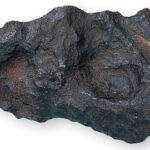
On the 15th of March,1806, a meteorite fell near Alais, France and was the first object from space in which scientists discovered organic chemicals.
Perspectives in Astrobiology
On this day in space… the Alais Meteorite
Share this post
Related articles
Astrobiology
As we gaze upon the universe, contemplating our place in its vast expanse, we grapple with questions about our future.
Astrobiology S…
The detection of a complex organic molecule, dimethyl ether, in the disk around an infant star suggests prebiotic chemistry starts in the space between stars.
Perspectives in Astrobiology
Largest Molecule Found Yet in Planet-Forming Disk
Share this post
Related articles
Astrobiology
As we gaze upon the universe, contemplating our place in its vast expanse, we grapple with questions about our futu…
Blog Contributor: Arty Goodwin
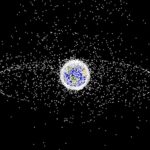
Sustainability is something that is becoming ever more important in our daily lives. We are now more conscientious of the effect our habitual ways of living have on the environment. More recycling, less fossil fuels, and managing our impact on this one planet we inhabit. Yet, as humans launch an increasing number of satellites into orbit, it is clear we need to exte…
Blog Contributor: Sibsankar Palit
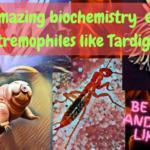
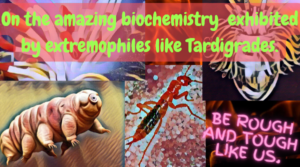
The biggest challenge to life on Earth that prevents it from moving beyond our own planet Earth is the impact of space on its metabolism and physiology. Many germs and microscopic animals exhibit amazing biochemistry that helps them survive extreme heat, extreme cold, extreme radiation and extreme space conditions
Blog Contributor: Arty Goodwin
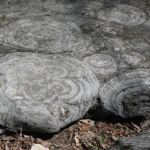
Stromatolites are an important geological feature for tracking the earliest life on Earth. These sedimentary structures first appeared in the geological record ~3.5 billion years ago and have historically been used as a biosignature for life, often with some controversy
Blog Contributor: Sibsankar Palit
The biggest challenge to life on Earth that prevents it from moving beyond our own planet Earth is the impact of space on its metabolism and physiology. Many germs and microscopic animals exhibit amazing biochemistry that helps them survive extreme heat, extreme cold, extreme radiation and extreme space conditions
Perspectives in Astrobiology
Perspectives in Astr…





 research.io