For the first time in 30 years, computer scientists have found a better way to allocate objects evenly between two groups. The post ‘Huge Breakthrough’ in the Math of Imbalance first appeared on Quanta Magazine
A simple scaling law brings order to the chaos of flowing water, rock, and sediment. New findings have extended the law even further. The post Why Are Rivers So Mathematical? first appeared on Quanta Magazine
AI’s greatest mathematical successes have come from answers to problems posed by a mid-20th century iconoclast. By examining what makes the Erdős problems unique, mathematicians are trying to understand how AI might change the rest of math. The post Why the Legendary Erdős Problems Are Falling to AI first appeared on Quanta Magazine
Jordana Cepelewicz·...·Kevin Hartnett and Natalie Wolchover
7/23/2026
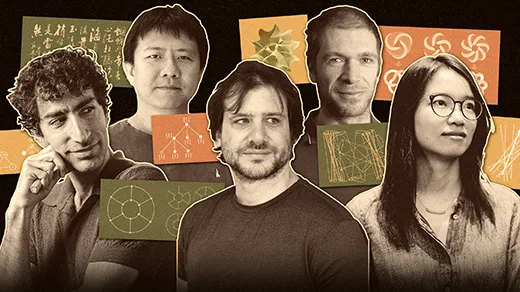
Every four years, the math world’s preeminent awards are given to the finest minds of a generation. The young winners — all under 40 on the first day of the year — have reshaped mathematics and theoretical computer science. Here are their stories. The post Fields and Abacus Medals 2026 first appeared on Quanta Magazine
Focus, commitment, and insight resulted in a “once in a century” proof. Hong Wang is now just the third woman to win a Fields Medal. The post Living Fully in the Math World Means Threading the Needle first appeared on Quanta Magazine
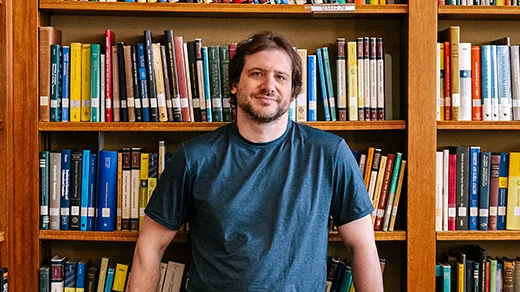
Determination and effort propelled Jacob Tsimerman to the top of the math world. But now that he’s won a Fields Medal, he worries that the field is in jeopardy. The post Sometimes Being First Means Seeing the End Before Anyone Else first appeared on Quanta Magazine
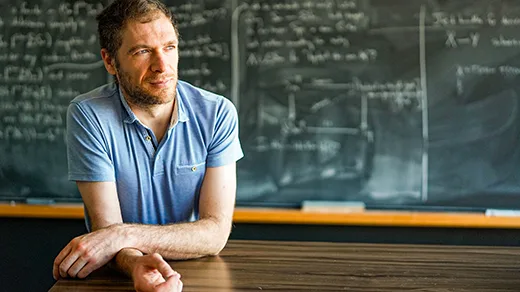
John Pardon sees connections between different areas of math that others don’t. For that vision, he’s now been awarded a Fields Medal. The post The Quietest Mathematician Has Always Been Worth Listening To first appeared on Quanta Magazine
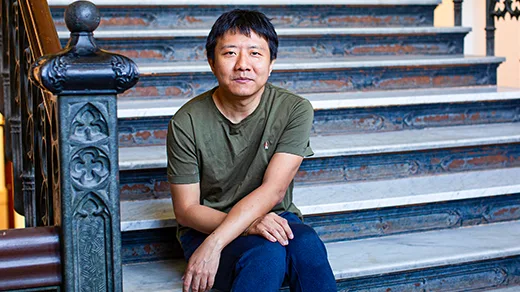
Before he won a Fields Medal for his pioneering work balancing randomness and order, Yu Deng first had to achieve equilibrium in his own life. The post Amid Life’s Chaos, a Meticulous Mathematician Finds Stability first appeared on Quanta Magazine
Decades ago, Paul Erdős used randomness to illuminate the vast and weird world of networks. Now mathematicians are making his technique even more powerful. The post After 80 Years, Mathematicians Give Famed ‘Erdős Method’ an Upgrade first appeared on Quanta Magazine
Lauren Williams tells 'The Joy of Why' how studying a fundamental object in algebraic combinatorics led to a career full of surprises. The post What Is the Positive Grassmannian and Why Does It Show Up Everywhere? first appeared on Quanta Magazine
With automated proof-checkers, a problem can be broken up into small chunks, solved bit-by-bit, then reassembled with confidence that every piece is correct. For some, this heralds a new area in mathematical research. The post How Terry Tao Became an Evangelist for AI in Math first appeared on Quanta Magazine
By replacing the most fundamental concept in topology, Peter Scholze and Dustin Clausen are taking the first step in a far bigger program to understand why numbers behave the way they do. The post Two Researchers Are Rebuilding Mathematics From the Ground Up first appeared on Quanta Magazine
Grothendieck is revered in the world of math; outside of it, he’s known for his unusual life, if he’s known at all. But what were his actual mathematical contributions? The post How Alexander Grothendieck Revolutionized 20th-Century Mathematics first appeared on Quanta Magazine
At 25, Kurt Gödel proved there can never be a mathematical “theory of everything.” Columnist Natalie Wolchover explores the implications. The post What Do Gödel’s Incompleteness Theorems Truly Mean? first appeared on Quanta Magazine
Zermelo-Fraenkel set theory is so widely accepted that modern mathematicians hardly think about it. But believing in its core principles didn’t come easily. The post Why Math’s Final Axiom Proved So Controversial first appeared on Quanta Magazine
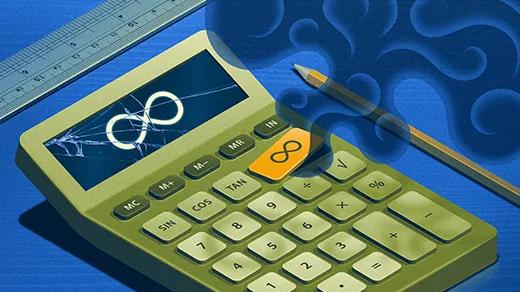
Ultrafinitism, a philosophy that rejects the infinite, has long been dismissed as mathematical heresy. But it is also producing new insights in math and beyond. The post What Can We Gain by Losing Infinity? first appeared on Quanta Magazine
With a newly discovered mathematical tool, researchers are hoping to gain unprecedented insight into the structure of complex knots. The post A Powerful New ‘QR Code’ Untangles Math’s Knottiest Knots first appeared on Quanta Magazine
Biggest Breakthroughs in Biology 2025
Biggest Breakthroughs in Biology 2025
2025’s most surprising breakthroughs in biology included a finding that a father’s environmental exposures can impact the development of their offspring, research confirming that intelligence evolved independently in birds and mammals, and a new mathematical model reveals that evolution happens in explosive bursts.
Explor…
Introduction
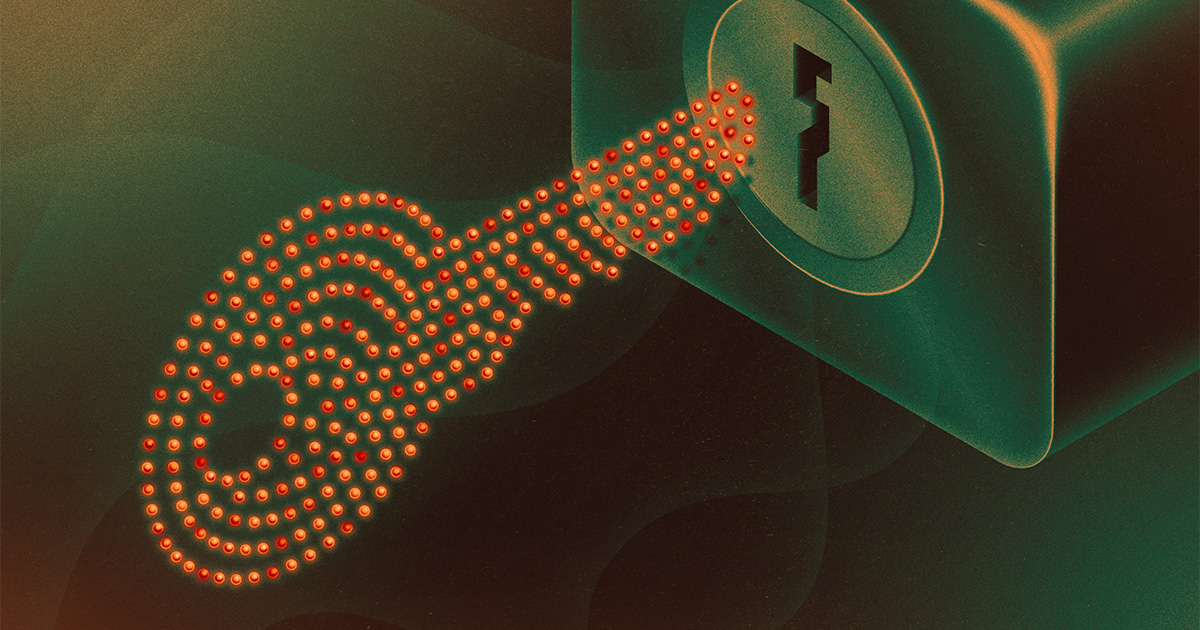
Some 30 years ago, the mathematician Peter Shor took a niche physics project — the dream of building a computer based on the counterintuitive rules of quantum mechanics — and shook the world.
Shor worked out a way for quantum computers to swiftly solve a couple of math problems that classical computers could complete only after many billions of years. Those two math problems happened…
Kristina Armitage/Quanta Magazine
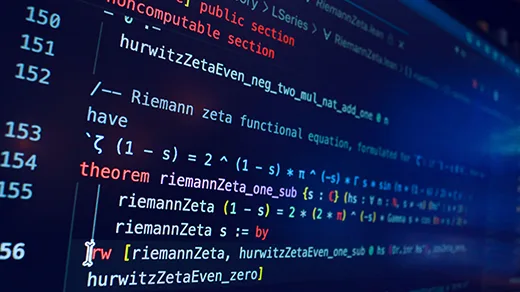
In ancient Greece, Euclid showed that if you agree on a small list of preliminary principles, or axioms, you can use deductive reasoning to reveal all sorts of new mathematical truths. But although these early proofs, as mathematicians call them, were derived using the laws of logic, they sometimes also contained hidden, unstated assumptions or relied on misleadi…









 research.io