Weekly Roundup The latest findings from Pew Research Center · Subscribe ↗ From our research The share of U.S. parents with kids under 18 who are highly confident the childhood vaccine schedule is safe, according to a fall 2025 survey. Another 27% are somewhat confident, while 24% are not too or not at all confident.
The Briefing ☀️ Happy Thursday! The Briefing is your guide to the world of news and information. Sign up here! In today’s email: 🔥 Featured story The top editor of Forbes was fired after failing to disclose a $6 million payment from the founder of a company that does business with the publication, igniting questions […]
Hispanic, Black, and Asian adults are more likely than White adults to get health information from social media and turn to health and wellness influencers.
About Pew Research Center’s Spring 2026 Global Attitudes Survey Results for the survey are based on face-to-face interviews conducted under the direction of Gallup and Langer Research Associates. The results are based on national samples, unless otherwise noted. Read more about our international survey methodology and country-specific sample designs. Some, but not all, of our […]
This report is a collaborative effort based on the input and analysis of the following individuals. Jacob Poushter, Associate Director, Global Attitudes ResearchSneha Gubbala, Research AnalystWilliam Miner, Research Analyst Julia Armeli, Research AssistantPeter Bell, Associate Director, Design and UXEthan Charlip, Communications AssociateJanakee Chavda, Associate Digital ProducerLaura Clancy, Res…
We asked adults in Bangladesh, India, Pakistan and Sri Lanka how they view other South Asian countries. Only Sri Lanka receives more positive than negative ratings from the other three publics.
Religion & Public Life A weekly digest of the Center’s latest research on religion and public life in the U.S. and around the world · Subscribe ↗ Media mentions A pope from Chicago was elected. The White Sox were resurrectedAug. 7 – The New York Times * ‘A gift from heaven’: Pope Leo prepares for warm Peru […]
Around three-quarters of Americans in their late 30s or early 40s have lived with a romantic partner they’re not married to at some point in their lives.
Weekly Roundup The latest findings from Pew Research Center · Subscribe ↗ From our research The share of Americans who are confident that all citizens who want to vote in the midterms will be able to. Far more Republicans than Democrats hold this view (83% vs. 53%).
The Briefing ☀️ Happy Thursday! The Briefing is your guide to the world of news and information. Sign up here! In today’s email: 🔥 Featured story E.W. Scripps, the broadcasting company with dozens of local affiliates, is laying off 268 employees as it restructures its local TV business around digital-first news production and streaming. The company plans to centralize some […]
The American Trends Panel survey methodology Overview Data in this report comes from Wave 196 of the American Trends Panel (ATP), Pew Research Center’s nationally representative panel of randomly selected U.S. adults. The survey was conducted from July 6 to July 12, 2026. A total of 3,554 panelists responded out of 4,173 who were sampled, […]
This report is a collaborative effort based on the input and analysis of the following individuals: Research team Jocelyn Kiley, Director, Political ResearchSteven Shepard, Associate Director, Political ResearchHannah Hartig, Senior ResearcherBaxter Oliphant, Senior ResearcherGabe Borelli, Research AssociateAndrew Daniller, Research AssociateAndy Cerda, Research Analyst Shanay Gracia, Resear…
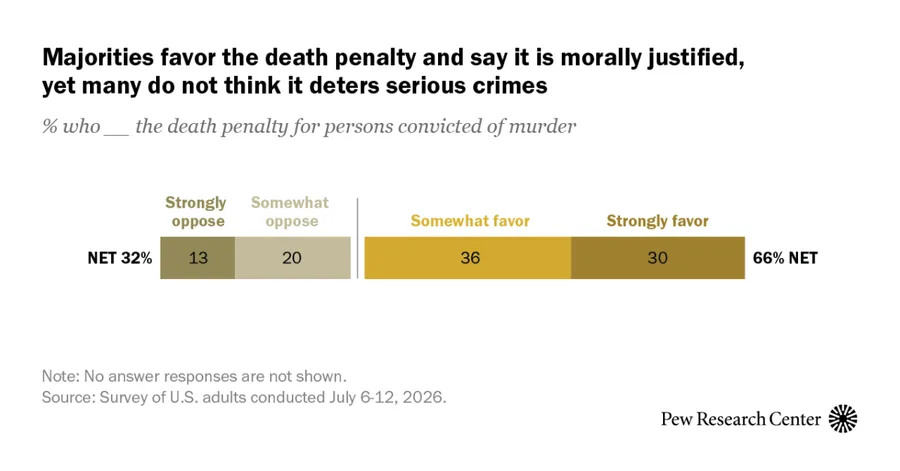
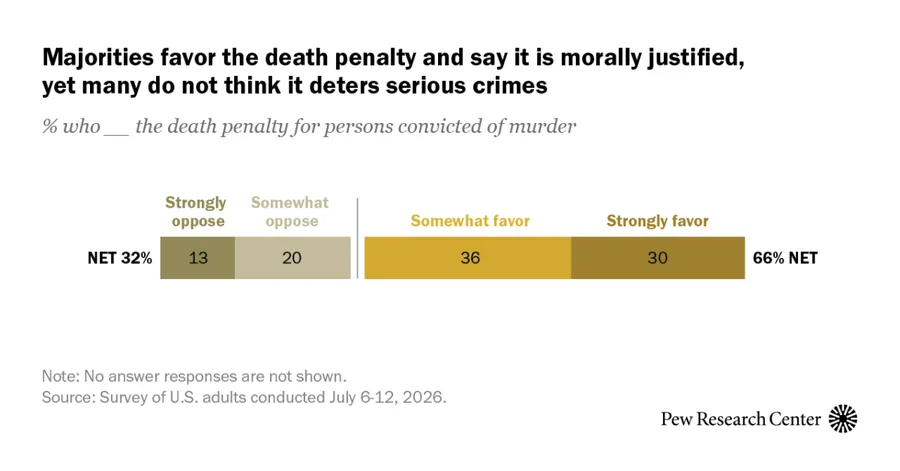
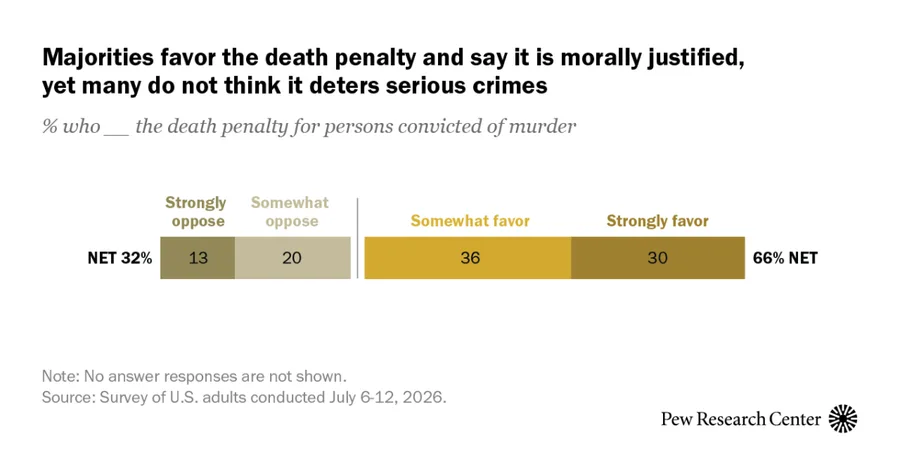
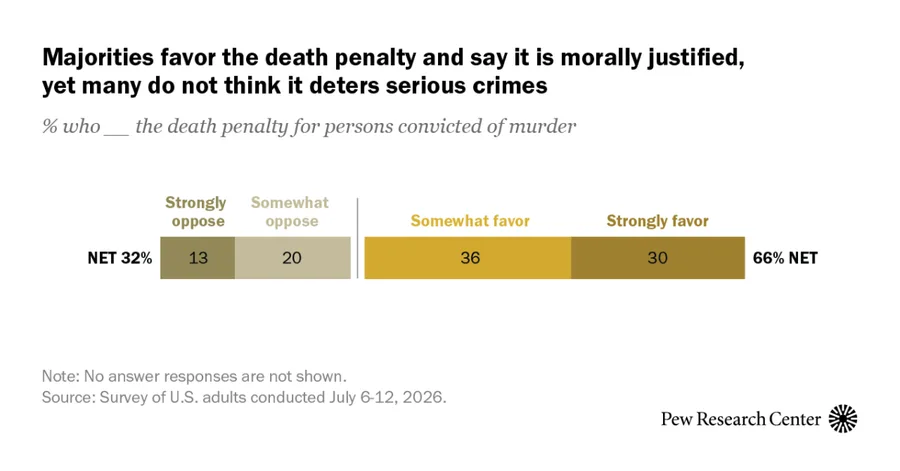
While 68% see the death penalty as morally justified for those committing murder, 59% say it doesn't deter serious crimes – and there are wide partisan gaps on both questions.






 research.io