Materials Science & Engineering

The United States doesn’t have a commercial nuclear fuel reprocessing facility and has been at an impasse for decades on a permanent repository to deal with spent nuclear waste. There’s a growing federal appetite to build and operate a domestic nuclear recycling facility, and Utah wants to be top of mind. Read more HERE.

engineeringnuclear-engineering
nelson
11/4/2025

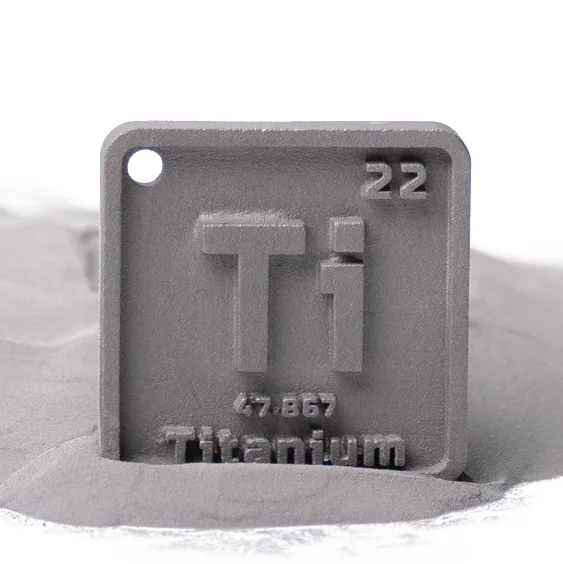
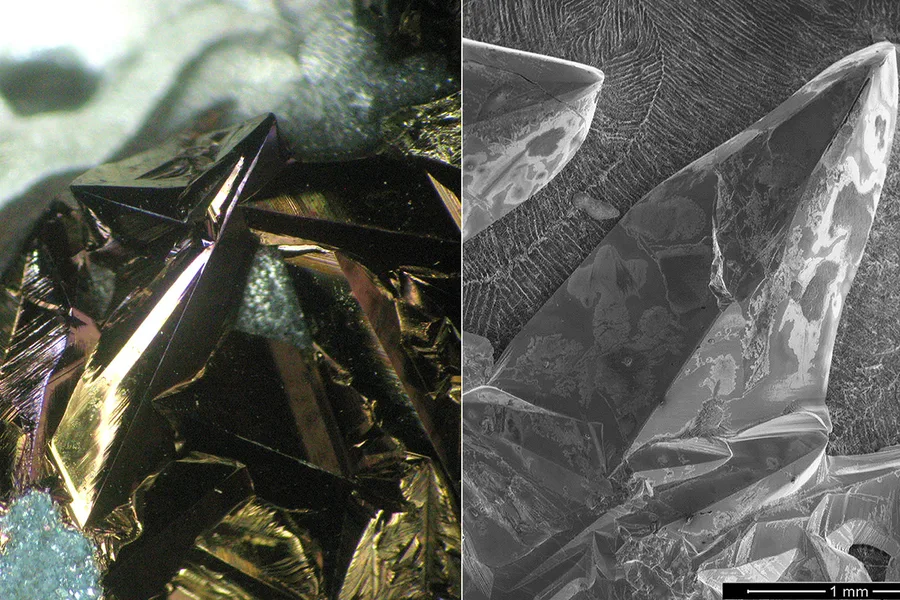
Titanium is as strong as steel—yet it’s only half the weight. So, using titanium in airplane construction, for example, would reduce fuel consumption and make flying more sustainable. Unfortunately, producing titanium is very expensive. But that is changing: Zhigang Zak Fang, U professor of metallurgical engineering, has found a way to produce high-quality titanium powder relatively inexpensively…

materialsmetals

Crabtree’s announcement through the DOE’s Office of Fossil Energy and Carbon Management (FECM) recently detailed that $45 million has been awarded in federal funding for six projects to create regional consortia to accelerate the development of critical mineral and materials (CMM) supply chains including novel non-fuel carbon-based products from secondary and unconventional feedstocks. Realizing …

U Researchers Secure Major Funding to Advance Critical Metals Production Think about the device you’re reading this on. Whether it’s a smartphone, tablet, or laptop, it contains dozens of rare earth elements and critical metals that make its operation possible. Yet the United States currently relies on foreign sources for approximately 90% of some of these essential materials, creating vulnerabil…

materialsmetals

Electronic waste, or e-waste, is a rapidly growing global problem, and it’s expected to worsen with the production of new kinds of flexible electronics for robotics, wearable devices, health monitors, and other new applications, including single-use devices. A new kind of flexible substrate material developed at MIT, the University of Utah, and Meta has the potential to enable not only the recycl…

biomaterialsmaterialsrecycling

Prof. Chandran has been recently awarded new Phase II funding (~$3M) for his ARPA-E project on the design and development of high temperature niobium alloys for gas turbines and other structural applications. The Phase II funding will make the cumulative ARPA-E funding, since 2021, as about $4.5M. Dr. Chandran’s proposal was one of the four selected and funded after the Phase II competition natio…

A new infusion of federal funding through the Department of Energy (DOE) totaling $28 million will support some of the most cutting-edge efforts to decarbonize the dirty steel industry, and the University of Utah has received the largest award (~ $3.5 million) of the 13 projects in nine states. The initiative, through the DOE’s Advanced Research Projects Agency-Energy (ARPA-E) aims to spur soluti…

engineeringenvironmental-engineering

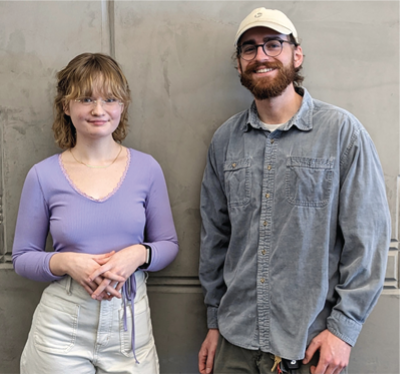
Three student researchers from Professor Michael Simpson’s group were awarded prestigious awards from the Nuclear Energy Office of the U.S. Department of Energy this week. Olivia Dale (Ph.D. candidate, MET-E) and Matthew Newton (Ph.D. candidate, MET-E) were selected for awards in the Innovations in Nuclear Energy Research and Development Student Competition, and Jon Dromey (B.S. candidate, Mech E…

engineeringnuclear-engineering

Fang and his research team will provide IPX with research and development services related to metallurgical technologies to produce primary metals, advanced manufacturing technologies, including additive manufacturing (i.e., 3D printing) of titanium alloys, and recycling of rare earth metals from magnets used in wind turbines and electric vehicles.

3d-printingmaterialsnanomaterials

College students are often told to “shoot for the moon,” exploring their interests with ambitious plans and projects. This week, a team University of Utah engineering students are taking that advice to heart in a more literal way. NASA’s Breakthrough, Innovative and Game-changing (BIG) Idea Challenge is an annual, nation-wide competition that gives college students the opportunity to play a pivot…

astronomyspace-exploration

Titanium (Ti) metal, prized for its high strength-to-weight ratio, corrosion resistance and biocompatibility is a critical material in aerospace, defense, and medical applications, but its wider use is obstructed by excessively high costs. That’s where Materials Sciences and Metallurgical Engineering Professor Zhigang Zak Fang comes into play. A recent recipient of the prestigious Humboldt Resear…

biomaterialsmaterials

Ling Zang, Professor in the John and Marcia Price College of Engineering’s Department of Materials Science and Engineering, has been elected a Fellow of the Royal Society of Chemistry. Founded in London in 1841, the Royal Society of Chemistry (RSC) is the oldest scholarly society in its field and now boasts more than 54,000 members across the globe.… The post Prof. Zang Elected Fellow of The Roya…

materialsmaterials-science

Professor Jeff Bates of the Materials Science & Engineering Department at the University of Utah spoke at TEDx Bountiful 2023 on Saturday, February 4, 2023 at the Bountiful Davis Arts Center in Bountiful, Utah. Prof. Bates who works with polymer materials and biodegradable polymer materials gave a lecture titled "The Problem with Plastics." Watch Prof.… The post Prof. Bates speaks at TEDx Bountif…

biomaterialsmaterialspolymers

Two students, Allison Harward (B.S., Chemical Engineering candidate) and Jon Dromey (B.S., Mechanical Engineering candidate), from Prof. Michael Simpson’s research group each received scholarships worth $10,000 from the U.S. Department of Energy (DOE) Nuclear Leadership program. Harward and Dromey are two of only 92 such scholarships awarded nationwide this year and the only recipients from… The …

chemical-engineeringengineeringnuclear-engineering

In a world where renewables are the future of energy generation, researchers around the world are constantly chasing the best, most efficient technologies for each kind of clean energy source. For solar photovoltaic energy generation, solar panels use semiconductor materials to convert light into electrical power. Each material technology has a different world record efficiency… The post Rethinki…

materialsrenewable-energysemiconductors

University of Utah materials science and engineering professor Michael Simpson has received a $1.5 million grant from the U.S. Department of Energy (DOE) to develop a method of recycling spent fuel from existing commercial nuclear power plants using molten salt. The U is one of only 12 recipients from the DOE’s ARPA-E CURIE program aimed… The post Simpson Receives $1.5m to Develop Process for Rec…

engineeringmaterials-sciencenuclear-engineeringnuclear-physics

Earlier this month, Allison Harward, Junior in Chemical Engineering (CE), Claire Decker, Junior in Materials Science & Engineering (MSE), and Collin Anderson, a Ph.D. candidate in Materials Science & Engineering, from Professor Michael Simpson’s Research Group were notified that they had been selected for funding from the U.S. Department of Energy’s University Nuclear Leadership Program… The post…

chemical-engineeringengineeringmaterials-science

Congratulations to Feng Liu, Ivan B. Cutler Professor of Materials Science and Engineering, who will be named a Distinguished Professor effective July 1. He will be recognized during the university’s commencement next month. The title of Distinguished Professor is a rare and prestigious honor granted by the University of Utah to faculty who meet the… The post Liu To Be Named Distinguished Profess…

A major environmental concern about the use of nuclear reactors is what’s left behind — the nuclear waste from spent fuel rods. Where to dispose of this waste has been the source of much controversy. But instead of just burying the spent fuel rods, what if you could somehow recycle them to be used again?… The post A Terrible Thing to Waste appeared first on Materials Science & Engineering .

environmentnuclear-wastepollution

University of Utah materials science and engineering professor Ling Zang was elected to the rank of Fellow to the Council of the American Association for the Advancement of Science (AAAS) for his “distinguished contributions to the research of molecular self-assembly and nanostructures, and development of optical and electrical chemical sensors for applications in public safety,… The post Dr. Zan…

materialsnanomaterialssurface-science
research.ioresearch.io

Sign up to keep scrolling

Create your feed subscriptions, save articles, keep scrolling.

Already have an account?