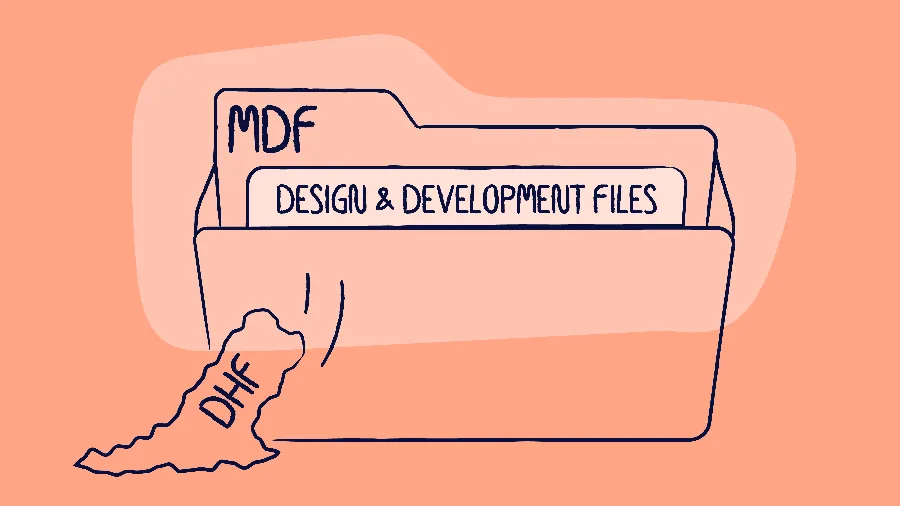
The F DA's Quality Management System Regulation (QMSR) no longer uses the term Design History File (DHF). Instead, ISO 13485:2016 Clause 7.3.10 requires manufacturers subject to design and development requirements to maintain a design and development file for each medical device type or device family. This file contains or references the records needed to demonstrate that the device was designed …
Quick answer: What is ISO/IEC 42001? ISO/IEC 42001 is the first international standard for establishing and continually improving an AI management system. For life sciences organizations, it provides a structured way to govern AI risks, responsibilities, documentation, and performance throughout the AI lifecycle—complementing existing frameworks such as GxP and ISO 13485 rather than replacing the…
The European Commission keeps a public repository of AI literacy practices . Real programmes from real organisations, published so you can copy what works. There are forty-odd entries, filterable by sector.
Quick answer: The validated state is the condition in which a computerized system consistently performs as intended and continues to meet documented GMP requirements. Validation establishes this state before go-live, while change control, incident management, supplier oversight, and periodic review ensure it is maintained throughout the system lifecycle.
A few years ago I sat in on a customer onboarding call where the Head of Quality opened with a sentence I still remember. “We’ve validated this computerized system three times in five years,” she said, “and we still got a Form 483 observation on it last month.”
A few years ago I sat in on a customer onboarding call where the Head of Quality opened with a sentence I still remember. “We’ve validated this computerised system three times in five years,” she said, “and we still got a Form 483 observation on it last month.”
Quick answer The EU AI Act is the European Union's risk-based regulation for artificial intelligence. It applies to organizations that develop, provide or use AI systems, including pharmaceutical, biotechnology and medical device companies. Compliance requirements depend on the AI system's level of risk, with high-risk applications subject to strict rules for risk management, human oversight, doc…
Quick answer Draft Annex 22 is the EU's proposed GMP guidance for data-trained AI and machine learning (AI/ML) models used in critical pharmaceutical manufacturing applications. It introduces AI-specific expectations for governance, validation, risk management, human oversight and ongoing monitoring, helping quality teams prepare for the safe and compliant use of AI in GMP-regulated environments.…
An eQMS supports strategic quality management by centralizing controlled quality data, connecting quality events and actions, standardizing workflows, and making trends, risks, and process performance easier to evaluate. It does not replace QA judgment. It gives QA managers the traceability and context needed to guide better operational and strategic decisions.
ALCOA was born on a crowded slide in the early 1990s. An FDA officer called Stan Woollen ran out of room while preparing a presentation, so he typed five letters as a memory prompt: Attributable, Legible, Contemporaneous, Original, Accurate. The acronym stuck.
Data integrity is one of those topics that sounds simple until you are sitting in an audit room and someone asks: can you prove where this data came from?
Medical device companies operate in one of the most highly regulated industries in the world. To consistently deliver safe and effective products while meeting regulatory requirements, organizations need a structured approach to quality management.
If you work in medical devices, chances are you’ve heard at least one version of this question over the past year: “Wait… does the device history record still exist under QMSR?”
If you work in medical devices, chances are you’ve heard at least one version of this question over the past year: “Wait… does the device history record still exist under QMSR?”
If you’ve worked in medical devices for a while, the term Device Master Record or DMR probably feels like muscle memory. It’s been part of the regulatory vocabulary for decades, especially if you’ve worked with U.S. Food and Drug Administration (FDA) requirements.
If you’ve worked in medical devices for a while, the term Device Master Record or DMR probably feels like muscle memory. It’s been part of the regulatory vocabulary for decades, especially if you’ve worked with U.S. Food and Drug Administration (FDA) requirements.
Most of the NIS2 Germany coverage I have read in the last six months came from law firms or IT consultancies. Much of it treats NIS2 as a standalone cybersecurity programme.
In highly regulated industries like pharma and biotech , organizations are typically well-versed in compliance and regulations. Yet as they scale, some quality systems begin to show cracks in ways that aren’t immediately obvious.
In the medical devices industry, “ design transfer ” refers to the process of transitioning a medical device from development to large-scale manufacturing. For manufacturers, particularly personnel in the quality, R&D, and manufacturing functions, a working knowledge of design transfer and compliance with requirements is essential. In this post, we’ll explain why design transfer is important, how…
In my experience as a quality professional, I have found that a CAPA medical device system is the most revealing part of a company's internal structure. I once worked with a team that had nearly 40 open files, some dating back eighteen months, because they treated the process as a secondary administrative task rather than a priority.










 research.io