In our previous blog post, we introduced latent variable models, where the latent variable can be thought of as a feature vector that has been “encoded” efficiently. This encoding turns the feature vector X into a context vector z. Latent variable models sound very GenAI-zy, but they descend from models that quant traders have long been familiar with.
No doubt you have heard of PCA or SVD (see …
By QTS Capital Management LLC
Prepared by Ernest Chan, Chairman, and Nahid Jetha, CEO
Features are inputs to machine learning algorithms. Sometimes also called independent variables,
covariates, or just X, they can be used for supervised or unsupervised learning, or for optimization. For
example, at QTS , we use more than 100 of them as inputs to dynamically calibrate the allocation
between our …
By Hamlet Medina & Ernest Chan *** A Weekend with Ernie Chan in London : Trading with GenAI Imperial College London, United Kingdom Nov 22, 2025, 9:00 AM - Nov 23, 2025, 5:00 PM Join Dr. Ernest P. Chan in London for a two day deep dive into cutting edge AI-driven trading strategies, in collaboration with Imperial College MathSoc! Book Now *** The world of finance is no stranger to artificial inte…
Is it really better than Predictnow.ai's Conditional Portfolio Optimization scheme? We wrote a lot about transformers in the last three blog posts . Their sole purpose was for feature transformation / importance weighting. These transformed and attention-weighted features will be used as input to downstream applications. In this blog post, we will discuss one such application: portfolio optimizat…
In the previous blog post , we saw how we can apply self-attention transformers to a matrix of time series features of a single stock. The output of that transformer is a transformed feature vector r of dimension 768 × 1. 768 is the result of 12 × 64: all the lagged features are concatenated / flattened into one vector. 12 is the number of lagged months, and 64 is the dimension of the embedding s…
In the previous blog post , we gave a very simple example of how traders can use self-attention transformers as a feature selection method: in this case, to select which previous returns of a stock to use for predictions or optimizations. To be precise, the transformer assigns weights on the different transformed features for downstream applications. In this post, we will discuss how traders ca…
For those of us who grew up before GenAI became a thing (e.g. Ernie), we often use tree-based algorithms for supervised learning. Trees work very well with heterogeneous and tabular feature sets, and by limiting the number of nodes or the depth of a branch, there is feature selection by default. With neural networks (NN), before deep learning comes around, it is quite common to perform feature se…
The answer to this question may seem obvious if you read the breathless proclamations of AI luminaries, but good quantitative investors should be hype-immune. We want to carefully compare the ChatGPT’s unsatisfactory responses to a couple of the prompts outlined in our book (which are mostly generated in early 2024) to their responses now (April 2025). In addition, if ChatGPT’s response is still …
By
Sergei Belov, Ernest
Chan, Nahid Jetha, and
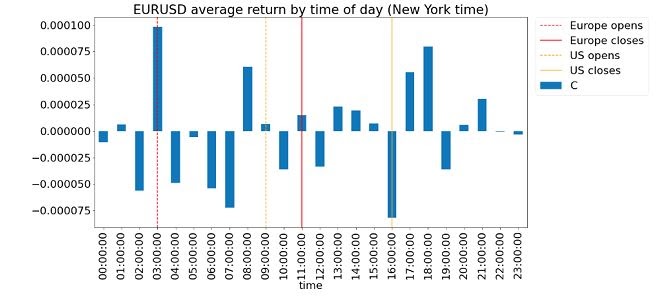
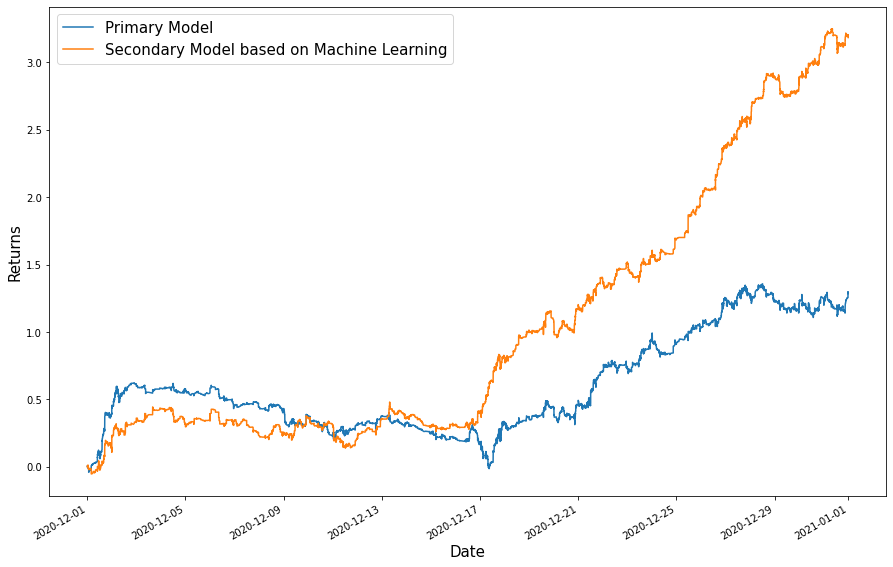
Akshay Nautiyal ABSTRACT We applied Corrective AI (Chan, 2022) to a trading model that takes
advantage of the intraday seasonality of forex returns. Breedon and Ranaldo
(2012) observed that foreign currencies
depreciate vs. the US dollar during their local working hours and appreciate
during the local working hours of the US dollar. We first backtest…
By Ernest Chan, Ph.D., Haoyu Fan, Ph.D., Sudarshan Sawal, and Quentin Viville, Ph.D. Previously on this blog, we wrote about a machine-learning-based parameter optimization technique we invented, called Conditional Parameter Optimization (CPO). It appeared to work well on optimizing the operating parameters of trading strategies, but increasingly, we found that its greatest power lies in its pote…
The story is now familiar: Zillow Group built a home price prediction system based on AI in order to become a market-maker in the housing industry. As a market maker, the goal is simply to buy low and sell high, quickly, and with minimal transaction cost. Backtests showed that its AI model's predictive accuracy was over 96% (Hat tip: Peter U., for that article). In reality, though, it lost half …
By Quentin Viville, Sudarshan Sawal, and Ernest Chan PredictNow.ai is excited to announce that we’re expanding our feature zoo to cover crypto features! This follows our work on US stock features, and features based on options activities, ETFs, futures, and macroeconomic indicators. To read more on our previous work, click here . These new crypto features can be used as input to our machine-learn…
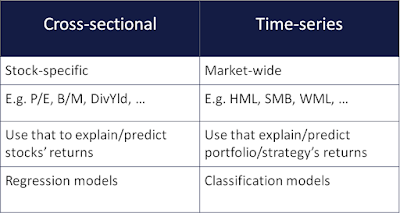
By Akshay Nautiyal and Ernest Chan This has been a summer of feature engineering for PredictNow.ai. First, we launched the US stock cross-sectional features and the time-series market-wide features. Now we have launched the features based on options activities, ETFs, futures, and macroeconomic indicators. In total, we are now offering 616 ready-made features to our subscribers. There is a lot to …
By Ernest Chan and Akshay Nautiyal Features are inputs to supervised machine learning (ML)
models. In traditional finance, they are typically called “factors”, and they
are used in linear regression models to either explain or predict returns. In
the former usage, the factors are contemporaneous with the target returns,
while in the latter the factors must be from a prior period. There are genera…
Every trader knows that there are market regimes
that are favorable to their strategies, and other regimes that are not. Some
regimes are obvious, like bull vs bear markets, calm vs choppy markets, etc.
These regimes affect many strategies and portfolios (unless they are
market-neutral or volatility-neutral portfolios) and are readily observable and
identifiable (but perhaps not predictable). Oth…
One major impediment to widespread adoption of machine learning (ML) in investment management is their black-box nature: how would you explain to an investor why the machine makes a certain prediction? What's the intuition behind a certain ML trading strategy? How would you explain a major drawdown? This lack of "interpretability" is not just a problem for financial ML, it is a prevalent issue in…
What is the probability of profit
of your next trade? You would think every trader can answer this simple
question. Say you look at your historical trades (live or backtest) and count
the winners and losers, and come up with a percentage of winning trades, say 60%. Is the probability of profit of your next trade 0.6? This might be a good
initial estimate, but it is also a completely useless numbe…
I generally don't like to write about our investment programs here, since the good folks at the National Futures Association would then have to review my blog posts during their regular audits/examinations of our CPO/CTA. But given the extraordinary market condition we are experiencing, our kind cap intro broker urged me to do so. Hopefully there is enough financial insights here to benefit those…
Introduction The monthly US nonfarm payroll (NFP) announcement by the
United States Bureau of Labor Statistics (BLS) is one of the most closely
watched economic indicators, for economists and investors alike. (When I was
teaching a class at a well-known proprietary trading firm, the traders suddenly
ran out of the classroom to their desks on a Friday morning just before 8:30am
EST.) Naturally, th…
By Akshay Nautiyal, Quantinsti Simulating returns using either the traditional closed-form equations or probabilistic models like Monte Carlo has been the standard practice to match them against empirical observations from stock, bond and other financial time-series data. (See Chan and Ng, 2017 and Lopez de Prado, 2018 .) Some of the stylised facts of return distributions are as follows: The tail…


 research.io