The following editorial appears in the November issue of Nature Medicine.
The international response to the ongoing Ebola epidemic has in many respects been more reactive than proactive. But there are changes that, if made, may shift the balance toward future readiness.
The projections are appalling. At the time of this writing, the World Health Organization (WHO) stated that the number of new Eb…
The following editorial appears in the September issue of Nature Medicine.
The size, speed and potential reach of the 2014 Ebola virus outbreak in West Africa presents a wake-up call to the research and pharmaceutical communities—and to federal governments—of the continuing need to invest resources in the study and cure of emerging infectious diseases.
At the time of this writing, more than 2,200…
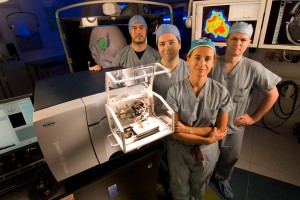
It doesn’t get much more complicated than brain surgery. Surgeons tasked with removing brain tumors have limited information available to help them make decisions about what tissue appears cancerous and how much to excise without damaging brain regions important to key functions such as movement and speech.
But decisions about how much to cut might become easier in the near future: A study publis…
It was only last summer, while on a kite surfing holiday, Garmt van Soest observed that his right hand was unusually weak. He also noticed that his speech was gradually becoming slower. “You wouldn’t know it now but I was really the fastest speaker in the office,” he says, enunciating deliberately. The changes motivated him to see his doctor. “I was really lucky,” says van Soest, a senior manager…
Since its appearance in Saudi Arabia in 2012, Middle Eastern Respiratory Syndrome (MERS) has spread to fifteen countries, including the US, where two cases were confirmed in the past month. Worryingly, about 30% of confirmed cases have been fatal, and the lack of specific antiviral drugs for the MERS-coronavirus (MERS-CoV), which causes the illness, poses a threat to public health.
A new insight …
Earlier this year, the Ebola virus popped up for the first time ever in West Africa. How it got there, some 2,000 miles from previous Ebola hotspots in remote parts of Central Africa, remains a mystery. Experts are particularly concerned about the current outbreak, which has sickened more than 250 and killed at least 140, because the pathogen has made its way into Conakry, the densely populated c…
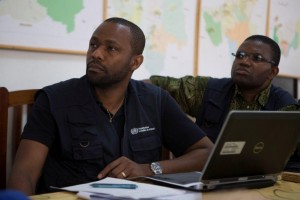
Armed conflicts and other humanitarian crises are notorious for claiming lives. But any disaster scenario can quickly go from bad to worse when health facilities are abandoned or ransacked. That’s precisely the situation brewing in the Central African Republic, where ongoing political fighting that erupted late in 2012 and intensified last December has plunged the country into chaos and devastate…
Before there was Twitter, there was Facebook, and before that, Friendster. And who can forget MySpace? There’s a similar trend of successive usurping technologies in the fast-moving quest to develop therapeutics capable of modifying the genome. Since the late nineties, we’ve witnessed the rise of several gene-silencing approaches, from “antisense” oligonucleotides and RNA interference (RNAi) to t…
The worst thing that can happen to a person participating in a clinical trial is what’s known as a ‘serious adverse event’, which can describe anything from permanent kidney damage or liver failure to hospitalization or even death. Federal law in the US mandates that researchers conducting trials of drugs or other products regulated by the country’s Food and Drug Administration (FDA) report adver…
If you’re anything like me, you love a good planetarium show. I don’t mean the trippy laser light shows set to Pink Floyd tunes (although these certainly have their place), but rather the kind of immersive experience that gives you a glimpse into the untold depths of the universe and a few wondrous moments of what it feels like to soar through outer space. Now, a team of neuroscientists, astronom…
Bioethicists have long known about a potential regulatory loophole that excludes certain types of clinical trials from federal regulations designed to protect the safety of human research subjects in the US. However, the number of clinical trials that fell into this gap remained unknown. Now, a letter published online today in the Journal of the American Medical Association reveals just how many …
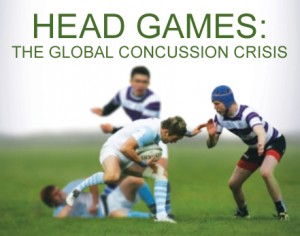
Although it wasn’t a contender for last night’s Academy Awards, there’s a powerful new film out this week that you may want to see. It’s the sports documentary, Head Games: The Global Concussion Crisis, and it provides a human face to the seemingly endless stream of high-profile reports linking repetitive head trauma to degenerative brain disease. Read more Continue reading →
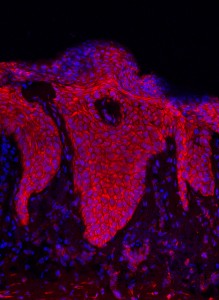
Nearly 2% of people worldwide chronically suffer from itchy and painful patches on their bodies, the manifestation of psoriasis, an incurable inflammatory disease in which immune cells infiltrate the skin and release molecules called cytokines that stimulate the skin cells to grow too rapidly. Treatments such as corticosteroids and immunosuppressants can help alleviate mild forms of the disease, …
This year marks the 50th anniversary of the US Surgeon General’s first ever report, which implicated smoking as the primary cause of emphysema and other chronic diseases. Despite decades of research, emphysema—a form of chronic obstructive pulmonary disease (COPD), which ranks among the third leading cause of death in the US—remains incurable. Read more Continue reading →
More than two decades ago, drugmakers searching for new hypertension medications unearthed a mysterious new cell receptor that responded to a hormone known as angiotensin II. This peptide hormone constricts blood vessels, but, oddly, blocking the so-called angiotensin II receptor type 2 (AT2) appeared to have no effect on blood pressure, so the target was largely ignored by drug developers. “Big …
Earlier this week, news that six months of exposure therapy to peanuts enabled almost 100 children with an allergy to this food to eat the equivalent of ten peanuts stirred a lot of optimism. It was just one of many studies showing that some patients with severe peanut allergies can actually gain the ability to consume to small amounts of the food by eating a little bit of this nut each day, gra…
Since the late 1970s, clinicians have distinguished breast cancers types according to the presence or absence of certain receptors that sit on the surface of these tumor cells. Depending on the receptors found—namely, the estrogen receptor (ER), progesterone receptor (PR) and human epidermal growth factor receptor 2 (HER2)—a doctor can get a better sense of the prognosis and which treatments migh…
The information that clinicians provide to patients about a medication prescribed for their migraines can influence the magnitude of pain relief induced by the treatment, reports a study published online today in Science Translational Medicine. The findings suggest that patients who receive positive messages about the potential efficacy of their treatment may have better treatment outcomes than p…
Scientists have developed a nanotechnology-based way to silence a key genetic switch involved in the formation of glioblastoma brain cancer. The technique, which delayed tumor growth in mice, consists of an injection of synthetic balls of RNA with a gold nanoparticle core. Researchers think similarly engineered RNA blobs, called spherical nucleic acids (SNAs), could eventually be used to treat Al…
It’s Nobel week. And while all eyes are on this year’s winners of the medicine/physiology prize for their work on cell transport mechanisms, it’s worth looking back at another award granted seven years ago to the discoverers of RNA interference (RNAi), the biological process by which small RNA molecules inhibit gene expression. In recent years, various RNAi therapies have entered clinical trials,…















 research.io