By day, I work as an experimentalist on laser-cooling molecules, but I’ve never fully surrendered my theoretical-physics license. I started as an undergraduate in Lincoln Carr’s group at the Colorado School of Mines in Golden, CO. I learned from his … Continue reading →
In my closet, in a basket labeled “Random stuff,” sits a bag of quarters. They total only a few dollars, but their worth to me exceeds their monetary value. I received the quarters from Mark Wise. Mark taught a course … Continue reading →
Mark Wise, the John A. McCone Professor of High Energy Physics at Caltech, passed away on July 10 at age 72. At a recent memorial service, John Preskill made these remarks. I’m John Preskill, Mark’s colleague on the Caltech physics … Continue reading →
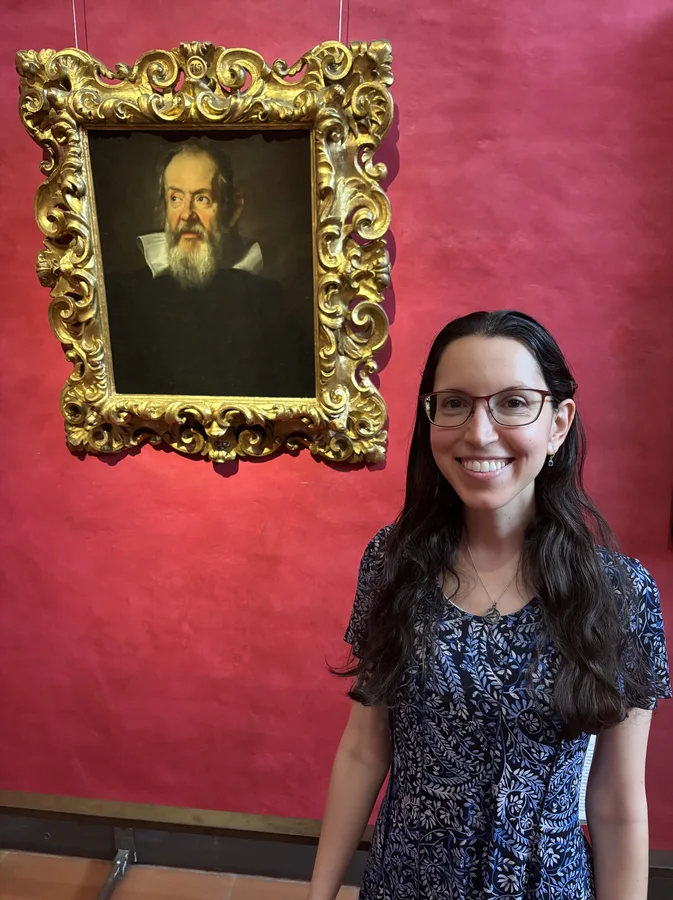
A scientist in Florence can’t avoid bumping into colleagues. When visiting the Renaissance’s birthplace last summer, I ran into a fellow physicist even on a Saturday morning. I was wandering around the Uffizi Gallery, a museum blessed with some of … Continue reading →
It’s happening. Your inbox registers an email from the chair of a faculty-hiring committee. With trembling fingers, you click on the message. “We’ve been grateful for the opportunity to learn about your work…The decision was very difficult…many highly qualified candidates…” … Continue reading →
When I was pursuing a PhD at Caltech, so was my friend Jeremy. He used to throw a dinner party every few months. The email invitations welcomed friends to partake of his cooking and, if we wished, to help him … Continue reading →
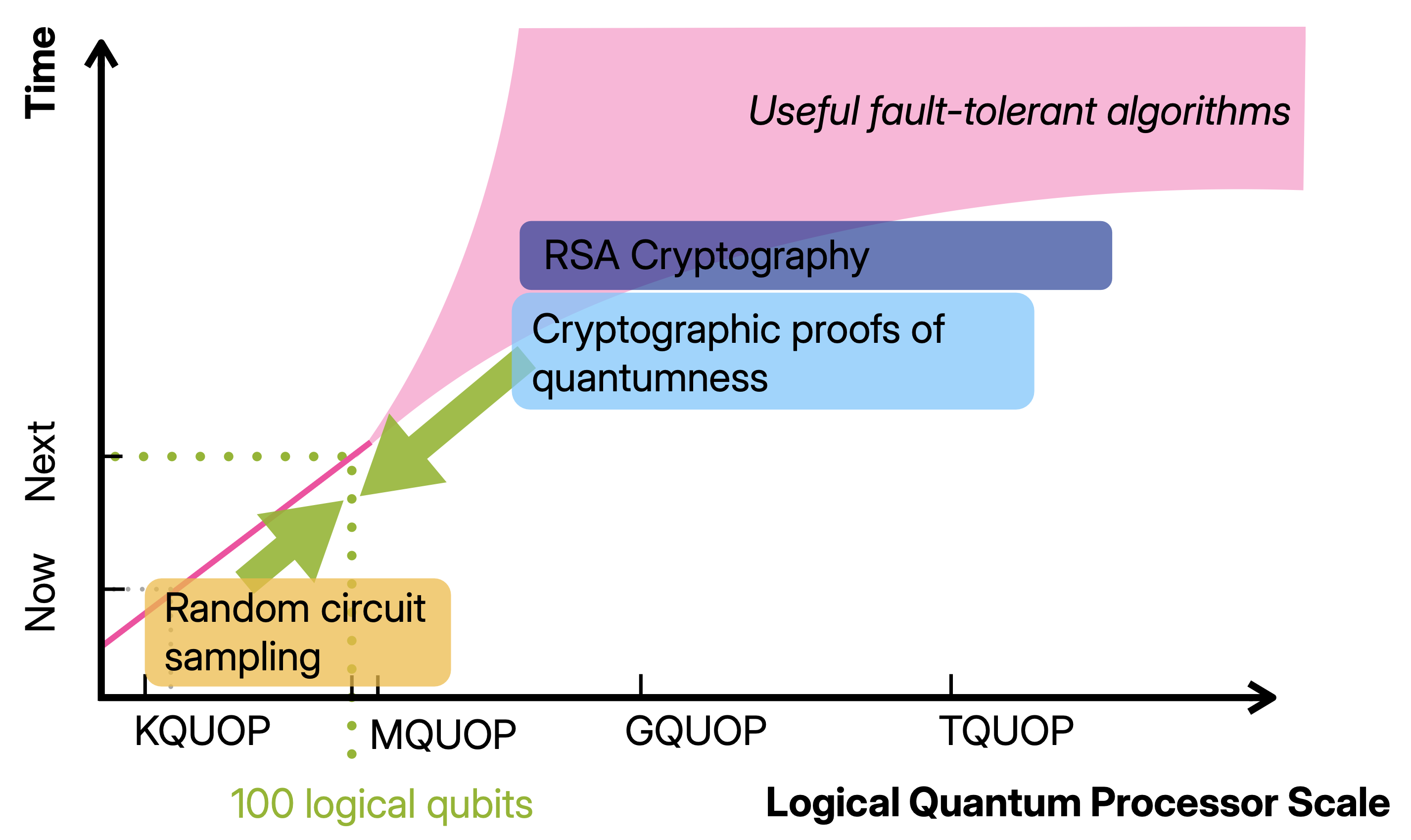
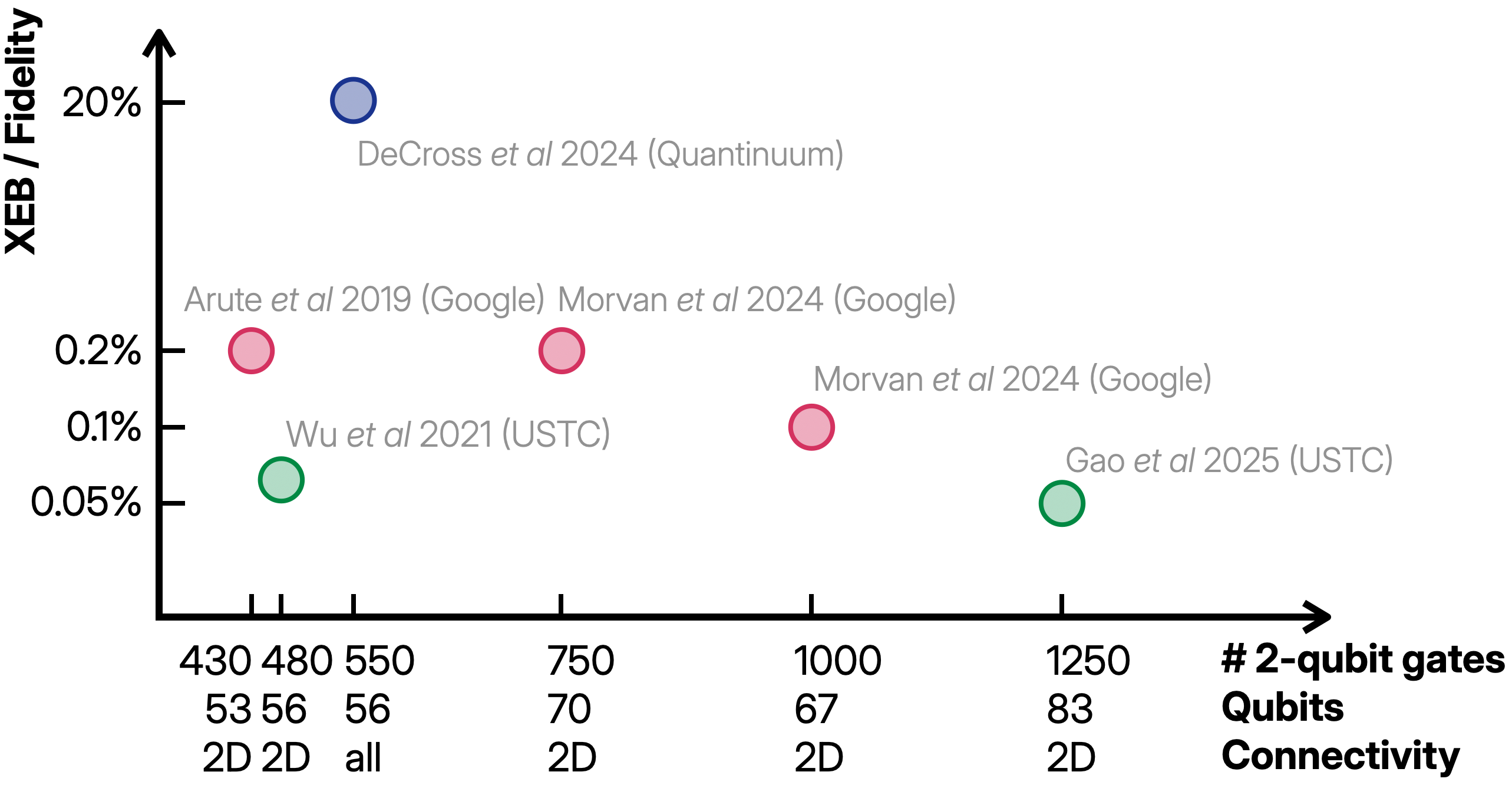
As experimental capabilities advance rapidly, the quantum computing community faces a critical elephant in the room: What will these quantum machines eventually be useful for? Will they deliver the promised broad societal impact, or will they remain highly specialized devices … Continue reading →
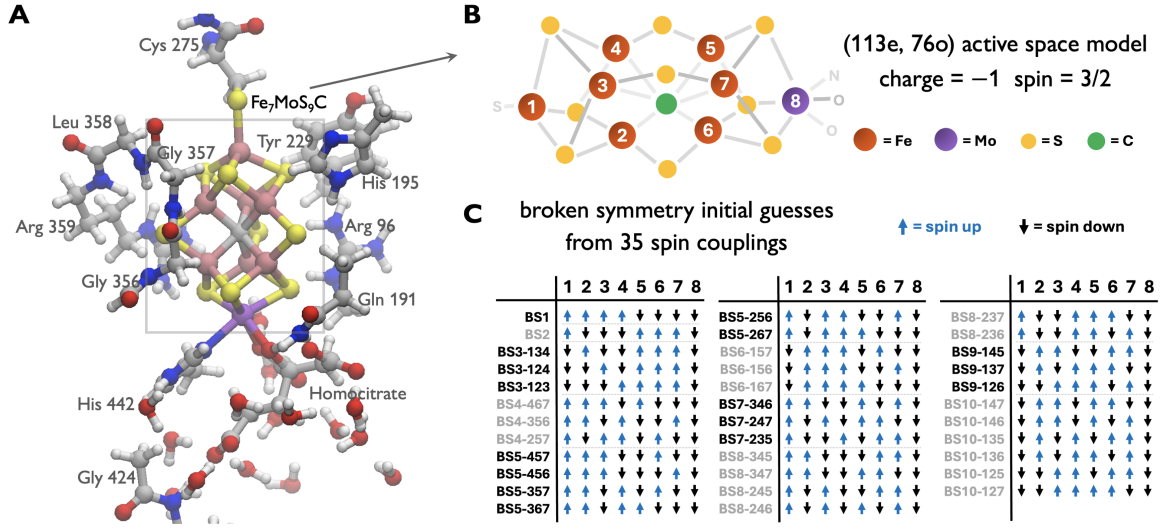
Recently, my coworkers and I put out a preprint “Classical solution of the FeMo-cofactor model to chemical accuracy and its implications’’ (Zhai et al. 2026). It is a bit unusual to write commentary on one’s own scientific article. However, in this case, given the many inquiries I have had about the work in the context of quantum computing, many of which have contained similar questions (and ofte…
We are now at an exciting point in our process of developing quantum computers and understanding their computational power: It has been demonstrated that quantum computers can outperform classical ones (if you buy my argument from Parts 1 and 2 of this mini series). And it has been demonstrated that quantum fault-tolerance is possible for at least a few logical qubits. Together, these form the el…
Einstein and I have both been spooked by entanglement. Einstein’s experience was more profound: in a 1947 letter to Born, he famously dubbed it spukhafte Fernwirkung (or spooky action at a distance). Mine, more pedestrian. It came when I first learned the cost of entangling logical qubits on today’s hardware.
Logical entanglement is not easy
I recently listened to a talk where the speaker declare…
Welcome back to: Has quantum advantage been achieved?
In Part 1 of this mini-series on quantum advantage demonstrations, I told you about the idea of random circuit sampling (RCS) and the experimental implementations thereof. In this post, Part 2 out of 3, I will discuss the arguments and evidence for why I am convinced that the experiments demonstrate a quantum advantage.
Recall from Part 1 that…
Recently, I gave a couple of perspective talks on quantum advantage, one at the annual retreat of the CIQC and one at a recent KITP programme. I started off by polling the audience on who believed quantum advantage had been achieved. Just this one, simple question.
The audience was mostly experimental and theoretical physicists with a few CS theory folks sprinkled in. I was sure that these audien…
On December 10, I gave a keynote address at the Q2B 2025 Conference in Silicon Valley. This is a transcript of my remarks. The slides I presented are here. The video is here.
The first century
We are nearing the end of the International Year of Quantum Science and Technology, so designated to commemorate the 100th anniversary of the discovery of quantum mechanics in 1925. The story goes that 23-y…
AI promises to revolutionize the way we do science, which raises a central technological question of our time: Can classical AI understand all natural phenomena, or are some fundamentally beyond its reach? Many proponents of artificial intelligence argue that any … Continue reading →
Should you require a model for an Oxford don in a play or novel, look no farther than Andrew Briggs. The emeritus professor of nanomaterials speaks with a southern-English accent as crisp as shortbread, exhibits manners to which etiquette influencer … Continue reading →
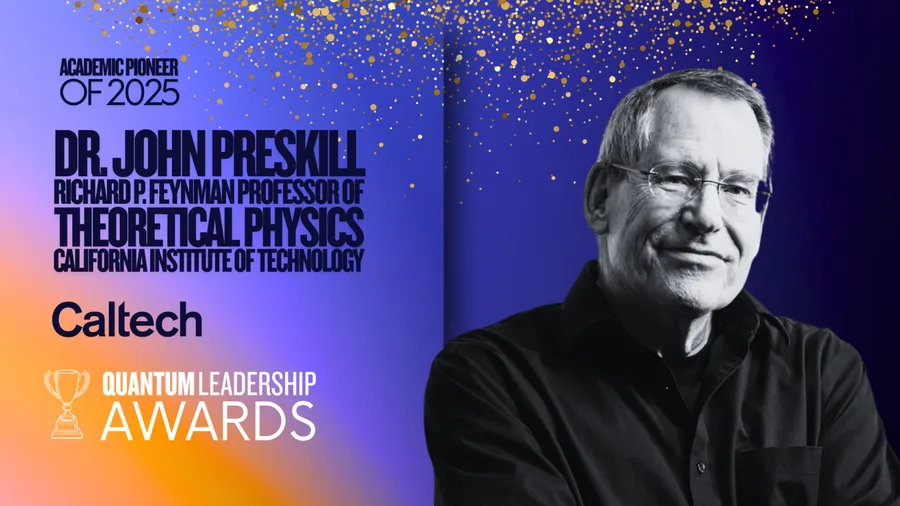
The 2025 Quantum Leadership Awards were announced at the Quantum World Congress on 18 September 2025. Upon receiving the Academic Pioneer in Quantum Award, John Preskill made these remarks. I’m enormously excited and honored to receive this Quantum Leadership Award, … Continue reading →
Sunflowers are blooming, stores are trumpeting back-to-school sales, and professors are scrambling to chart out the courses they planned to develop in July. If you’re applying for an academic job this fall, now is the time to get your application … Continue reading →
A common saying goes, you should never meet your heroes, because they’ll disappoint you. But you shouldn’t trust every common saying; some heroes impress you more, the better you know them. Ray Laflamme was such a hero. I first heard … Continue reading →
Nowadays it is best to exercise caution when bringing the words “quantum” and “consciousness” anywhere near each other, lest you be suspected of mysticism or quackery. Eugene Wigner did not concern himself with this when he wrote his “Remarks on … Continue reading →
I never imagined that an artist would update me about quantum-computing research. Last year, steampunk artist Bruce Rosenbaum forwarded me a notification about a news article published in Science. The article reported on an experiment performed in physicist Yiwen Chu’s … Continue reading →






 research.io