Dynamic Ecology


A while back, I announced that there’s an Easter egg in my new book, gave a couple of hints about it, and offered a small prize to the first person to find it. A friend of mine was the first … Continue reading →

This week: a new review of The Ecology of Ecologists, house elf misinformation, the largest tweetable number, Stephen Heard is at it again, and more. UPDATE: Oh, ha, I wrote this post forgetting that I already had a linkfest post … Continue reading →

This week: stand by your man fraudster, incentives are for losers, and more. Better late than never: Ecology Letters has retracted Dixson, Munday, & Jones 2010 because the data were deliberately faked and all three authors continue to insist that … Continue reading →

This week: doing less with less, which AI to use and how, classicist (no, not that one) vs. Christopher Nolan, new carnivorous plant, inverse seminar, forecasts vs. pants, art history guessing game, and more. There’s a new review of my … Continue reading →
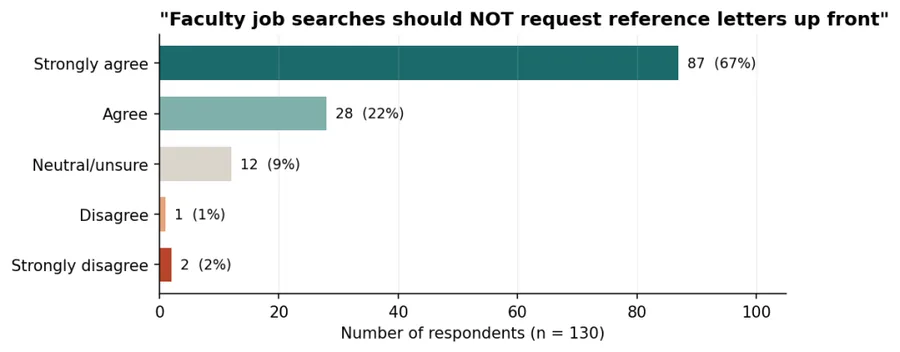
Recently, I polled y’all on your views on up front reference letters for faculty positions (i.e. reference letters that must be supplied by the application deadline, before the applicants have been evaluated or filtered in any way). I have no … Continue reading →

Last week I attended the ESA 2026 annual meeting in Salt Lake City. Here are some reflections on the meeting. It was a small meeting by ESA standards, but not as small as I feared it would be. It was … Continue reading →

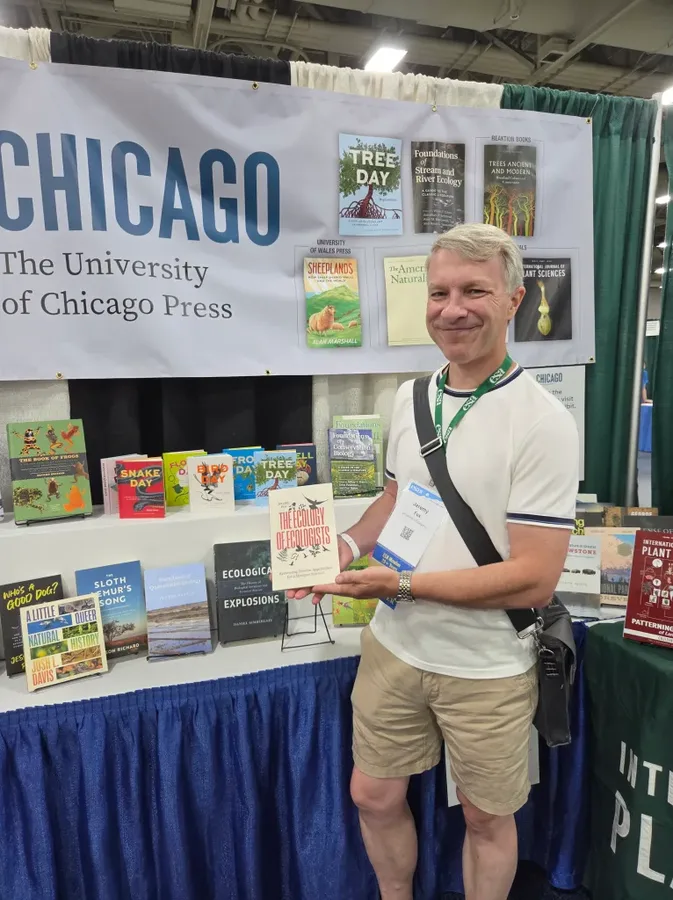
In all honesty, my main reason for attending the ESA meeting this year is that I’m hoping people will come up to me and tell me what they thought of my book. 🙂 So come find me! If you do … Continue reading →

This week: two new reviews of The Ecology of Ecologists, Emily Wilson vs. Christopher Nolan, Nobel Prizes that Don’t Exist But Should, this week in LLMs vs. mathematics, and more. Paul Ganderton reviewed my new book, The Ecology of Ecologists, … Continue reading →
A Friday linkfest a little while back linked to a Dan Davies piece on the politics of unrealistic numbers. Davies piece critiques the British government’s claim that a few tweaks to bank regulations could prompt “up to 80 billion pounds” … Continue reading →
You don’t have to read the EEB faculty job board ecoevojobs.net for long before you encounter complaints about faculty jobs that require reference letters up front (i.e. require reference letters for all applicants, by the application deadline). However, it’s often … Continue reading →
This week: a new case of apparent data duplication in a leading ecology journal, regression to the mean vs. solar wind, Puritanism vs. LLMs, and more. A PubPeer comment identifies substantial apparent data duplications in the data associated with Tao … Continue reading →
This week: tell me again what “expertise” is, and more. Cardiff University sociologist Harry Collins spent so much time studying and hanging around with physicists studying gravity waves that by many measures he was able to pass as a gravity … Continue reading →
I will be in Salt Lake City for the 2026 ESA meeting at the end of the month, and I’m guessing some of you will be to. While we are there, we will need to eat food and drink drinks. … Continue reading →
Many students get anxious about exams and other marked assignments. Some of that anxiety is normal, fine, and unavoidable. I doubt it’s possible to make college and university courses literally anxiety-free for all students, at least not without totally giving … Continue reading →

This week: reproducible p-hacking, the biodiversity sampling arms race (?), early warning breakthrough signals, bad data vs. the vibecession, thesis defense penalty shoot out, and more. The colors your screen can’t show you. Long but fascinating. Adam Mastroianni’s latest linkfest … Continue reading →
The latest review of my book just came out. It’s by Rachel Germain, for BioScience. Check it out! Also, we how have a new tab at the top of the page, compiling all of my posts about my book as … Continue reading →

Pretty much no decent-sized sample of people will all agree, on anything. Even experts don’t all agree on the topics on which they’re experts. 97% of climate scientists agree that humans are causing global warming–which means that 3% disagree. 95% … Continue reading →
My book has been cited for the first time! The citation comes from longtime DE reader, commenter, and guest author Jeff Ollerton and his collaborators. It seems appropriate that an unconventional scientific book would first get cited in an unconventional … Continue reading →

research.ioSign up to keep scrolling
Create your feed subscriptions, save articles, keep scrolling.