Washington Sea Grant
The sun is out, birds are chirping, and Washington’s boating season is officially here! Before Washingtonians rush to the docks and hop in their boats, it’s important to brush up on how to dispose of sewage from a boat’s holding tank in order to keep our waters healthy. Luckily, for recreational boaters there are plenty of resources available to both get educated in waste disposal methods a…
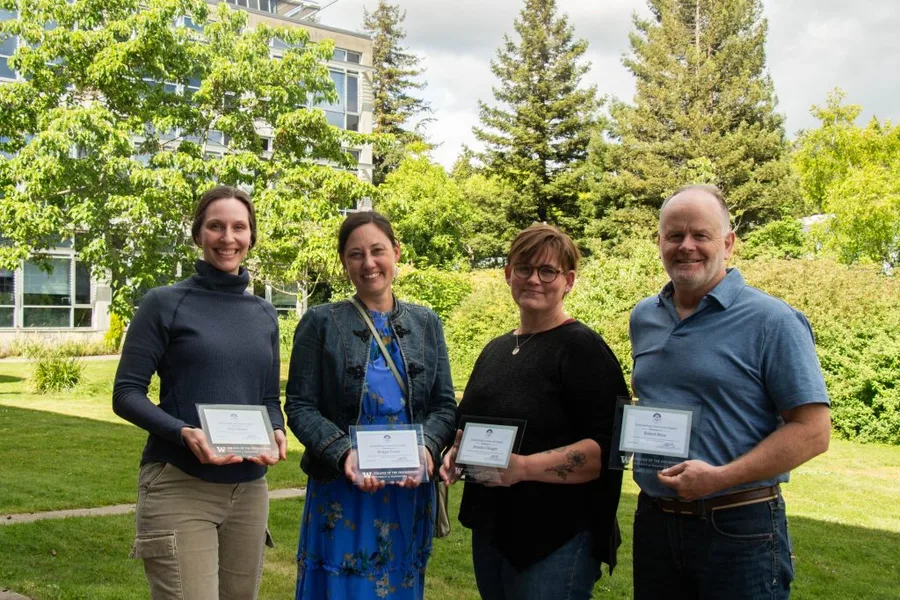
Washington Sea Grant is happy to share that five staff members have been selected for 2026 College of the Environment awards. Each year, the University of Washington’s College of the Environment recognizes outstanding individuals and teams who have made significant contributions to the college and the communities they serve. Nominations are solicited College-wide. Outstanding Community Impact Aw…
If you’ve visited the Washington Sea Grant (WSG) website recently, you may have noticed our new look. After many months of development in partnership with University of Washington’s College of the Environment, we are excited to share our new website with you. In addition to a fresh look, more cohesive branding, and beautiful imagery, we placed a particular emphasis on making sure information abou…
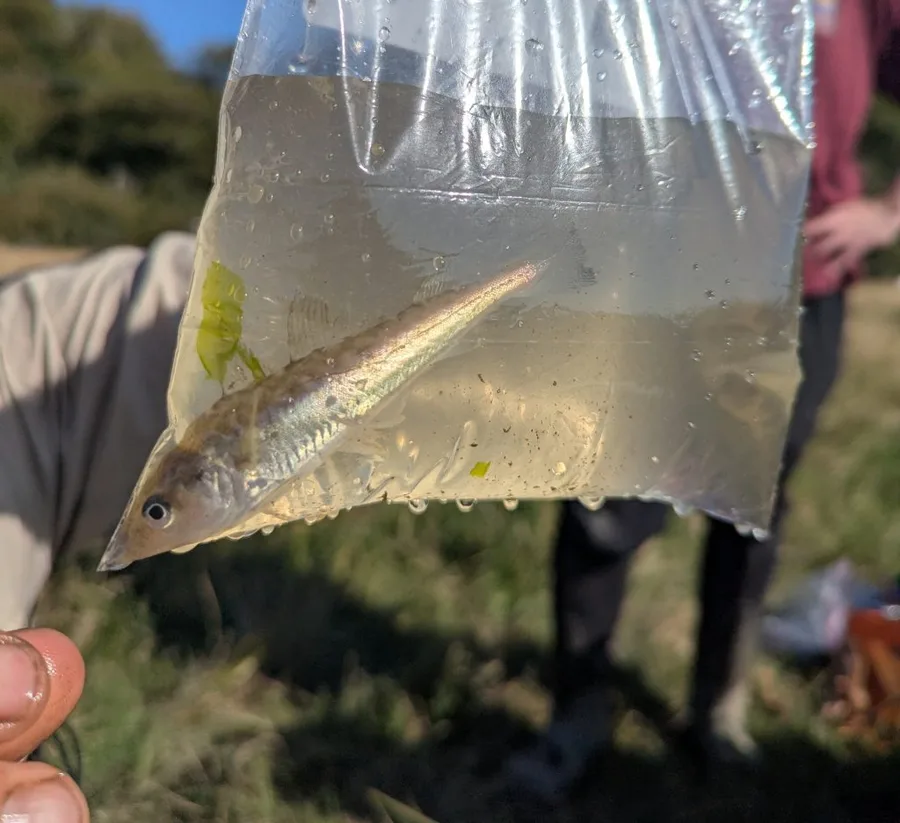
My name is Emily Bjornsgard, and I am so excited to join Washington Sea Grant as the Spring/Summer Graduate Science Communications Fellow! I am currently pursuing a master’s degree at Western Washington University, where I am examining the effects of diatom-derived polyunsaturated aldehydes (chemical compounds) on the survival and feeding abilities of larval forage fishes here in the Salish Sea. …

May 4, 2026 Crab Team likes to shine a light on the creatures we encounter in our muddy environments, from the rare and far-out, to the common and familiar, each of the species in Washington estuaries plays a role in local ecology. They also have a story to tell when they appear in Crab Team monitoring traps. In September of 2025, two separate network monitoring sites in Grays Harbor both capture…
April 29, 2026 Hello Crab Team Community! I’m excited to be back with you all as the new Crab Team Outreach Specialist! I had the pleasure of meeting some of you and entering lots of your data during the 2022 and 2023 seasons when I was a student assistant. In my new role, I’m looking forward to reconnecting, meeting those I haven’t yet, and finally putting faces to all the familiar names. I’ll b…
When Rich Desanto applied for the new Washington Sea Grant (WSG) Coastal Resilience Fellowship, he was looking for a change. After nine years in Seattle, mostly spent in grad school and weathering the COVID-19 pandemic, Desanto was feeling priced out of the city and unsettled in his career in landscape architecture. He was already subscribed to the Washington Sea Grant (WSG) Shorelines and Coasta…
April 29, 2026 By Alison Lorenz, Communications Project Coordinator When Rich Desanto applied for the new Washington Sea Grant (WSG) Coastal Resilience Fellowship, he was looking for a change. After nine years in Seattle, mostly spent in grad school and weathering the COVID-19 pandemic, Desanto was feeling priced out of the city and unsettled in his career in landscape architecture. He was alread…
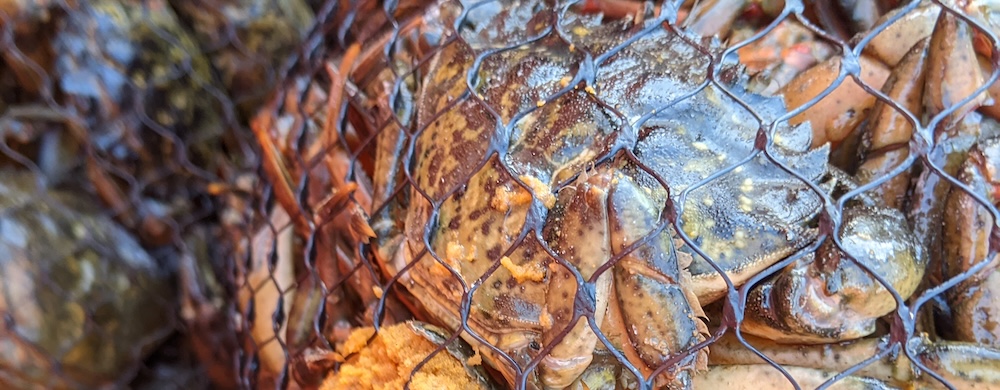
April 23, 2026 Shellfish growers have long been stewards of Washington’s rich marine waters. After all, the industry as a whole relies on healthy marine ecosystems. So it probably comes as no surprise that shellfish growers have been partners in efforts to control invasive European green crab from the get-go. It has been routinely observed that green crab aggregate around aquaculture gear, partic…
By Alison Lorenz, WSG Communications Project Coordinator Almost ten years after the Washington State Coast Resilience Assessment pointed to a need for a unified, state-funded response to growing hazards on Washington’s coasts, the Coastal Hazards Organizational Resilience Team – or COHORT – is making its mark in coastal resilience by letting communities lead. The team recently published their fir…
April 14, 2026 By Alison Lorenz, WSG Communications Project Coordinator Almost ten years after the Washington State Coast Resilience Assessment pointed to a need for a unified, state-funded response to growing hazards on Washington’s coasts, the Coastal Hazards Organizational Resilience Team – or COHORT – is making its mark in coastal resilience by letting communities lead. The team recently publ…
March 31, 2026 My name is Seiler Grubb, I usually go by Sei, and I am very excited to work with Washington Sea Grant as an undergraduate Science Communications fellow for the spring of 2026. I grew up in Kansas City, Missouri and always loved traveling to the coasts so I could be near an ocean. Fortunately, I got the opportunity to move to California in the fall of 2022. Shortly after, I worked w…
My name is Seiler Grubb, I usually go by Sei, and I am very excited to work with Washington Sea Grant as an undergraduate Science Communications fellow for the spring of 2026. I grew up in Kansas City, Missouri and always loved traveling to the coasts so I could be near an ocean. Fortunately, I got the opportunity to move to California in the fall of 2022. 
Washington Sea Grant (WSG) is excited to share that PhD candidate Mariah Ricci is the first Marine Carbon Dioxide Removal Fellow! As the ocean absorbs excess carbon dioxide from greenhouse gases, it becomes more acidic, causing harm to marine functions and ecosystems. Marine carbon dioxide removal (mCDR) describes the variety of technologies and approaches being explored to either remove carbon d…
March 20, 2026 WSG is excited to share that PhD candidate Mariah Ricci is the first Marine Carbon Dioxide Removal Fellow! As the ocean absorbs excess carbon dioxide from greenhouse gases, it becomes more acidic, causing harm to marine functions and ecosystems. Marine carbon dioxide removal (mCDR) describes the variety of technologies and approaches being explored to either remove carbon dioxide f…
Washington Sea Grant (WSG) is offering two basic Seafood Hazard Analysis Critical Control Point (HACCP) trainings at its Bendiksen Landing office in South Bend this spring. The trainings will be held in person March 26-27 and May 28-29. Federal law (21 CFR Part 123) requires establishments that process seafood to conduct a hazard analysis and, if a hazard is identified, develop and follow a HACCP…
March 11, 2026 Washington Sea Grant (WSG) is offering two basic Seafood Hazard Analysis Critical Control Point (HACCP) trainings at its Bendiksen Landing office in South Bend this spring. The trainings will be held in person March 26-27 and May 28-29. Federal law (21 CFR Part 123) requires establishments that process seafood to conduct a hazard analysis and, if a hazard is identified, develop and…
March 3, 2026 Washington Clean Marina is proud to announce Oak Harbor Marina’s renewal as a certified clean marina for another three-year period. The prestigious Clean Marina certification, a program administered by Washington Sea Grant (WSG), requires marinas to undergo a rigorous assessment of their environmental practices and plan improvements for the future. Located in the city of Oak Harbor …
research.ioSign up to keep scrolling
Create your feed subscriptions, save articles, keep scrolling.