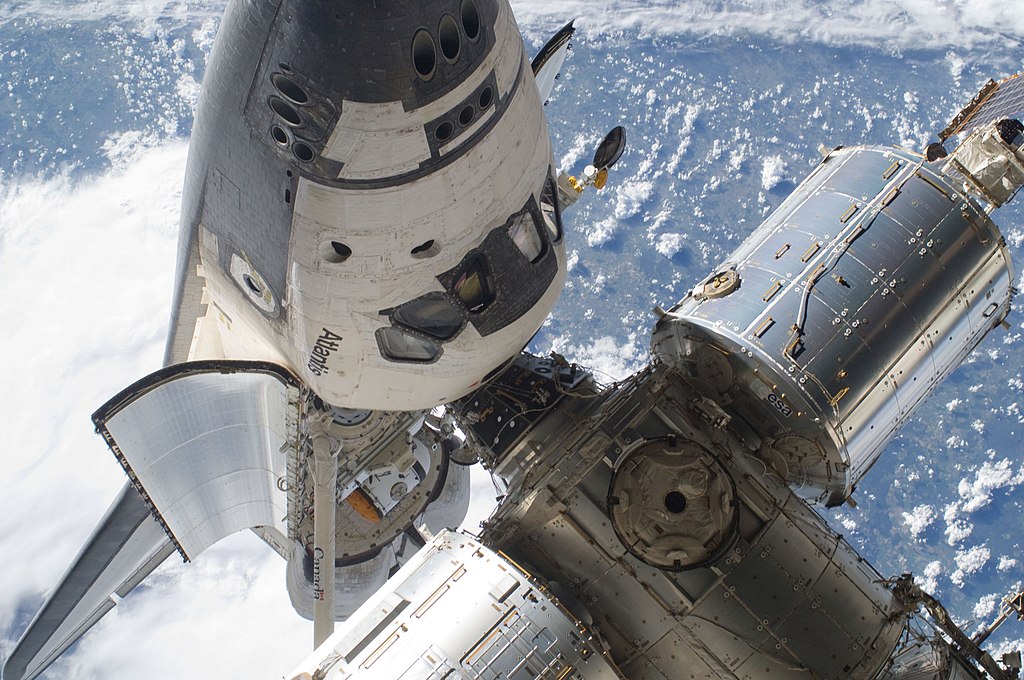
So far as an astronomer understands the ‘witchcraft’ of spacecraft design, very light weight and durable alloys of titanium, aluminum and magnesium are commonly used. This picture of the ISS shows many different materials that have to be made space-worthy to survive the extreme conditions of temperature and pressure. (Credit: NASA: STS-132).
Aluminum – Most commonly used conventional material (us…
According to popular science fiction accounts, on a space station orbiting Saturn, a man inside a punctured spacesuit swells to monstrous proportions and explodes. On Mars, the eyes of a man exposed to the near-vacuum of the martian atmosphere, pop out of his head and dangle by their optic nerves on the sides of his … Continue reading What happens when a human is exposed to a vacuum? →
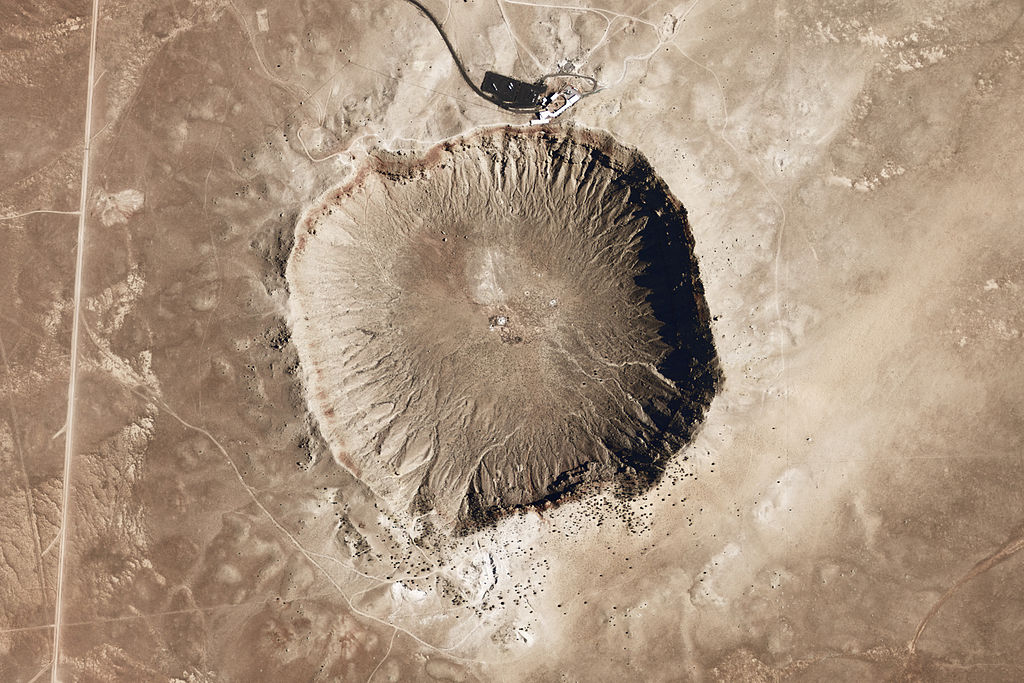
About 50,000 years ago, an object about 150-meters across traveling at 45,000 mph created the Barringer Crater in Arizona that is 1,500-meters across. (Credit:Wikipedia-NASA). It was a 10-megaton explosion. An asteroid for which there is some possibility of a collision with Earth at a future date and which is above a certain size is classified … Continue reading What would happen if a large objec…
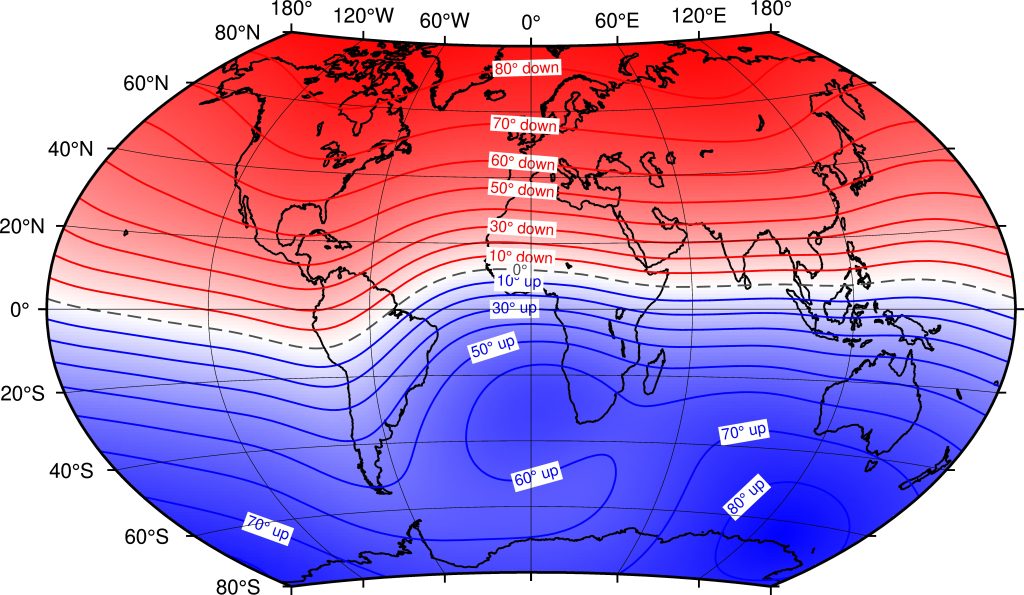
Earth’s magnetic field at the surface has been mapped for decades. This map provided by the British Geological Survey, shows basic polarity difference between the North and South Hemispheres. The magnetic field of Earth is shaped like the one you see in a toy bar magnet, but there is a very important difference. The toy … Continue reading Is Earth’s magnetic field about to reverse polarity? →
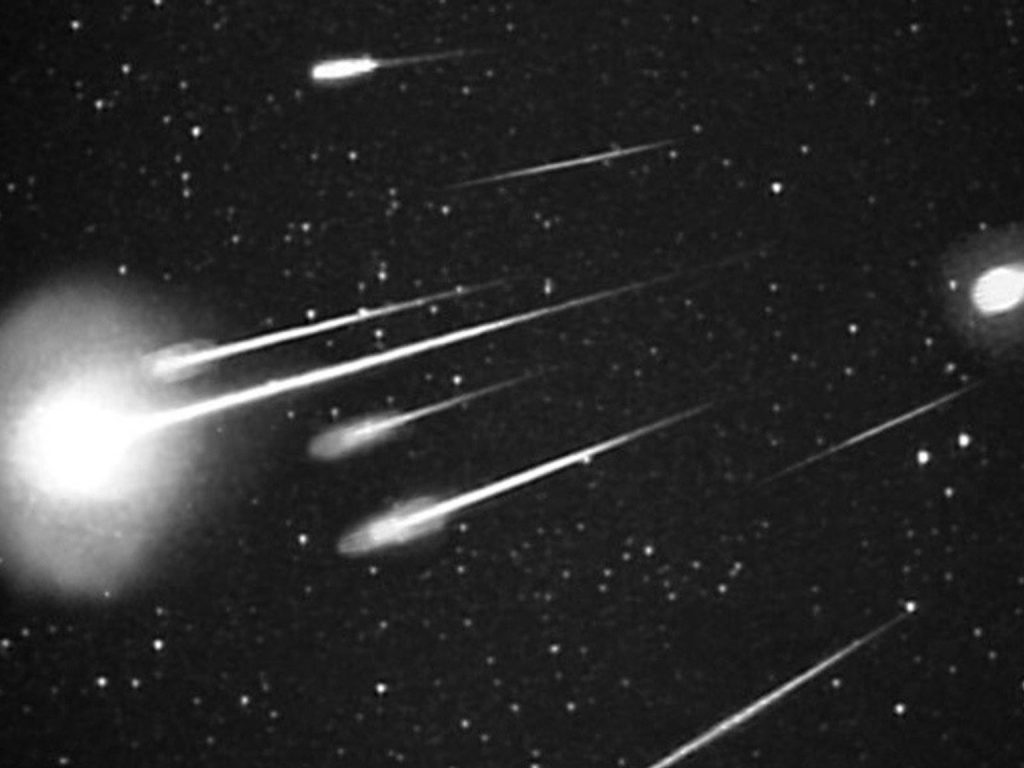
Many of us have seen meteor showers like the Leonids shown here in a NASA image seen at 38,000 feet from Leonid Multi Instrument Aircraft Campaign (Leonid MAC) with 50 mm camera. Credit: NASA/Ames Research Center/ISAS/Shinsuke Abe and Hajime Yano In an article in the journal Nature, March 28, 1996 vol. 380, page 323, Dr’s A.D. … Continue reading How many meteors enter the Earth’s atmosphere every…
Since 1967, some astronomers have intensively studied the evolution of stars similar in mass and age to our Sun. For example, Prof. Iko Iben at MIT published a ground breaking paper in 1967 ( The Astrophysical Journal, vol. 147, page 624) in which he calculated the changes in temperature, size and luminosity of stars with … Continue reading How long will the Earth remain habitable? →
The above picture, taken with the DES satellite on March 13, 1989 during a Great Aurora, shows that some aurora can be seen very far south. The southern edge of this auroral oval extended to the Great Lakes and could be seen almost directly over head. Further south, in Florida, observers saw a bright red … Continue reading Why don’t auroras happen near the equator? →
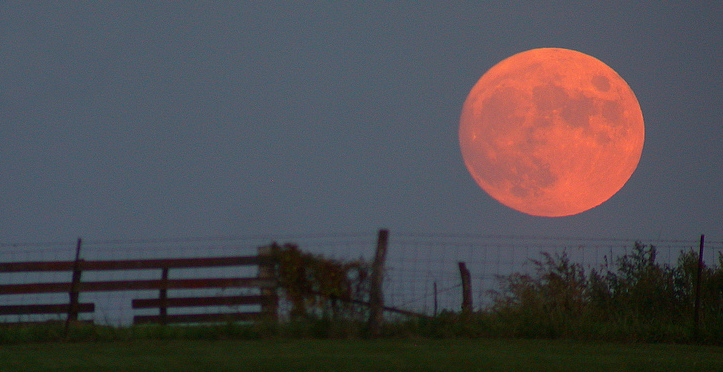
The Harvest Moon goes by many other names. (Credit:Wikipedia). There are several lists of these to be found across the WWW. The Old Farmers Almanac has one such list based upon the Algonquin names. A full Moon name used by one tribe might differ from one used by another tribe for the same time period, or be … Continue reading How did the Indigenous Peoples of North America name the Full Moons? →
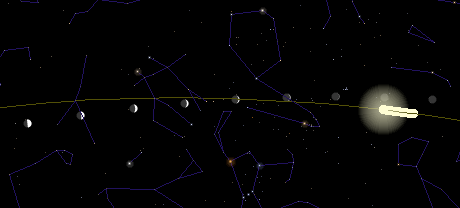
Here is a simulation of the moon on nine consecutive nights at the same local time. This image shows the positions of the sun and moon with respect to the stars over a nine-day period. The yellow line is the ecliptic, from which the moon never strays by more than about five degrees. (The sizes … Continue reading Why does the moon rise 50 minutes later each day? →
A typical scene on North Seymour in the Galapagos Islands. (Credit:Wikipedia-David Adam Kess). In general, tides along continental shores near the equator are much less violent than elsewhere. Tides are a very complex phenomenon. For any particular location, their height and fluctuation in time depends to varying degrees on the location of the Sun and … Continue reading Why are there no ocean tid…
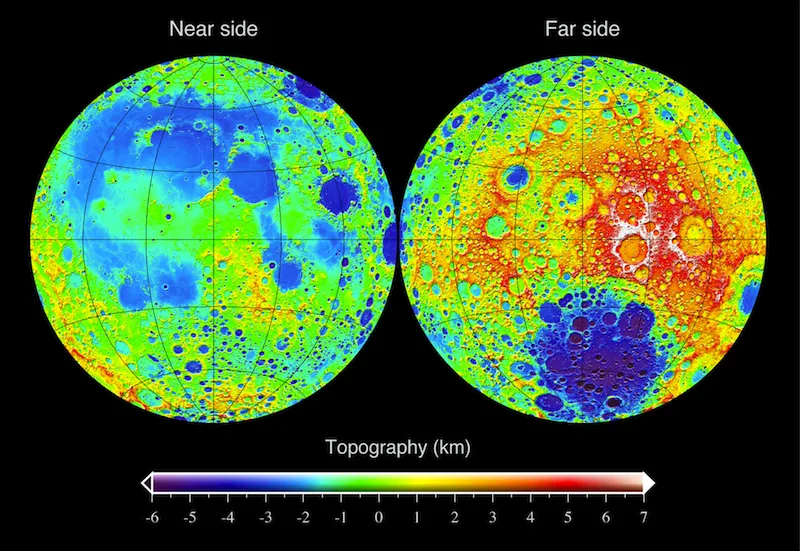
At the top of this article is a figure that shows how deformed the moons shape is from a perfect sphere based on orbital data from the Lunar Orbiter spacecraft. The topography of the Moon referenced to a sphere with a radius of 1737.4 kilometers. Data were obtained from the Lunar Orbiter Laser Altimeter (LOLA) … Continue reading Could you explain what causes the Moon’s synchronous rotation? →
In fact, the Sun is doing a slow-motion explosion. It is shedding about 600 million tons every second in light energy, and it is loosing about 100 trillionth of its mass every year in the so-called solar wind. Here is a satellite photo of one of these mass ejections seen by the NASA/ESA SOHO satellite … Continue reading Why doesn’t the Sun blow up? →




 research.io