Step outside on a crisp autumn evening and look up. The ultimate celestial show has already begun. Autumn brings longer, darker nights to the Northern Hemisphere, creating some of the best conditions of the year for stargazing. Stars fill the sky, familiar constellations return to centre stage and, every so […]
16 August 2026 Armagh Observatory and Planetarium is uniting with Ireland’s two other historic observatories in an ambitious bid to gain UNESCO World Heritage status. Along with the Birr Scientific and Heritage Foundation and Dublin Institute for Advanced Studies (Dunsink Observatory), the three observatories are known as the Historic Astronomical […]
RECORD-BREAKING JULY. DRIEST FOR AT LEAST 190 YEARS, EQUAL HIGHEST PRESSURE, AND MUCH WARMER AND SUNNIER THAN AVERAGE Armagh Observatory, 4th August 2026: Armagh Observatory reports that this July 2026 was the driest July on record at Armagh, that is, since daily rainfall measurements began at the Observatory in 1836. […]
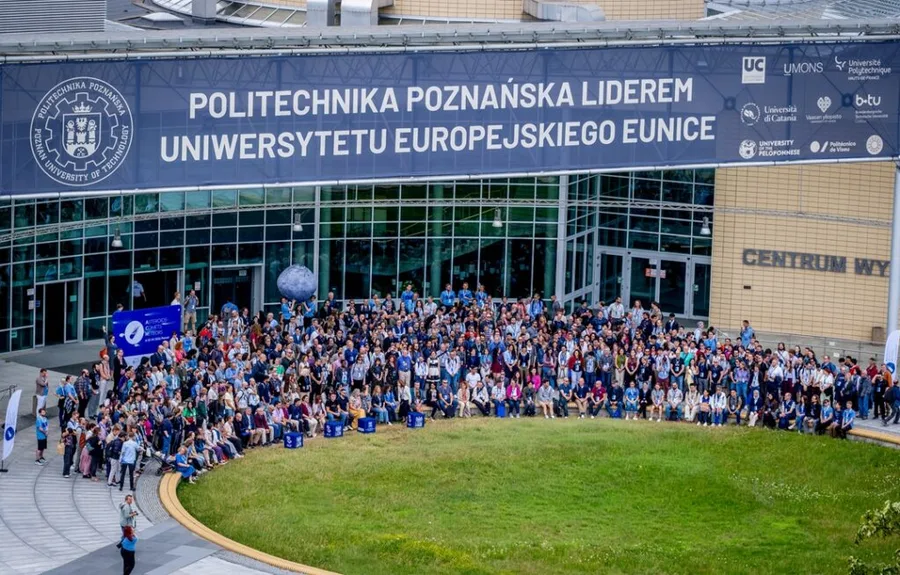
AOP students and staff gave good accounts of themselves at the 15th Asteroids Comets Meteors (ACM) conference that took place between the 6th and 10th of July in the historical city of Poznań in Poland. Held once every three years, the ACM is the largest international meeting for scientists researching […]
Highly prestigious ERC Advanced Grant will create up to eight new jobs An astronomer based at Armagh Observatory and Planetarium (AOP) has been awarded €2million to investigate how the first stars in the universe ‘switched on the lights’ following the Big Bang. Professor Jorick Vink believes the funding – one […]
JUNE MUCH WARMER, WETTER, AND SUNNIER THAN AVERAGE Armagh Observatory, 3rd July 2026: Armagh Observatory reports that June 2026 was much warmer, wetter, and sunnier than average. With an average temperature of approximately 15.8 degrees Celsius (60.5 Fahrenheit), this was the sixth warmest June on record at Armagh, shared with […]
The Swift space mission was launched in 2004 with a goal to detect high-energy Gamma-Ray Bursts (GRBs). Since then, this US, UK and Italian project has detected around 100 bursts every year, many of which are in the very distant universe. They are thought to be due to merging neutron […]
On Wednesday 12 August 2026, we will have the chance to witness one of nature’s most spectacular celestial events, a partial solar eclipse. From Armagh, the Moon will cover approximately 94% of the Sun at maximum eclipse, making it one of the most anticipated eclipses visible from Ireland in decades. […]
MAY 2026 WARMER, DRIER, AND SLIGHTLY SUNNIER THAN AVERAGE. FOURTH WARMEST SPRING ON RECORD, DRIER AND SUNNIER THAN AVERAGE Armagh Observatory, 4th June 2026: Armagh Observatory reports that May 2026 was warmer, drier, and slightly sunnier than average. Taking March, April, and May together, the meteorological spring was also drier […]
Cosmic commitment helps institution flourish As Volunteer Week approaches in June, Armagh Observatory & Planetarium (AOP) is celebrating the people who give their time and skills to support its work. Their newly appointed Volunteers Co-ordinator Kelly McGloin has been helping to open the doors to the centuries-old institution for students, […]
Welcome to the night sky for the next few months. In this article we will cover June, July and August. There will be tips & tricks, constellations, and some celestial events; including an ECLIPSE! So, let’s get into it. Summer can be a bit tricky for stargazing with the longer, […]
APRIL WARMER, SUNNIER, AND DRIER THAN AVERAGE Armagh Observatory, 5th May 2026: Armagh Observatory reports that the first two to three weeks of April 2026 saw a seasonal mixture of sunshine and showers but the month as a whole was warmer, sunnier, and drier than average. This April was the […]
As a student of Public History, I am fascinated by the invaluable, yet often underappreciated role played by archives and archivists. I was therefore delighted to undertake a thirty-day internship at the archives of the Armagh Observatory and Planetarium (AOP) as part of my Masters course. Under the supervision of Matthew McMahon, Museum Collections Officer, I spent the first portion of my time a…
MARCH 2026 WARMER, WETTER, AND SUNNIER THAN AVERAGE Armagh Observatory, 3rd April 2026: Armagh Observatory reports that March 2026 was warmer, wetter, and sunnier than average. This was the equal thirteenth warmest March on record at Armagh and the sunniest for four years, that is, since the record-breaking sunny March […]
Welcome to the new format of our Night Sky blog articles. Going forward we will be focusing our night sky articles to the four different seasons and highlighting what things you can see in the night sky during those months.
Spring is arguably the quietest season for stargazing, but we have just passed the March equinox so there is a great stretch to the evenings now. This means the sky will start…
We’d love to hear your thoughts and invite you to share your views on the redevelopment through a short online survey available here.
The survey will remain open until 12 April 2026.
A bold new chapter is beginning for the Armagh Observatory and Planetarium. This is a major investment that will help reimagine one of Northern Ireland’s most treasured historic, scientific and cultural landmarks, re…
Nobel Laureate Professor Reinhard Genzel delivers masterclass to top Irish students of astrophysics and high-energy particle physics.
On Wednesday 18 February the Royal Irish Academy hosted thirteen postgraduate students for a masterclass facilitated remotely by Nobel Laureate Professor Reinhard Genzel. Professor Genzel is Director of the Max Planck Institute for Extraterrestrial Physics, a profe…
JANUARY MUCH WETTER, SUNNIER, AND COOLER THAN AVERAGE
Armagh Observatory, 5th February 2026: Armagh Observatory reports that January 2026 was much wetter, sunnier, and cooler than average. As with January last year (2025) there were three named storms this year, Goretti, Ingrid, and Chandra, but only the last of the three, namely Storm Chandra, brought damaging impacts to Northern Ireland.
Storm …
December 2025: Warmer, Drier, and Much Sunnier Than Average
Record-Breaking Calendar Year 2025: Second Warmest Year on Record at Armagh, Drier and Much Sunnier Than Average
Armagh Observatory reports that December 2025 was warmer, drier, and much sunnier than average. With 54.7 hours of strong sunshine, it was the sunniest December at Armagh for three years and the tenth sunniest December on reco…
NOVEMBER WARMER, WETTER, AND SUNNIER THAN AVERAGE. AUTUMN 2025 WARMER, MUCH WETTER, AND DULLER THAN AVERAGE
Armagh Observatory, 6th December 2025. Armagh Observatory reports that November 2025 was warmer, wetter, and sunnier than average. The meteorological autumn (September, October, and November) was warmer, much wetter, and duller than average. This was the dullest autumn at Armagh for four ye…





 research.io