Physics – Quanta Magazine

The hunt for these ghostly particles has required some of the most audacious experimental setups ever built. The post How Physicists Track and Trap the Elusive Neutrino first appeared on Quanta Magazine

particle-physicsphysics

Recent observations suggest that dark energy is changing over time. Theorists wonder if dark matter is, too. The post A Dark Dimension Could Link Two of the Universe’s Great Unknowns first appeared on Quanta Magazine

astronomyastrophysicscosmology
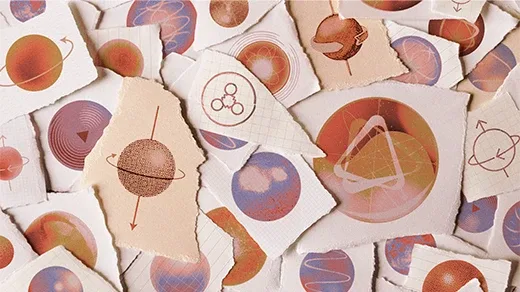
Plausible answers range from 17 to — in all seriousness — 995.5. The post How Many Elementary Particles Are There, Really? first appeared on Quanta Magazine

particle-physicsphysics

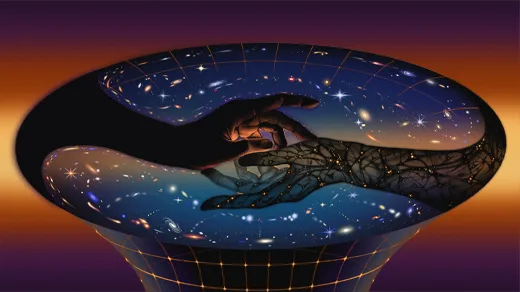
In holographic theories, physicists may have traced the pliability of space-time to its quantum roots: a measure of quantumness known as “magic.” The post Entanglement Builds Space-Time. Now “Magic” Gives It Gravity. first appeared on Quanta Magazine

physicsquantum-physicsrelativity

Over hundreds of years, increasingly sophisticated instruments have revealed — and continue to reveal — the secrets of our star. The post How We See the Beautiful, Violent Sun first appeared on Quanta Magazine

astronomysolar-physics

Earth’s largest volcanic system, hidden in mountain chains under the sea, has long been assumed to erupt only quietly. The shallow seafloor off Iceland tells another story. The post When Quiet Undersea Volcanoes Turn Disruptive first appeared on Quanta Magazine

earth-sciencevolcanology

It should be possible, but getting there will require a greater understanding of subsurface physics. The post Will We Ever Be Able To Forecast Volcanic Eruptions Like Weather? first appeared on Quanta Magazine

earth-sciencevolcanology

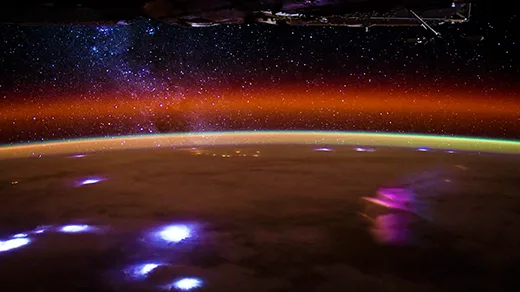
Armed with a slew of new instruments, physicists are closing in on one of nature’s oldest mysteries — and finding that storm clouds are seething with violent and unexpected phenomena. The post What Causes Lightning? The Answer Keeps Getting More Interesting. first appeared on Quanta Magazine

fluid-dynamicsphysics

Scientists keep detecting new forms of ice. According to simulations, there could be many more left to find. The post Physicists Discover the Most Complex Forms of Ice Yet first appeared on Quanta Magazine

condensed-matterphysics

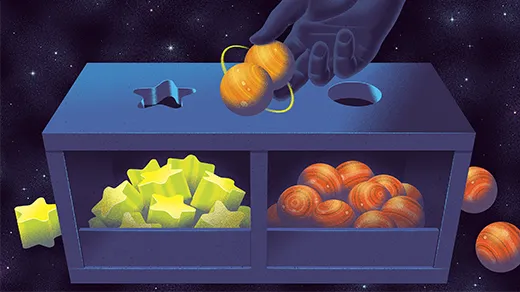
Some quantum cryptographers want to find ways to keep messages secret even if the rules of quantum mechanics don’t hold. The recently rediscovered idea of quantum jamming complicates things. The post Quantum ‘Jamming’ Explores the Truly Fundamental Principles of Nature first appeared on Quanta Magazine

physicsquantum-physics

Introduction In theory, a universe can come in any shape or size, but scientists prefer to think about three basic kinds of universes: one that’s expanding, one that’s collapsing, and one that stays the same. Out of these three simplified models, an expanding universe is the hardest for physicists to understand. Yet it’s exactly the one our real world most resembles. When physicists calculate wha…

physicsquantum-physics

Introduction In the summer of 1912, word reached Robert Fiske Griggs that the apocalypse had arrived on Kodiak, an inhabited island off the coast of Alaska. The following year, Griggs, a botanist at the University of Ohio, led the first of several expeditions to the island, where he and a team glimpsed a disquieting sight: Kodiak was shrouded in a full foot of ash. And it wasn’t just the island. …

earth-sciencevolcanology

Introduction Fifty-eight years after it first appeared, string theory remains the most popular candidate for the “theory of everything,” the unified mathematical framework for all matter and forces in the universe. This is much to the chagrin of its rather vocal critics. “String theory is not dead; it’s undead and now walks around like a zombie eating people’s brains,” the former physicist Sabine…

physicsstring-theory

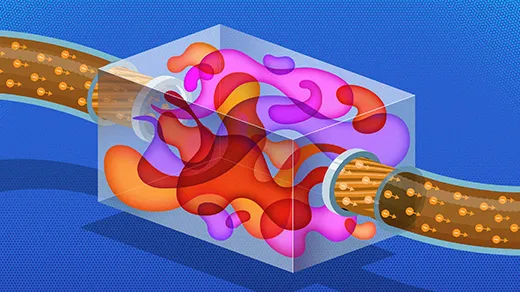
For 50 years, physicists have understood current as a flow of charged particles. But a new experiment has found that in at least one strange material, this understanding falls apart. The post Meet Strange Metals: Where Electricity May Flow Without Electrons first appeared on Quanta Magazine

condensed-matterphysics

Scientists have recently discovered scores of free-floating worlds that defy classification. The new observations have forced them to rethink their theories of star and planet formation. The post Rogue Worlds Throw Planetary Ideas Out of Orbit first appeared on Quanta Magazine

astronomyexoplanets

In the rumbles and groans of underwater volcanoes, Jackie Caplan-Auerbach finds her favorite harmonies — and clues to the Earth’s interior. The post The Scientist Who Decodes the Songs of Undersea Volcanoes first appeared on Quanta Magazine

earth-sciencegeology

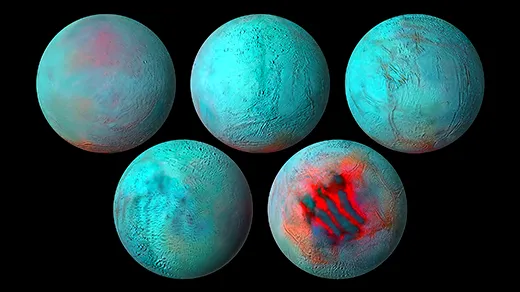
The moons orbiting Jupiter and Saturn appear to have subsurface oceans — tantalizing targets in the search for life beyond Earth. But it’s not clear why these seas exist at all. The post These Moons Are Dark and Frozen. So How Can They Have Oceans? first appeared on Quanta Magazine

astronomyastrophysics

After identifying interlocking symmetries in mammalian cells, scientists can describe some tissues as liquid crystals — an observation that lays the groundwork for a fluid-dynamic theory of how tissues move. The post Biophysicists Uncover Powerful Symmetries in Living Tissue first appeared on Quanta Magazine

biologybiophysics
research.ioresearch.io

Sign up to keep scrolling

Create your feed subscriptions, save articles, keep scrolling.

Already have an account?