Ghina M. Halabi is an astrophysicist and social entrepreneur, whose work lies at the intersection of science, entrepreneurship and education. During her PhD and postdoctoral work, her research was on internal structure and evolution of stars. Now, working at Cambridge Judge Business School Entrepreneurship Centre, she creates and leads impactful opportunities for scientists and academics to thriv…
The British cosmologist Stephen Hawking (1942–2018) was probably the most recognizable scientist of the last 50 years. Many of his greatest contributions were in the study of black holes. In particular, he discovered in 1974 that black holes emit what came to be known as Hawking radiation — which shows that black holes are not truly black and appears to contradict quantum mechanics.
His public pe…
Contributed by the following authors (in alphabetical order): Dr Claudia Antolini, Dr Clara Barker, Dr Kathryn Boast, Dr Izzy Jayasinghe, Dr Caroline Müllenbroich, Dr Clara Nellist
Why we launched a webinar series
2020 has seen an explosion of physics webinars. Many of these came about out of necessity to adapt established seminar series and conferences to suit the restrictions around the COVID-1…
Contributed by Saar Nehemia and Ido Kaminer – Technion, Israel Institute of Technology.
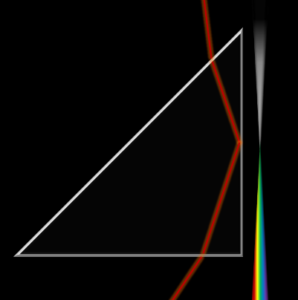
In 1934, Pavel Cherenkov discovered that when charged particles surpass the speed of light in matter, they generate an electromagnetic shockwave. A well-known analogue for this phenomenon is a sonic boom – shockwaves of sound generated when jet planes surpass the speed of sound in air. This new understanding o…
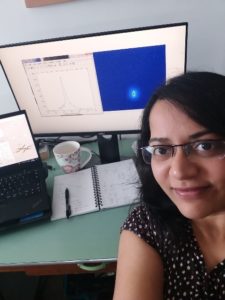
During the COVID-19 lockdown which led to the closure of many labs around the world, Dr. Amruta Gadge, a postdoctoral researcher in the Quantum Systems and Devices group at the University of Sussex*, made headlines for remotely setting up a Bose–Einstein condensate from her living room. Here, she tells us her story.
When the UK government announced the national lockdown on 23rd March due to the p…
On 21st July 2020, editors from various Nature journals who handle 2D materials research gathered in an online discussion with Joshua Lui (UC Riverside) , Cecilia Mattevi (Imperial College London) and Matthew Yankowitz (University of Washington) to discuss the reproducibility issues currently faced by the 2D materials research community. Read more Continue reading →
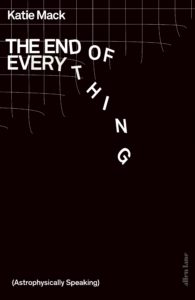
In her new book, “The End of the Universe (Astrophysically Speaking)”, Katie Mack takes us on a journey through cosmology to find out how it will all end. Will the Universe collapse into itself in a Big Crunch? Or will a vacuum bubble slowly swallow up everything? Read more Continue reading →
In 1967, Andrei Sakharov proposed conditions required in the early universe for generating matter and anti-matter at different rates, to explain the abundance of matter in our universe today. Charge-Parity (CP) violating processes are essential under these conditions. Measurements of the CP violation in quarks, first performed in 1964, are too small to explain the difference, and finding other so…
Francesca Chadha-Day is a Junior Research Fellow at the University of Cambridge, studying particle astrophysics and axion phenomenology. She is also a comedian. Here, Fran writes for us about her experience of stand-up comedy. … Read more Continue reading →
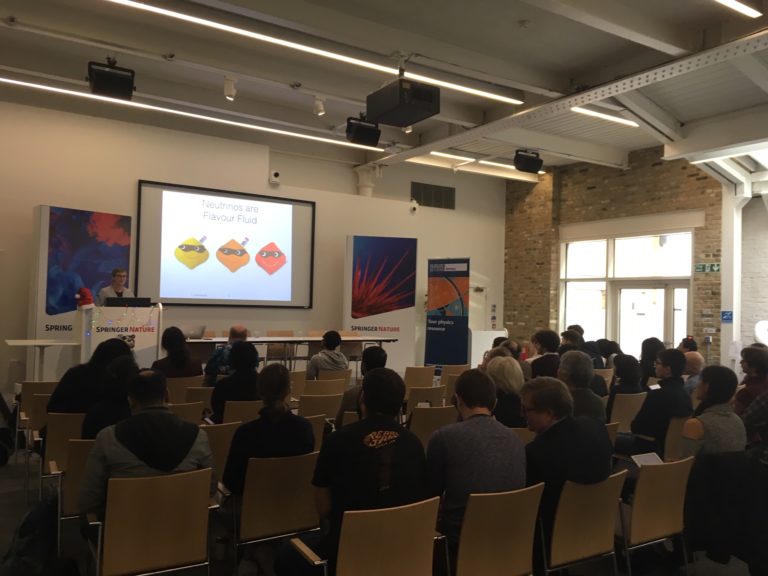
On 19th December we hosted a neutrino symposium in our Springer Nature campus in London. We invited four scientists to share their views and excitement about the past, present and future of neutrino physics. The meeting was organised together with King’s College London and with the support of JSPS. Read more Continue reading →
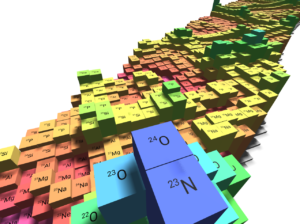
The nuclide chart is a staple of nuclear physics, visualizing the properties of nuclides arranged by their number of protons and neutrons. The chart appears in text books, talk slides and Lego™ form (in the Binding Blocks science outreach programme). The 3D Nuclide Chart is a web app put together by Ed Simpson (@SuperSubatomic on Twitter) of the Australian National University. The app lets users …
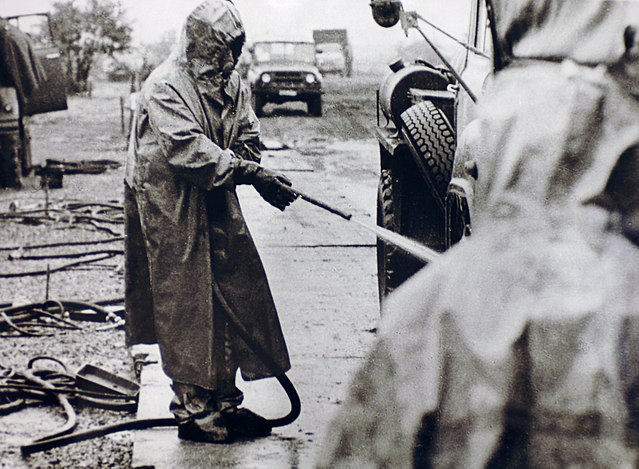
The new British-American miniseries ‘Chernobyl’, aired on HBO and Sky in May and June 2019, takes you on a dark ride through the insanity that accompanied the nuclear disaster of Chernobyl. Five haunting episodes depict the night and aftermath of the explosion of reactor 4, using the style of disaster films to vividly show how the combination of bad nuclear reactor design, irresponsible scientist…
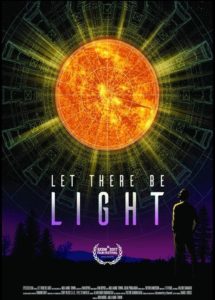
Too little does the public hear about nuclear fusion — a process in which two light nuclei collide at high speed and fuse into a heavier nucleus — which is surprising considering the need for alternative energy sources and fusion’s promise to deliver limitless clean and safe energy. If the word fusion brings anything to the mind of the wider public, this is likely related to ITER, a research reac…
Nina recently joined Nature Physics as a Senior Editor, having worked at Nature Communications for the last three years. Her research background is in plasmonics and metamaterials, particularly their interaction with optical emitters. Read more Continue reading →
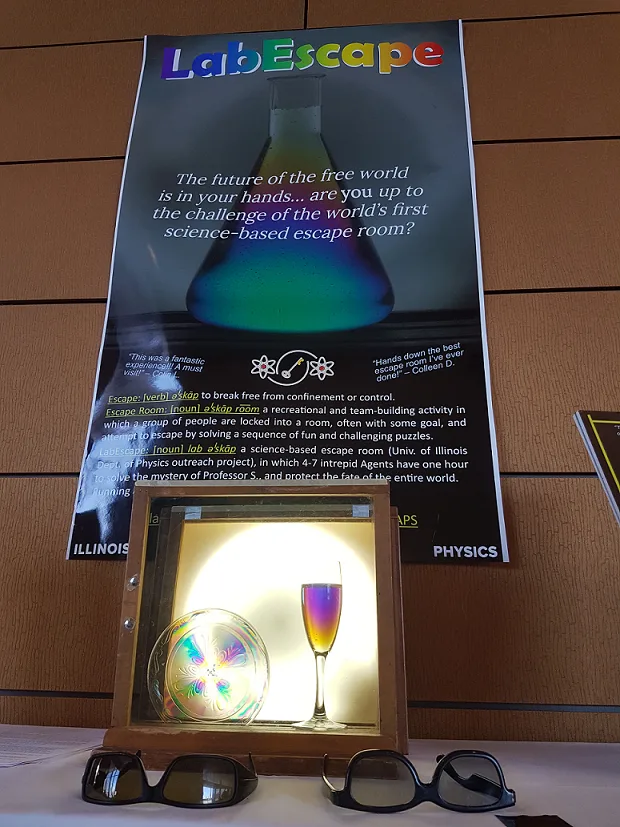
LabEscape is an escape room based on physics – I got the opportunity to explore it during the APS March meeting in Boston, where it was set up for one week away from its usual site in Urbana, Illinois. Read more Continue reading →
In theory, many ordinary materials can have exotic topological phases. But how can we find them? In 2018 a research group from the National Laboratory for Condensed Matter Physics in Beijing scanned 39519 materials to predict which phases of the already-known compounds might exhibit topological properties. These materials were summarised into an interactive database Materiae, where you can browse…
David Abergel is an Associate Editor at Nature Physics. Before joining Nature Physics in 2017, David carried out theoretical research on graphene and other two-dimensional crystals, and quantum topological materials. … Read more Continue reading →









 research.io