In vitro fertilization (IVF) is emotionally and financially taxing, especially for women of advanced maternal age. As maternal age increases, the risk of chromosomal abnormalities (aneuploidy) in embryos rises, heightening fears of conditions like Trisomy 21, or Down syndrome. Capitalizing on this anxiety, the IVF industry heavily promotes Preimplantation Genetic Testing for Aneuploidy (PGT-A) as…
There is growing research interest in the prevalence of moral injury – a profound psychological harm caused by judgments which deviate from what an individual or society views as “right” – among those who have been exposed to trauma, such as veterans and survivors of abuse. However, what makes a judgment “moral”? Philosophers have long […] The post Mapping the Moral Brain: Probing the Architectur…
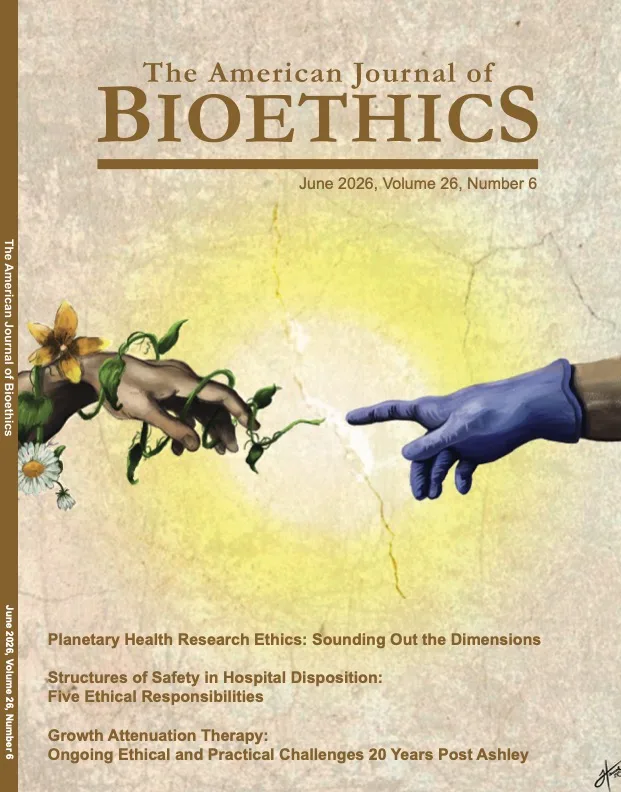
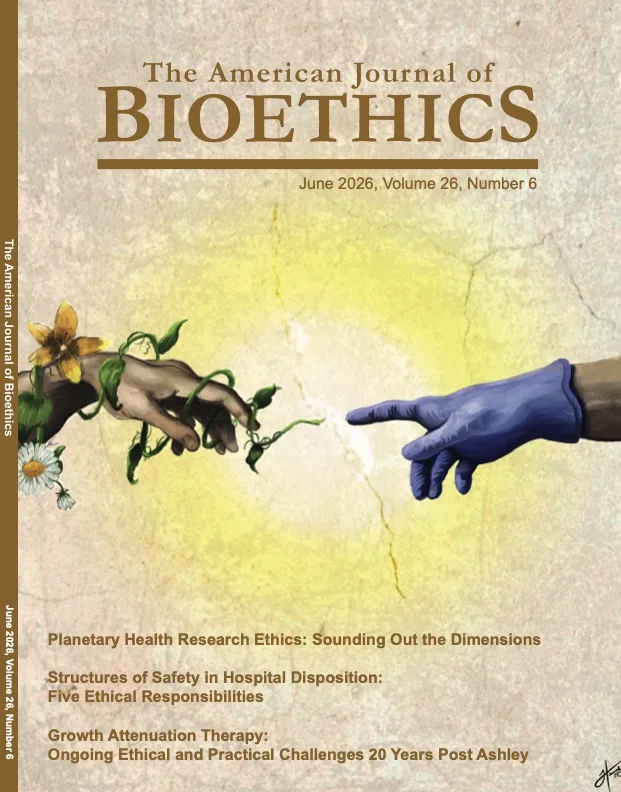
This editorial appears in the June Issue of the American Journal of Bioethics Planetary ethics, or examining the moral relationship between humans and the physical world, is a growing field of inquiry related to the broader discipline of environmental ethics. Essentially, more people interested in the health of our planet and the negative impact humans […] The post Centering Our Social World in P…
This editorial appears in the June Issue of the American Journal of Bioethics Twenty years ago, Dan Gunther and I published our experience using high-dose estrogen to attenuate the growth of a young girl with severe and permanent neurodevelopmental disability that left her non-verbal, non-ambulatory, and completely dependent on others for her care. Gunther was […] The post Ashley Revisited: Refle…
From TikTok to Instagram, social media has become one of the most powerful influences on how people understand health and illness. Nearly 90% of American adults turn to social media for healthcare information. Rising healthcare costs, limited time within busy schedules, and the convenience of digital accessibility have all contributed to this shift. Yet social […] The post When Social Media Becom…
The viewership of traditional athletics has always been dwarfed by MMA, boxing, and football. The Enhanced Games, commencing this week, might change that. The organizers have recruited an impressive cohort of ex-Olympians to participate in the first event to openly permit performance-enhancing drugs. Despite all the moral panic it has generated, the Enhanced Games introduce […] The post The Enhan…
In John Scalzi’s sci-fi novel Old Man’s War, soldiers receive the BrainPal, a neural interface that boosts thinking and connects them to computer assistants. Sounds far-fetched? Perhaps not for long. Military neuroenhancement may be closer than we think. An AI-assisted closed-loop brain-computer interface, or AI-BCI, could be a breakthrough tool to upgrade warfighters. But while […] The post When…
Over the last four years, GLP-1 agonists such as Ozempic, touted by many as miracle weight-loss drugs and popularized by celebrity culture, have seen a 700% increase in use among patients without diabetes. Their use for weight loss has more than doubled since early 2024. On November 6, 2025, the Trump administration announced that the cost of these drugs […] The post Ozempic, Coerced Weight-Loss,…
This editorial appears in the May Issue of the American Journal of Bioethics The recent increases in the number of persons detained by ICE in the United States is affecting health care. Many health-care professionals and facilities that serve immigrant communities report a chilling Health Technology Assessment (HTA), and the value assessment frameworks that underlie […] The post Whose Values Defi…
This editorial appears in the May Issue of the American Journal of Bioethics In their Target Article “Inpatient Hospitalization of Adolescents Diagnosed with Autism Spectrum Disorder: An Ethical Analysis,” Hrycko and Sinderbrand argue that inpatient psychiatric hospitalization (“IPH”) creates lasting harms to autistic adolescents. They go on to state that autistic adolescents “are admitted to […]…
When I was promoted and received tenure, I received a card from another Black woman professor that said, “The ancestors are moving mountains to see you rise.” As I made the news public, other Black professionals made reference to our ancestors, telling me things like “I’ve made the ancestors proud” or “I am my ancestors’ […] The post Eviscerating the Voting Rights Act, Black Bioethics, and the An…
Oregon’s psilocybin services are often described as quite expensive in both media coverage and academic discussions. However, when making this claim, we should ask: expensive compared to what? Whether or not psilocybin services are considered too expensive may, in fact, depend in large part on whether their use is being thought of as healthcare, a luxury experience, a quasi-therapeutic […] The po…
In the context of healthcare, moral distress has traditionally described the emotional and psychological distress healthcare providers experience when they are prevented from acting in the way they feel is most ethical or just. Their moral agency is typically constrained by institutional policies, pressures, or a lack of resources. NPR, for instance, recently reported on […] The post Can Research…
Psychedelic-assisted therapy will soon be approved for adults. If the history of adult psychiatric drugs is any guide, adolescents will not be far behind — which makes the question of how they should be included in research an urgent one. That question has typically been framed through the lens of autonomy, and specifically through the […] The post How Should Adolescents Be Included in Clinical P…
In American hospitals, beneath the noise of day-to-day clinical work, a quieter, more insidious shift has taken place—a linguistic one that is eroding the physician’s identity. After two decades of practice across three continents, I have been called many things: healer, doctor, advisor, confidant, and student. Only in the United States have I been routinely […] The post In Every Country I Practi…
Used by one-third of US adults and the majority of teens, the social media platform TikTok, has emerged as a hotbed for social and political commentary. Viral TikTok content regularly amasses millions of views and hundreds of thousands of comments. The platform has become the most popular app in the last four years, creating some […] The post TikTok Ethics: Social Media’s Influence on Moral Value…
The Pitt has been praised not only for its superb writing, direction, and acting, but also for its accuracy. For example, MedPage Today editor-in-chief Jeremy Faust (who is also an emergency physician) has lauded it as “a very sophisticated medical show.” The Pitt has addressed a multitude of issues, ranging from end-of-life care to lack […] The post Bioethics TV: The Pitt Puts the Spotlight on S…
Bioethics exists to help us think clearly about difficult medical decisions, especially when those decisions affect individuals who cannot speak for themselves. At its core, bioethics asks a set of enduring questions: Who decides? Who bears the risks? And what obligations do we have to protect the most vulnerable? These questions arise across medicine, but […] The post Why Bioethics Matters in th…
Our research team has recently completed a pilot study with groups of older adults (N=11) and family care partners (N=9) to interact with Sava, our humanoid Pepper robot that is trained to assist with conversation and emotional support. We studied the potential effects of socially assistive robots, or carebots, for supporting persons with mild cognitive […] The post The Promises and Challenges fo…
My great-aunt chose medical assistance in dying (MAiD) in Alberta, Canada. It was sad – all death is – but it brought us comfort knowing that her death was autonomous, compassionate and mattered. And now, legislation threatens to take that choice away from others. On March 18th, Alberta introduced Bill 18: the Safeguards for Last […] The post My Great Aunt Had a Choice. Bill 18 Threatens That for…
bioethicslaw
research.io
Sign up to keep scrolling
Create your feed subscriptions, save articles, keep scrolling.

 research.io