Organisations are increasingly excited by the potential of agentic AI, but many overlook the legacy obstacles that stand in the way. In this post, I explore why successful AI adoption depends on tackling fragmented data, brittle processes and outdated architectures, and why modernisation is often the most important step towards unlocking value from intelligent agents.
Concerns about control are one of the biggest barriers to adopting agentic AI, particularly in regulated environments. In this post, we discuss how organisations can harness AI safely by designing processes around the strengths of both humans and machines, then applying the right controls, guardrails and monitoring.
Organisations increasingly recognise the value of making data more accessible, but concerns around control, risk and governance often stand in the way. In this post, I explore why data democratisation doesn't require organisations to sacrifice oversight, and how data products, platforms and agent factories can unlock innovation while maintaining trust, compliance and accountability.
As organisations invest in AI, many discover that their biggest challenges are not AI-related at all. In this post, I explore why strong data foundations, from quality and accessibility to governance and integration, are essential for turning AI ambition into reliable, production-ready outcomes.
Organisations often focus on collecting data and connecting systems, but the greatest value comes from helping datasets work together and making insights accessible to the people who need them. In this post, I explore the journey from siloed data to democratised access, showing how self-service analytics and AI can unlock hidden value, while strong governance provides the guardrails for confident…
Agile teams are built on more than frameworks and processes. This article explores why effective leadership, trust and delegation are fundamental to true organisational agility, drawing lessons from the British Army's Mission Command philosophy.
Agentic AI is impacting every part of an organisation, from customer journeys to back office, supply chains and software engineering. Everything is changing at an accelerating speed, all at the same time, everywhere, all at once. In response, organisations don't want drawn-out analysis engagements with consultants or long strategy projects; they want action. They want to quickly and safely deploy…
Migrating a legacy codebase of any reasonable complexity has always been challenging, but AI tools have fundamentally changed the economics of the process. Generating code is now cheap and fast, but we still need confidence that the generated code is as good as, or better than, code we'd write ourselves.
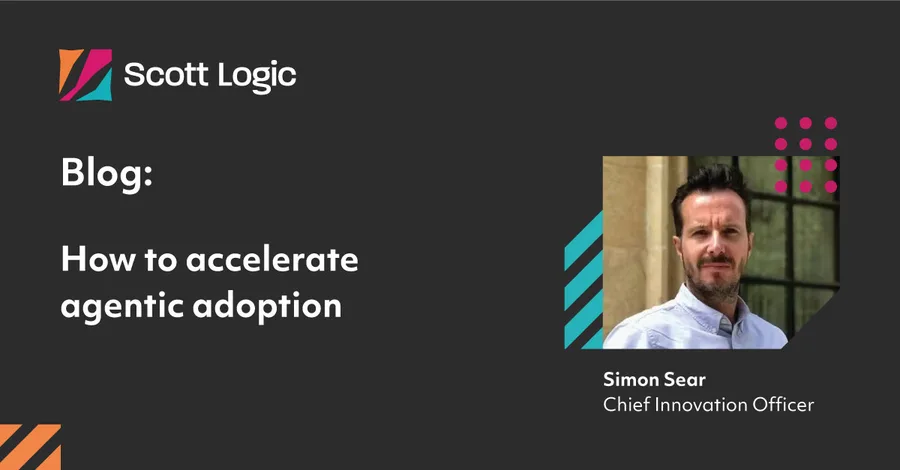
Everyone is talking about agentic AI. That’s not surprising. The promise is huge: AI agents that can plan, reason, use tools, work across systems and get real work done. In software engineering, that could mean faster delivery and better quality. In operations, it could mean complex processes moving with less manual effort, fewer handovers and better decisions.
Chinese-led open-weight AI models have closed the capability gap with frontier labs like OpenAI and Anthropic, challenging the assumption that massive investments guarantee lasting competitive advantage. By 2026, open-weight alternatives offer equivalent or superior performance at a fraction of the cost, along with greater ownership and data privacy, fundamentally disrupting the commercial AI lan…
Organisational readiness is often treated as a matter of governance, funding and delivery structures. In this post, I argue that true readiness is about building shared understanding, and explore how AI can help organisations align on goals, surface hidden assumptions and accelerate discovery work, while keeping human judgement firmly in control.
A summary of the talks and discussions from our recent event, Adopting Agentic - Software Engineering for the AI Age, exploring the human and organisational impact of AI on our industry. Includes session videos, key quotes and my personal reflections on each presentation.
In coding agents, the trio of: models, runtimes (e.g. Claude Code), and tools (e.g. file write) are what makes agentic software development possible. While they work safely most of the time, the (unsafe) default setup many of us fall into does carry risk. In this post, I’ll explore some things you could consider to make your own setup safer - or at least help you understand its limitations.
Giving AI agents free rein is easy. Trusting their output is hard. This post explores how workflow engines like Fluxnova, and its new Agentic Subprocess, bring auditability and control to agentic orchestration without sacrificing the flexibility that makes agents valuable.
Setting yourself up to try out open-weight models for agentic development isn’t difficult, but it isn’t as straightforward as downloading a coding agent from one of the handful of well-known AI vendors. In preparation for the latest round of our AI productivity experiments, we've recently been through this process. Read on for the choices we made, the considerations at play, and what made our sit…
This satirical post defines Agentrification as the sociotechnical phenomenon in which the original character of a human-centric space, platform, or profession is systematically displaced, optimised, or rendered obsolete by the arrival of autonomous AI agents, i.e. digital gentrification. It introduces the Agentrification Index (AIx) as a diagnostic tool to quantify this structural decay.
A discussion of how to successfully leverage agentic AI to raise the productivity ceiling covering the topics of human oversight, governance, and disciplined engineering practices that preserve stability.
After months working with GitHub Copilot in VS Code and recently switching to Claude Code, the transition turned out to be more involved than expected. Claude Code operates differently and in ways that take time to adjust to. In this post, I share my experiences and tips drawn from that experience.
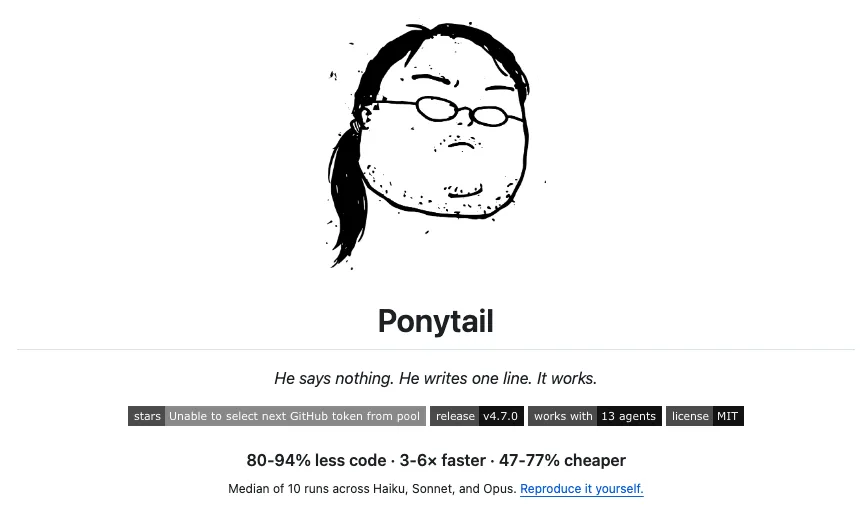
The post examines Ponytail, a popular AI coding “skill”, and argues that its benchmarked benefits appear to come largely from encouraging terse, YAGNI-style responses rather than from any deeper engineering value. By showing that a simple prompt can match or beat Ponytail on its own benchmark, it makes a broader case for treating prompt-based tools with scepticism unless their claims are backed b…
Transformation is often framed as a time‑bound programme, but in this post, I argue that lasting change depends on how work is structured, funded and led in practice. Along the way, I draw lessons from the Bank of England’s core ledger replacement programme and make the case for funding long‑term capability, not one‑off projects.
research.io
Sign up to keep scrolling
Create your feed subscriptions, save articles, keep scrolling.



 research.io