My coauthors June Huh, Mario Kummer, Oliver Lorscheid, and I just posted a paper called Lorentzian polynomials and matroids over triangular hyperfields, Part 2: Analytic aspects on the arXiv preprint server. This is the first paper of mine to contain a substantial result proved by AI, and also the first to contain a proof formally […]
Nine years ago, I wrote a July 4th blog post about matroids called A Celebration of Independence. Today, I’d like to talk about independence’s lesser-known sibling. In particular, I want to describe a characterization of matroids due to Paul Vaderlind that I feel ought to be better known. In most books and articles on matroid […]
In celebration of Pi Day 2024, I would like to explain how the “Arithmetic-Geometric Mean” of Gauss and Legendre can be used to give a rapid method for computing the digits of . By “rapid” here, I mean that the algorithm exhibits quadratic convergence: the number of correct digits roughly doubles with each iteration. I […]
A torsor (or principal homogeneous space) is, informally speaking, a mathematical structure quite similar to a group, but without a natural identity element. More formally, if is a group, a -torsor is a set on which acts simply and transitively, i.e., for every , there is a unique such that . Torsors are ubiquitous in […]
In honor of Pi Day 2023, I’d like to discuss Hilbert’s 7th Problem, which in an oversimplified (and rather vague) form asks: under what circumstances can a transcendental function take algebraic values at algebraic points? The connection with is that Lindemann proved in 1882 that the transcendental function takes transcendental values at every nonzero algebraic […]
Test your intuition: is the following true or false? Assertion 1: If is a square matrix over a commutative ring , the rows of are linearly independent over if and only if the columns of are linearly independent over . (All rings in this post will be nonzero commutative rings with identity.) And how about […]
In my previous post, I presented a proof of the existence portion of the structure theorem for finitely generated modules over a PID based on the Smith Normal Form of a matrix. In this post, I’d like to explain how the uniqueness portion of that theorem is actually a special case of a more general […]
I’m teaching Graduate Algebra this semester, and I wanted to record here the proof I gave in class of the (existence part of the) structure theorem for finitely generated modules over a PID. It’s a standard argument, based on the existence of the Smith Normal Form for a matrix with entries in a PID, but […]
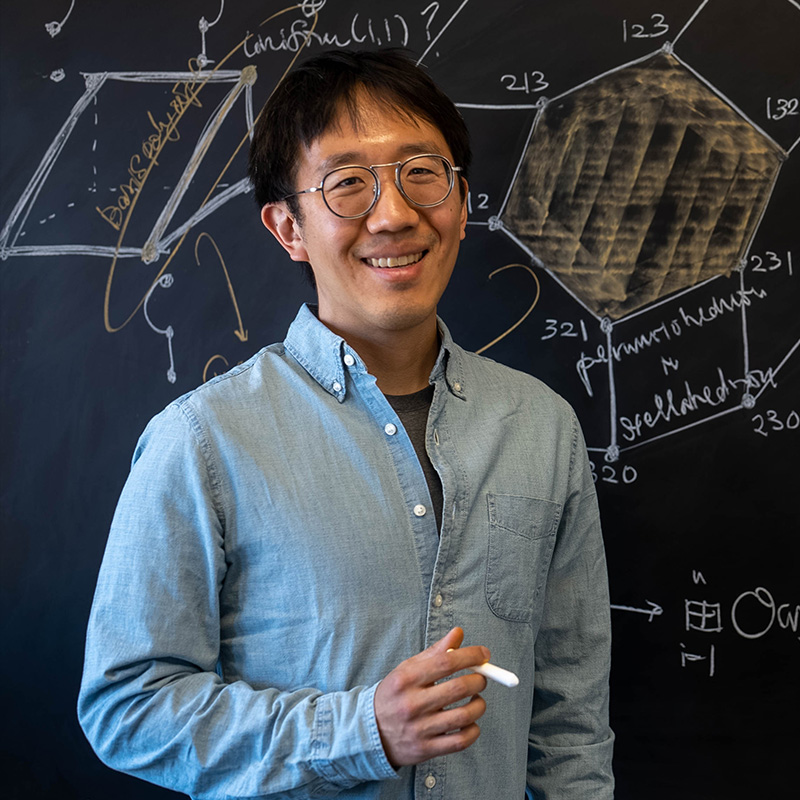
Congratulations to all of the winners of the 2022 Fields Medal! The only one I know personally, and whose work I have studied in detail, is June Huh. I’m happy both for June himself and for the field of combinatorics more broadly, which at one point was not taken seriously enough by the mathematics community […]
In this post I will provide a gentle introduction to the theory of martingales (also called “fair games”) by way of a beautiful proof, due to Johan Wästlund, that there are precisely labeled trees on vertices. Apertif: a true story In my early twenties, I appeared on the TV show Jeopardy! That’s not what this […]
Let’s call a function a near-endomorphism of if there is a constant such that for all . The set of near-endomorphisms of will be denoted by . We put an equivalence relation on by declaring that iff the function is bounded, and let denote the set of equivalence classes. It’s not difficult to show that […]
As readers of this previous post will know, I’m rather fond of mental calendar calculations. My friend Al Stanger, with whom I share a passion for recreational mathematics, came up with a remarkable procedure for finding the day of the week corresponding to any date in history using just a handful of playing cards. What’s […]
In an earlier post, I described the dollar game played on a finite graph , and mentioned (for the “borrowing binge variant”) that the total number of borrowing moves required to win the game is independent of which borrowing moves you do in which order. A similar phenomenon occurs for the pentagon game described in […]
In this post, I’d like to explain a proof of the Law of Quadratic Reciprocity based on properties of Lucas polynomials. (There are over 300 known proofs of the Law of Quadratic Reciprocity in the literature, but to the best of my knowledge this one is new!) In order to keep this post as self-contained […]
Everyone who studies elementary number theory learns two different versions of Fermat’s Little Theorem: Fermat’s Little Theorem, Version 1: If is prime and is an integer not divisible by , then . Fermat’s Little Theorem, Version 2: If is prime and is any integer, then . as well as the following extension of Version 1 […]
Today is the 10th anniversary of the death of Martin Gardner. His books on mathematics had a huge influence on me as a teenager, and I’m a fan of his writing on magic as well, but it was only last year that I branched out into reading some of his essays on philosophy, economics, religion, […]
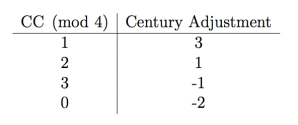
In this previous post, I recalled a discussion I once had with John Conway about the pros and cons of different systems for mentally calculating the day of the week for any given date. In this post, I’ll present two of the most popular systems for doing this, the “Apocryphal Method” [Note added 5/3/20: In […]
My previous post was about the mathematician John Conway, who died recently from COVID-19. This post is a tribute to my Georgia Tech School of Mathematics colleague Robin Thomas, who passed away on March 26th at the age of 57 following a long struggle with ALS. Robin was a good friend, an invaluable member of […]
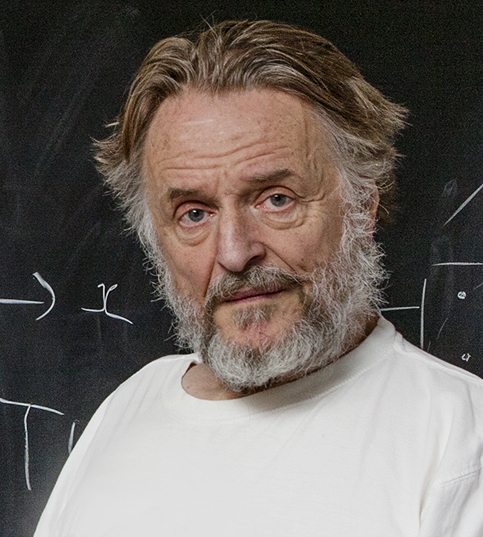
John Horton Conway died on April 11, 2020, at the age of 82, from complications related to COVID-19. See this obituary from Princeton University for an overview of Conway’s life and contributions to mathematics. Many readers of this blog will already be familiar with the Game of Life, surreal numbers, the Doomsday algorithm, monstrous moonshine, […]
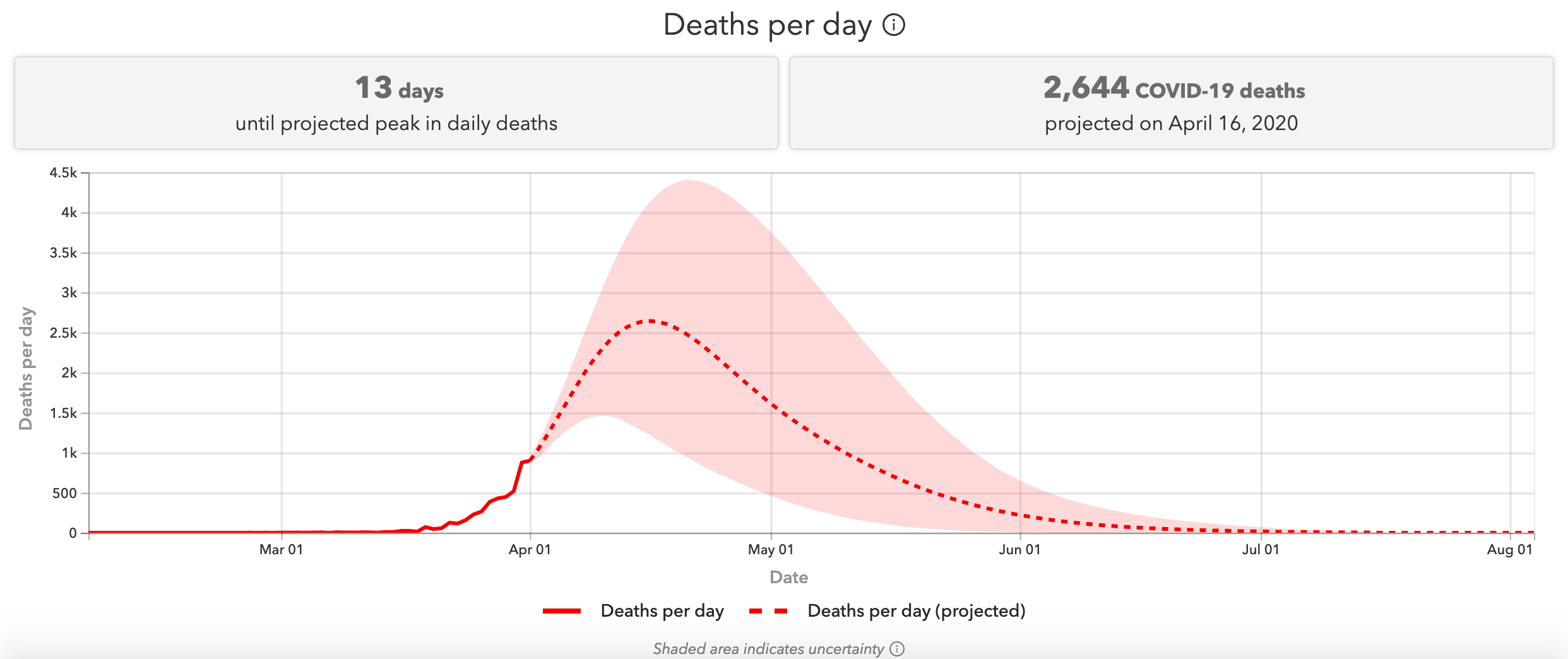
My friend Joshua Jay, who is one of the world’s top magicians, emails me from time to time with math questions. Sometimes they’re about card tricks, sometimes other things. Last night he sent me an excellent question about COVID-19, and I imagine that many others have wondered about this too. So I thought I’d share […]










 research.io