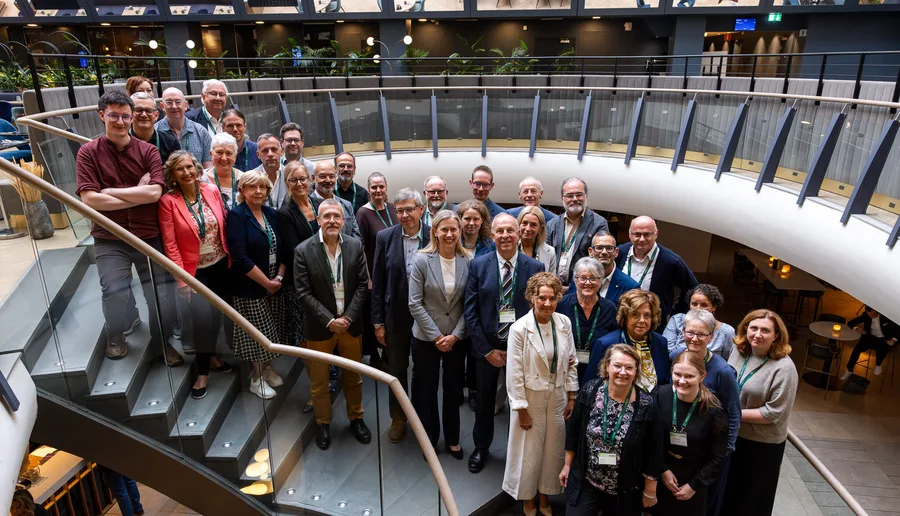
Our work is driven by a vibrant community of microbiologists who contribute their time, expertise, diverse perspectives, and passion to everything we do. On 4 September 2026 in Stockholm, Sweden, delegates from FEMS Member Societies across Europe came together to exchange ideas and to receive an update on the charity’s activities from the last year. […] The post FEMS Elects New President and Thre…
Plastic materials have transformed our daily lives, including farming. But plastic residues impact our soils, even though we do not fully understand how. Soil microbes are a key component in understanding the impacts of microplastics on soil processes and plant health. This is why the study “Conventional and biodegradable microplastics elicit contrasting taxon-level responses in […] The post #FEM…
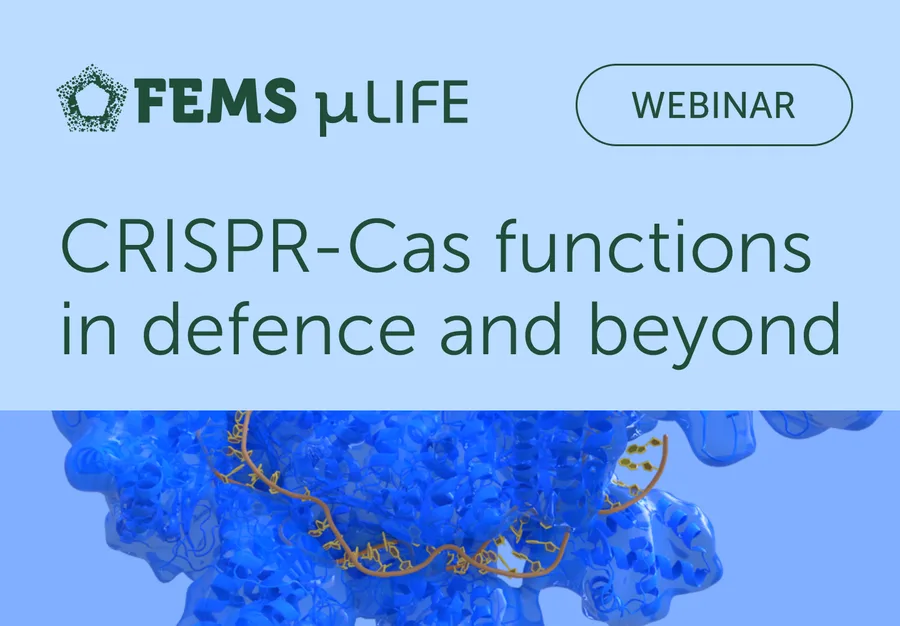
CRISPR-Cas systems are best known as adaptive immune defences that protect bacteria and archaea from invading genetic elements—but their biology, diversity and applications reach far beyond targeted DNA cleavage. In this FEMS webinar, featuring authors from microLife, researchers will explore three complementary perspectives on these remarkable systems. Discover how time-lapse imaging can reveal …
When people think about wine, they usually picture vineyards, grape varieties, terroir, and the craft of the winemaker. Yet every bottle also depends on a quieter partner: yeast. These microscopic fungi turn grape sugars into alcohol. Beyond driving fermentation, they also shape the aromas, flavours, texture and reliability that make one wine distinct from another. The […] The post #FEMSmicroBlog…
Just like all other organisms, plants are not alone in responding to changes in their environment. Complex microbial communities inhabit the rhizosphere, the area of soil surrounding plant roots. Here, soil microbes interact with each other and with the plant, contributing to the plant’s dynamic adaptation to the environment. The study “Successive cultivation under drought […] The post #FEMSmicro…
From food additives to biodegradable plastics, organic acids are everywhere in modern life. One of them, L-malic acid, is widely used in the food and beverage industry, giving products a characteristic tart taste. Despite its growing industrial relevance, most malic acid is still produced either from fossil resources or from sugar-based microbial fermentation, which competes […] The post #FEMSmic…
Bacteria can move efficiently thanks to one of nature’s most sophisticated molecular machines: the flagellum. This rotary motor propels them through oceans, soils, and even our bodies. For decades, our understanding of bacterial flagella has largely come from model organisms such as Escherichia coli and Salmonella enterica. Yet, recent advances in cryo-electron tomography are revealing […] The po…
The first complete bacterial genome was decoded in 1995 using whole-genome sequencing. Once very expensive and time-consuming, costs for whole-genome sequencing have dropped dramatically since, and nowadays a bacterial genome can be sequenced within a few hours. Especially the latest generation of whole-genome sequencing technology, long-read sequencing (LRS), is making all the difference in reve…
DNA-binding proteins are essential for life as they are involved in crucial processes like replication, transcription, and DNA repair. To better understand their mechanistic functions, dynamics, and spatiotemporal pattern, super-resolution microscopy techniques with single-molecule resolution are needed. The article “A novel expression system for imaging single-molecule fluorescence in Haloferax …
In less than a year, the microbiology community will come together again. From 5–8 July 2027, FEMS MICRO: Congress & Exhibition will arrive in Ljubljana, Slovenia, bringing microbiologists and partners from around the world together to exchange ideas and explore what comes next for the field. As the countdown begins, FEMS MICRO Ljubljana 2027 is […] The post The countdown to FEMS MICRO in Ljublj…
Helping people understand why microbes matter can start with something as simple as an activity, a piece of art, or a conversation. On 17 September 2026, International Microorganism Day (IMD) turns those ideas into a global celebration. This year, taking part in IMD is easier than ever. The redesigned International Microorganism Day website is now […] The post International Microorganism Day 202…
Primary producers use carbon dioxide and bicarbonate as their main carbon sources. To fix carbon, they rely on a variety of autotrophic pathways, with the Calvin-Benson-Bassham cycle (CBB) being well-studied. Just as organisms can tweak the CBB to the environmental context, the study “Evidence for ecological adaptation of reductive citric acid and reverse oxidative citric […] The post #FEMSmicroB…
Carbon is the backbone of life on Earth. Converting it into biomass is the job of primary producers—organisms that fix carbon from CO2 and transform it into organic molecules. Out of the seven known pathways organisms use to fix CO2, many modern primary producers employ the microbial acetyl-CoA pathway to fix carbon. The study “Protein […] The post #FEMSmicroBlog: What carbon-fixating microbial e…
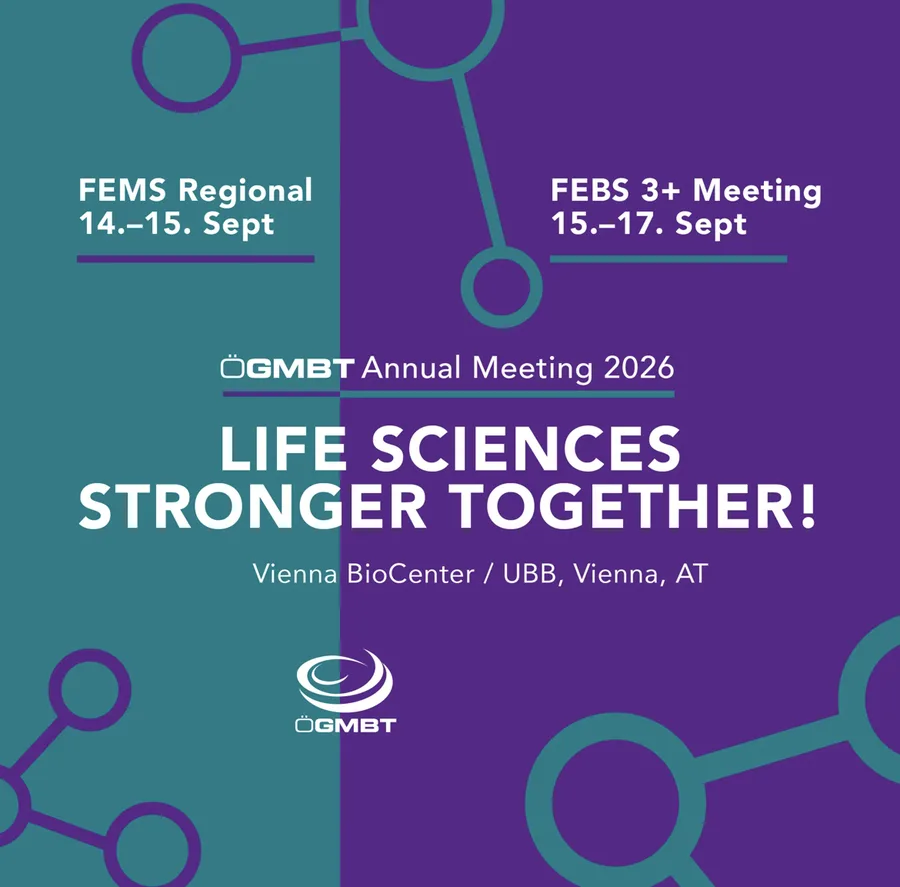
Great science rarely happens in isolation. Today’s most important breakthroughs come from collaboration, where diverse expertise meets shared curiosity. But finding the right partners can be a challenge. That’s exactly what the FEMS Regional COLLAB is designed to change. Taking place on 14–15 September 2026 in Vienna, Austria, as part of the 18th ÖGMBT Annual […] The post Expand your network. Sha…
The intracellular parasite Toxoplasma gondii can infect several warm-blooded animals. Its range for host intermediates is remarkable, even though its adaptation strategies are not fully understood. The study “In vitro growth of Toxoplasma gondii tachyzoites on different host cell lines selects for changes in efficiency of invasion and parasite surface antigen gene expression” published in […] The…
Indonesia is an agrarian country. Yet this simple label does not capture its complexity. From rice terraces in Java to cassava cultivation in eastern regions, spread across thousands of islands, agriculture shapes culture and ecosystems. But transforming these raw materials into food is what truly defines Indonesian culture, with fermented foods representing one of the […] The post #FEMSmicroBlog…
The incredibly vast amount of information available at a click, and the recent speed and scale of scientific and technological change can feel overwhelming. As scientists and educators, we need to ramp up our efforts to support everyone in developing the necessary science and information literacy, and to help regain trust in science. Such current […] The post #FEMSmicroBlog: When answers might se…
Mountain areas are complex ecosystems with varied functions and services, such as supplying clean water to downstream regions. Water quality depends not only on climate and atmospheric inputs but also on soil processes—especially those driven by microorganisms. The study “Contrasting nutrient retention in alpine soils: the role of soil microbiome in phosphorus and nitrogen mobility […] The post #…
The Federation of European Microbiological Societies (FEMS) is excited to welcome Prof. Dr Urs Greber, Professor of Molecular Cell Biology at the University of Zürich, Switzerland, to the leadership team of FEMS Microbiology Reviews. Effective from 1st May 2026, he joins Prof. Karin Sauer and Prof. Bart Thomma as Co-Editors-in-Chief, working with the editorial board to continue publishing authori…
As antibiotic resistance continues to rise, the search for new antimicrobial compounds is becoming increasingly urgent. While soils have long been the traditional source of antibiotic discovery, researchers are now turning to unexpected environments and organisms in search of new solutions. The study “Novel strains of Actinobacteria associated with neotropical social wasps (Vespidae; Polistinae, …


 research.io