


Update This article was first published in 2020. It was updated in 2023 with more recent data. Transport accounts for around one-quarter of global carbon dioxide (CO2) emissions from energy.1 In some countries — often richer countries with populations that travel often — transport can be one of the largest segments of an individual’s carbon footprint. If you need to travel locally or abroad, what is the lowest-carbon way to do so? In this chart, we see the comparison of travel modes by their carbon footprint. These are measured by the amount of greenhouse gases emitted per person to travel one kilometer. This data comes from the UK Government’s Department for Energy Security and Net Zero. It’s the emission factors companies use to quantify and report their emissions. While the overall rankings of transport modes will probably be the same, there may be differences across countries based on their electricity mix, vehicle stock, and public transport network. Greenhouse gases are measured in carbon dioxide equivalents (CO2eq), accounting for non-CO2 greenhouse gases and the increased warming effects of aviation emissions at high altitudes.2 Over short to medium distances, walking or cycling is nearly always the lowest carbon way to travel. While they’re not in the chart, the carbon footprint of cycling one kilometer is usually in the range of 16 to 50 grams CO2eq per km depending on how efficiently you cycle and what you eat.3 Using a bike instead of a car for short trips would reduce travel emissions by around 75%. Public transport is usually your best option if you can’t walk or cycle. Trains are particularly low-carbon ways to travel. Taking a train instead of a car for medium-length distances would reduce emissions by around 80%.4 Using a train instead of a domestic flight would reduce your emissions by around 86%.5 In fact, if you took the Eurostar in France instead of a short-haul flight, you’d cut your journey’s footprint by around 97%.6 If none of the above are...
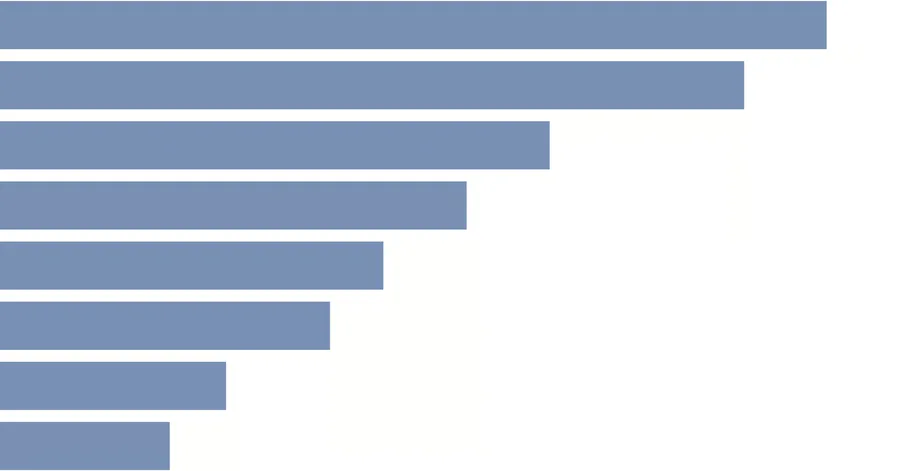
Which form of transport has the smallest carbon footprint?
Hannah Ritchie
4 min read