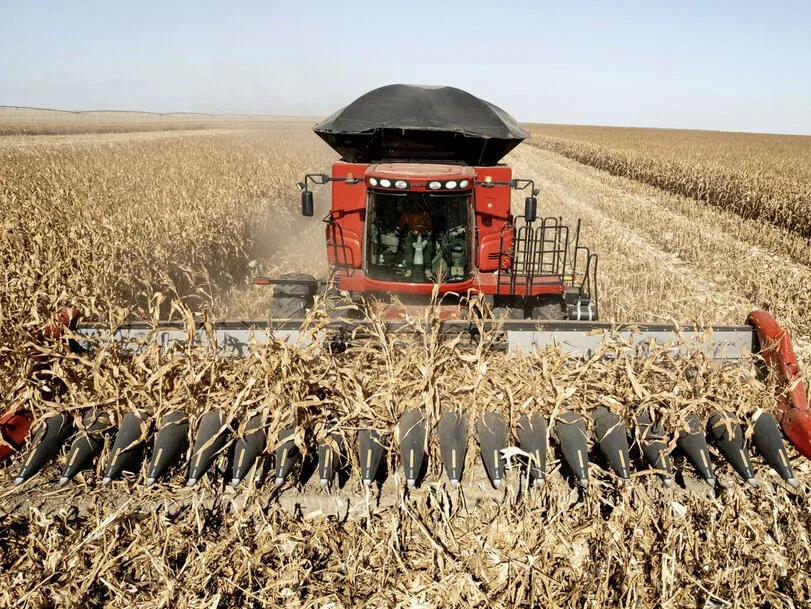
Farmall C tractors and Axial-Flow 260 Automation combines headline a portfolio of connected machinery, autonomous harvesting and digital farming solutions. www.casece.com Case IH has initiated the deployment of interconnected telemetry software and self-regulating agricultural machinery to establish a localized agricultural data ecosystem. This operational architecture utilizes the Axial-Flow 260 Automation series and Farmall C tractors to optimize broadacre grain cultivation and mechanical crop processing. Automated Interventions in High-Capacity Grain Harvesting Scheduled from August 29 to September 6 in Esteio, Rio Grande do Sul, the Expointer agricultural exhibition serves as the deployment site for the Axial-Flow 260 Automation series combine harvester. The processing system relies on an array of embedded sensors to process machine learning algorithms, executing up to 1,800 self-regulating adjustments daily during the harvest cycle. This automated feedback loop manages internal thresholds, allowing the machine to assume up to 90 percent of the control operations without human interference. Embedded autonomous features include automatic headland turning maneuvers and inter-machine spatial mapping. Operators track machinery output remotely via the FieldOps portal and dual in-cabin interface displays. Telemetry Integration and Hydraulic Capacity in Mid-Range Tractors Spanning a power portfolio of 80 to 645 horsepower, the Farmall C series provides 100 and 110 horsepower configurations engineered for continuous field operations. The tractor architecture features a hydraulic system delivering a flow rate of 62 liters per minute, generating a maximum rear linkage lift capacity of 4,200 kilograms. Four transmission variants permit operators to match gear ratios to specific load requirements. The integration of native telemetry routes operational data directly to the FieldOps software environment, enabling continuous remote tracking of fuel consumption and engine diagnostics. Mechanical Specifications for Harvesting Implements To accommodate varying regional row spacings, the proprietary corn header line, developed in partnership with MethalC, scales from 4 to 30 rows with spacing intervals adjustable between 45 and 90 centimeters. The mechanical design incorporates continuous lubrication systems, aluminum lateral drive shielding, and a 180-degree access point for lateral line maintenance. For rice cultivation, the 3010 Pro Rice header spans 25 feet and features a redesigned cutting bar geometry to optimize material flow between the reel and feeding auger. The chassis utilizes abrasion-resistant materials, a steel knife box, and a stainless steel floor to withstand the highly abrasive physical properties of rice stalks. Digital Credit Infrastructure and Capital Deployments Supporting equipment acquisition, Banco CNH provides financial structuring through the CONECTA digital platform, which consolidates a financing simulator, product catalog, and credit evaluation algorithms to expedite capital allocation. Available financing mechanisms include the Moderfrota program, offering an annual interest rate of 10.50 percent, up to seven years of amortization, and a 14-month grace period before initial repayment. Additionally, a commercial partnership with Sompo yields a 30 percent premium reduction on multi-year insurance policies contracted during the exhibition. Paulo Arabian, Vice President of Sales for Latin America, confirms that capital investment in digitized machinery establishes measurable cost reductions that scale sequentially from initial soil preparation through to the final harvest cycle. Additional Context: This section details technical specifications and competitive benchmarking not included in the original product announcement The implementation of machine learning in combine harvesters establishes a measurable framework for evaluating autonomous agricultural machinery. The Case IH automated system, integrated into the Axial-Flow 260 series, utilizes acoustic impact sensors and pressure differentials to monitor grain loss and sample quality, automatically adjusting the rotor cage vanes and sieve openings. In comparison, the John Deere Combine Advisor system on the S700 and X9 series relies heavily on active vision cameras mounted on the clean grain and tailings elevators to optically analyze cracked grain and foreign material. While the optical approach provides direct visual verification of grain quality, it requires periodic lens cleaning and calibration in high-dust environments. The acoustic and pressure-based sensor methodology maintains operational consistency in low-visibility conditions. Both systems achieve comparable autonomous intervention rates, executing over 1,500 background adjustments per day to maintain a predefined loss-to-throughput ratio, thereby standardizing performance across operators of varying skill levels. Edited by Natania Lyngdoh, Induportals editor, assisted by AI. www.caseih.com Powered by Induportals Media Publishing