


Vision-language-action models are the current state of the art in robotic manipulation. They still cannot pick up a potato chip without crushing it. That is the result published earlier this year by the team behind the Video Tactile Action Model (VTAM). On a potato chip pick-and-place task — a task that demands high-fidelity force awareness, where vision alone cannot distinguish a crushing grasp from a holding one — VTAM outperformed the π0.5 baseline by 80%. Across the broader contact-rich benchmark suite, VTAM held a 90% average success rate.¹ The chip is an adversarial example, and that is precisely why it is the right test. At the point of grasp, only contact dynamics carry useful signals. Pressure, vibration, and force/torque tell the policy what is happening, correcting the visual estimation errors that vision-only models cannot detect on their own. A camera, however high its resolution, cannot do that work.
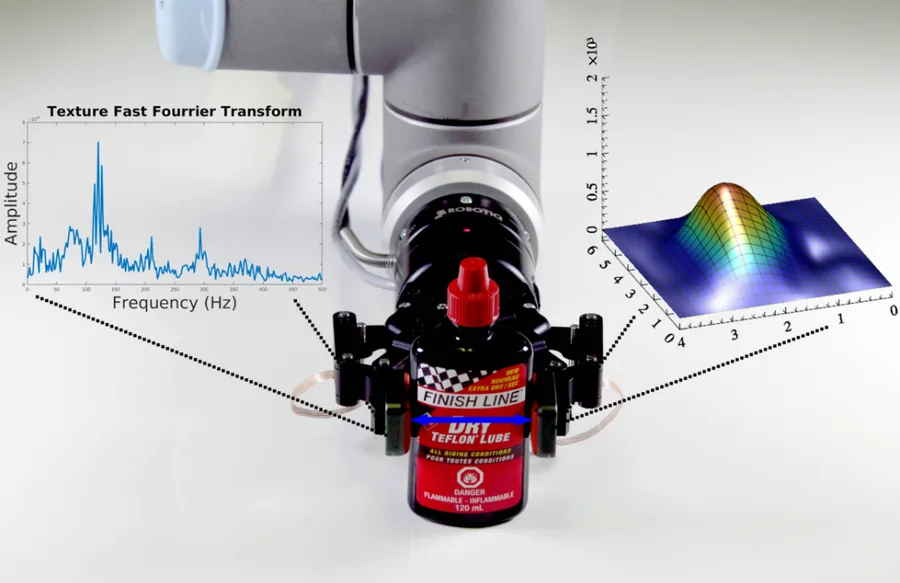
How tactile sensing improves model performance
Jennifer Kwiatkowski