


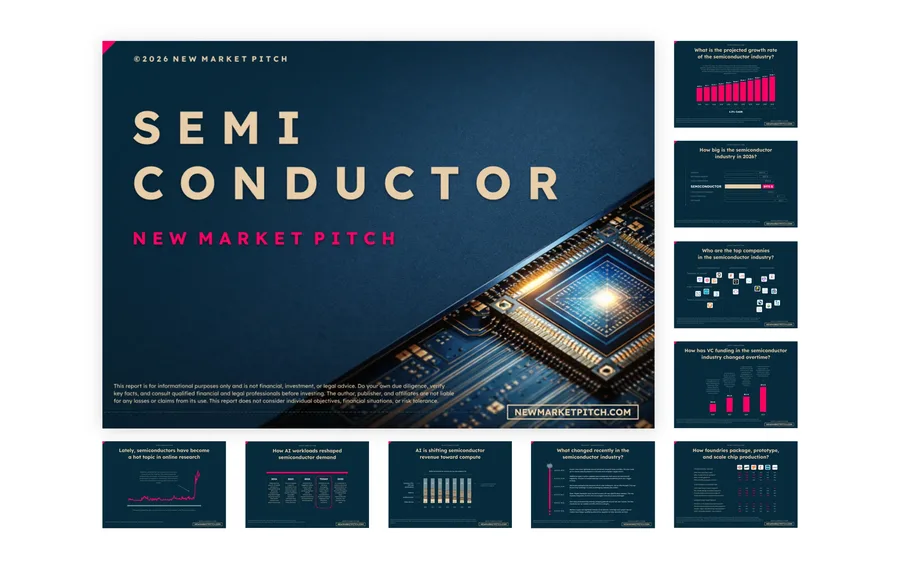
Who is the best memory chipmaker now? Last updated: 31 July 2026 In our semiconductor industry deck , you will find everything you need to understand the market SUMMARY SK hynix is the best memory chipmaker now because it still leads the market’s hardest and most strategically important product: high-bandwidth memory. Samsung remains the biggest and most complete supplier. It leads conventional DRAM, NAND flash and enterprise SSDs, so it would take first place under almost any definition based on breadth, scale or resilience. HBM has temporarily changed what leadership means. A smaller company can outrank Samsung overall because advanced AI memory now carries more strategic weight than ordinary bits of DRAM or NAND. SK hynix’s advantage comes from repetition, not one impressive specification. It has delivered several HBM generations at scale and still earns close to three-fifths of industry revenue despite facing two credible rivals. Samsung’s HBM4 recovery is real. Commercial production, Nvidia compatibility and a major AMD program have moved the company beyond promising samples, although the resulting revenue is not yet large enough to overturn SK hynix’s lead. Micron has become the fastest-moving challenger. Its HBM4 ramp, server-memory roadmap and shift toward enterprise storage show that the old three-company hierarchy is becoming much less predictable. Recent profitability figures flatter Micron slightly because its quarter captured a later stage of the DRAM and NAND price recovery. Even with that timing advantage, its operating performance is exceptional and no longer looks like a temporary rebound. The next AI-memory cycle may reward breadth more than the last one did. Inference systems need HBM, but they also consume large amounts of conventional server DRAM, low-power memory and high-capacity enterprise storage. That wider demand is Samsung’s best route back to first place. It can supply nearly every important layer of an AI server and manufacture HBM memory, logic base dies, controllers and finished storage products within the same group. SK hynix’s dependence on HBM and Nvidia is a genuine concentration risk, but it is also the source of its manufacturing knowledge, customer relationships and unusually high margins. For now, the benefits are still much larger than the danger. Chinese suppliers are becoming powerful in mainstream DRAM and NAND, which will push Samsung, SK hynix and Micron further toward premium server products. CXMT and YMTC can reshape the market without being close to winning the overall crown. The ranking is therefore narrow rather than permanent: SK hynix is the best current operator in advanced AI memory, Samsung owns the strongest all-round franchise, and Micron has the most room to surprise. Why is the best memory chipmaker harder to name now? The best memory chipmaker today depends on whether we care most about AI memory, total production scale, storage, manufacturing execution or profits. For years, Samsung was the obvious answer. It sold the most DRAM, led NAND flash and had the financial strength to keep building enormous factories through every downturn. AI has made the comparison less straightforward. High-bandwidth memory, or HBM, is now the most valuable and technically demanding part of the market. SK hynix leads HBM by a wide margin, even though Samsung remains larger across memory as a whole. Micron sits behind both in market share but has lately produced the fastest HBM ramp and the strongest reported margin. We use “best” to mean the company with the strongest current combination of advanced products, reliable mass production, important customers, profits and preparation for the next product cycle. Size still counts, but it no longer settles the question by itself. That definition gives SK hynix a narrow lead. Samsung remains the most complete memory company, while Micron is now a genuine contender rather than a distant third. Is Samsung still the biggest memory chipmaker today? Samsung is still the biggest all-round memory chipmaker today. In the latest comparable quarter, TrendForce estimated that Samsung generated 38.5% of global DRAM revenue. SK hynix held 28.8%, Micron 22.4% and CXMT remained below 10%. Samsung also led NAND flash. TrendForce placed its share at 31.6%, almost 14 percentage points ahead of SK hynix and Solidigm. Counterpoint uses a slightly different method and calculated a 29% share, but reached the same conclusion: Samsung remains comfortably ahead. Enterprise SSDs add another advantage. Samsung generated about 4.64 billion, while Micron produced 7.05B Fastest recent HBM ramp Micron More than 1 billion of HBM4 and is supplying Nvidia’s Vera Rubin platform. Micron has also held approximately 21% of HBM revenue for four consecutive quarters. That stability suggests it has secured a lasting place in the market rather than benefiting from a temporary qualification window. Progress extends beyond HBM. Micron is ramping its 1-gamma DRAM process, developing 256-gigabyte stacked DDR5 modules, shifting NAND capacity toward data-center SSDs and building additional advanced packaging capacity in Asia. Its enterprise SSD revenue has climbed to around 37.32 billion of DRAM revenue in the latest comparable quarter. SK hynix produced 21.75 billion. Samsung’s revenue rose 93% from the previous quarter. SK hynix grew 63%, even though it shipped the highest proportion of HBM among the three companies. That unusual result came from pricing. Conventional DRAM prices jumped much faster than contracted HBM prices during the quarter. Samsung had greater exposure to ordinary server DRAM, so it captured more of the sudden price increase. Samsung also had the highest server DRAM revenue contribution. Large cloud companies are currently buying high-capacity DDR5 modules alongside HBM because an AI server needs memory for its CPUs, accelerators, caches and data-preparation systems. This wider demand helps Samsung. The company can supply HBM, DDR5, LPDDR, SOCAMM modules and mobile DRAM from the same broad product organization. SK hynix remains exceptionally strong in premium AI memory. Across conventional DRAM as a whole, Samsung has retaken a clear lead. This chart, featured in our semiconductor industry deck , shows annual venture capital investment in semiconductor startups Who leads NAND flash and enterprise SSDs now? Samsung leads both NAND flash and enterprise SSDs today, giving it the strongest storage business among the major memory companies. TrendForce estimated Samsung’s latest quarterly NAND revenue at 5.9 billion ahead of SK hynix and Solidigm. Samsung’s revenue more than doubled from the previous quarter as pricing rose and server shipments increased. Samsung also produced around 38% of the enterprise SSD revenue generated by the five largest suppliers. Its 41.46 billion of revenue and 41.46B $33.32B 80.4% Reported later in the price cycle SK hynix KRW 52.58T KRW 37.61T 72.0% Earlier reporting period Samsung Device Solutions KRW 81.7T KRW 53.7T About 65.7% Includes foundry and logic Which memory chipmaker can invest enough to stay ahead? Samsung can spend the most, while SK hynix has lately used its investment more effectively in HBM. Samsung’s advantage comes from scale and vertical integration. The company can develop DRAM, manufacture the HBM logic base die, handle advanced packaging and fund new factories within the same semiconductor group. That combination is becoming more valuable. Future HBM products will use increasingly customized logic, packaging and thermal designs. Samsung can coordinate those pieces internally rather than relying entirely on outside foundries. SK hynix has directed investment toward the areas driving current shortages. It is ramping its M15X facility, preparing the Yongin manufacturing cluster and buying more EUV equipment for advanced DRAM. Its recent margins suggest that those choices have paid off. Micron is making the largest visible expansion relative to its current size. It expects full-year capital spendi
Who is the best memory chipmaker now?
NewMarketPitch Team