


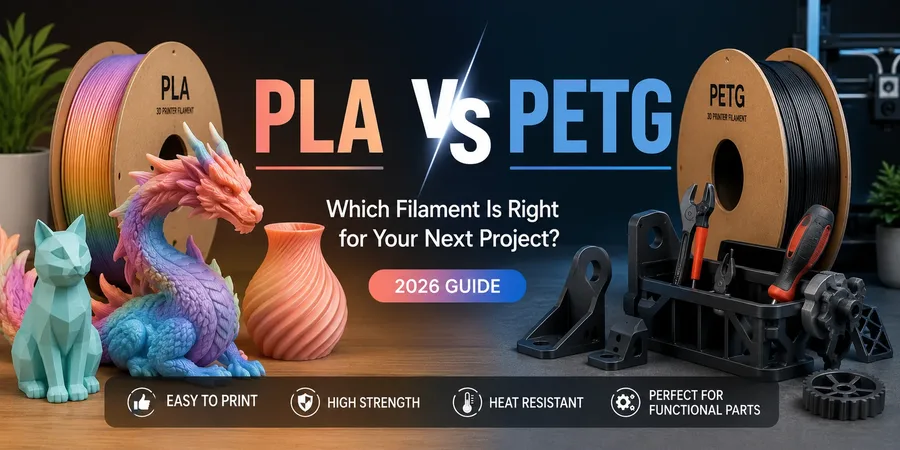
PLA vs PETG: Which Filament Should You Choose in 2026? PLA vs PETG: Understanding the Difference If you've spent any time in the 3D printing community, you've probably seen the same question come up again and again: Should I use PLA or PETG? Both materials are among the most popular filaments for FDM 3D printing. They're affordable, easy to find, and compatible with most desktop printers. However, each material has its own strengths, and choosing the right one can significantly improve your printing experience and final results. Suggested image: PLA decorative models on the left and PETG functional parts on the right. Feature PLA PETG Ease of Printing ⭐⭐⭐⭐⭐ ⭐⭐⭐⭐ Surface Finish ⭐⭐⭐⭐⭐ ⭐⭐⭐⭐ Strength ⭐⭐⭐ ⭐⭐⭐⭐⭐ Heat Resistance ⭐⭐ ⭐⭐⭐⭐ Outdoor Use ⭐⭐ ⭐⭐⭐⭐⭐ Beginner Friendly ⭐⭐⭐⭐⭐ ⭐⭐⭐⭐ At first glance, PLA and PETG may seem very similar. In reality, they are designed for different applications. What Is PLA Filament? PLA (Polylactic Acid) is often the first filament people try when entering the world of 3D printing. Its low printing temperature, minimal warping, and smooth surface finish make it one of the easiest materials to use. Why Users Love PLA ✔ Easy to print ✔ Excellent dimensional accuracy ✔ Smooth surface finish ✔ Wide variety of colors ✔ Beginner-friendly ✔ Affordable Examples: Dragons, figurines, cosplay props, decorative vases, home décor models. PLA is perfect for projects where appearance matters more than mechanical strength. Popular PLA Applications Decorative models Collectible figurines Cosplay accessories Home decorations Educational projects Product prototypes What Is PETG Filament? PETG combines many of the benefits of PLA while adding improved durability and heat resistance. For users who need stronger and more functional prints, PETG is often the next step after PLA. Why PETG Is Popular ✔ Stronger layer adhesion ✔ Better impact resistance ✔ Water resistant ✔ UV resistant ✔ More durable ✔ Better heat resistance Examples: Tool holders, brackets, workshop organizers, utility parts. PETG is commonly used for prints that need to withstand everyday use. PLA vs PETG Strength Comparison One of the biggest differences between these two materials is durability. PLA is rigid and maintains excellent shape accuracy, but it can become brittle under stress. PETG offers more flexibility and impact resistance, making it better suited for functional applications. Examples: Wall-mounted tool racks, shelf brackets, equipment holders. If your print will carry weight or experience regular use, PETG is usually the better choice. 🏆 Winner: PETG Heat Resistance Comparison Heat resistance becomes especially important during summer. PLA generally starts softening at around 60°C (140°F). PETG can tolerate significantly higher temperatures before deforming. Examples: Car phone mounts, dashboard accessories, workshop storage solutions. For applications exposed to sunlight or heat, PETG provides a much larger safety margin. 🏆 Winner: PETG Outdoor Performance Many makers use their printers to create practical outdoor accessories. This is another area where PETG stands out. Great Outdoor PETG Projects Camping hooks Garden accessories Hose connectors Plant pots Outdoor organizers Examples: Camping gear, outdoor mounts, garden tools. Because of its UV and moisture resistance, PETG typically lasts longer outdoors than PLA. 🏆 Winner: PETG Printing Experience Despite PETG's advantages, PLA remains the easiest filament to print. For beginners, reliability often matters more than strength. PLA Advantages During Printing ✔ Less stringing ✔ Easier first layers ✔ Better overhang performance ✔ Faster setup ✔ Consistent print quality Examples: Detailed dragons, display models, decorative prints. For hobbyists focused on aesthetics, PLA is still hard to beat. 🏆 Winner: PLA Recommended Print Settings PLA Nozzle Temperature: 190–220°C Bed Temperature: 0–60°C Cooling Fan: 100% PETG Nozzle Temperature: 230–250°C Bed Temperature: 70–90°C Cooling Fan: 30–50% PETG may require a little more tuning, but the additional strength is often worth it. Which Filament Should You Choose? Choose PLA If You Print ✔ Figurines ✔ Decorative models ✔ Cosplay props ✔ Home décor ✔ Educational projects Choose PETG If You Print ✔ Functional parts ✔ Outdoor accessories ✔ Automotive components ✔ Tool holders ✔ Mechanical assemblies Final Verdict There is no universal winner in the PLA vs PETG debate. PLA remains the best option for users who prioritize ease of printing and beautiful surface finishes. PETG is the better choice for functional parts, outdoor projects, and applications that require strength and durability. Many experienced makers keep both materials available and choose based on the needs of each project. Suggested banner text: Premium PLA & PETG Filaments ✔ Consistent Diameter ✔ Bubble-Free Printing ✔ Smooth Extrusion ✔ Vibrant Colors ✔ Fast Shipping Shop PLA → PLA Filament Shop PETG → PETG Filament
PLA vs PETG: Which Filament Should You Choose in 2026?
Aierce zheng