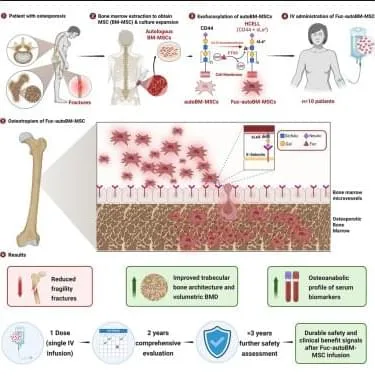
Mesenchymal stem/stromal cell (MSC)-based therapy holds promise for reversal of bone loss in osteoporosis. This phase 1 study establishes the safety and feasibility of intravenous administration of glycocalyx-engineered human MSCs and provides evidence that MSCs derived from the bone marrow of older individuals with osteoporosis retain clinically meaningful osteoregenerative capacity.
An experimental compound called AP503 significantly strengthened bones in mice by activating GPR133, a receptor that boosts bone formation while slowing bone loss. Because the same treatment has also been linked to stronger muscles, researchers see intriguing potential for combating age-related decline and osteoporosis.
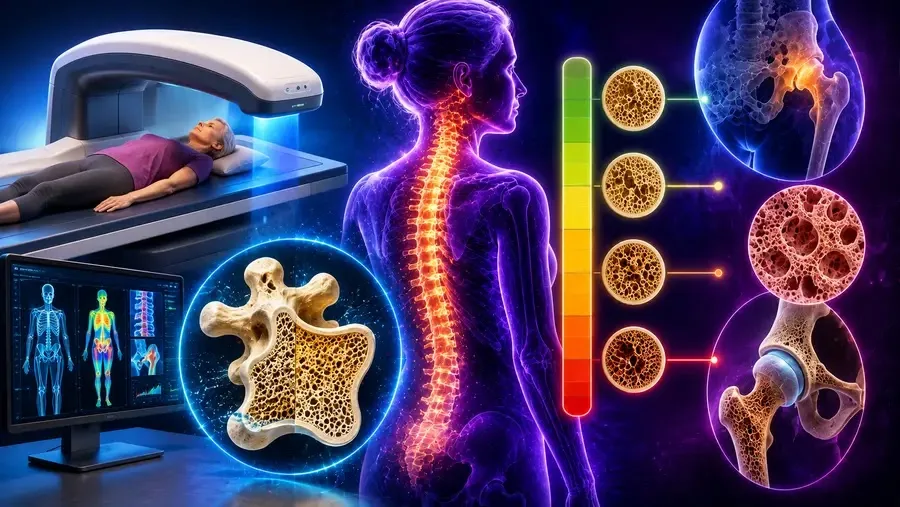
DEXA Scan Explained: How T‑Scores Predict Osteoporosis Risk and Fracture Chances A DEXA (Dual-Energy X-ray Absorptiometry) scan is a quick, painless, and highly accurate medical imaging test used to measure bone mineral density (BMD). It is the gold standard for diagnosing osteoporosis and assessing your risk for bone fractures. A T-score compares your bone density to that of a healthy, young adu…
Most people think of gum disease as a problem that only affects the mouth. It can cause swollen gums, bleeding while brushing, bad breath, loose teeth, and eventually tooth loss. New research suggests its effects may reach much further than the mouth and could even influence the strength of our bones. Osteoporosis is a disease […] The post The Surprising Way Gum Disease Could Increase the Risk of…
Bone metabolism-related disorders represent a significant global health burden, due to their high prevalence and substantial socioeconomic costs, particularly osteoporosis. Conventional antiresorptive and anabolic agents have well-established clinical utility, such as bisphosphonates, denosumab, teriparatide, and romosozumab. Nevertheless, their long-term clinical use remains limited by safety co…
Osteoporosis is a common disease that weakens bones and makes them easier to break. It affects millions of people around the world, especially older adults and women after menopause. Many people do not know they have osteoporosis until they suffer a broken bone, making prevention and early care very important. Another common health problem is […] The post Could Healthy Gums Help Protect Your Bone…
Osteoporosis is one of the most common diseases of ageing, yet millions of people do not know they have it. The condition slowly weakens bones over many years without causing pain. For many patients, the first sign is a broken bone that seems to happen after a minor fall or everyday activity. Researchers from the […] The post Why a simple broken bone should trigger an osteoporosis check appeared …
Osteoporosis is one of the most common age-related bone diseases, affecting millions of people worldwide and increasing the risk of fractures, disability, and reduced quality of life.
Broken bones are often seen as simple accidents, especially in older adults. However, doctors say some fractures can be an early warning sign of osteoporosis, a disease that makes bones weaker and easier to break. If osteoporosis is found early, treatment can lower the risk of future fractures and help people stay active and independent. […] The post Missed fracture warning signs leave many peopl…
Many fractures are early-warning signs of osteoporosis. Yet in everyday clinical care they often go unrecognized and undocumented as warning signs, according to a new nationwide Austrian study by the Complexity Science Hub (CSH) and the Ludwig Boltzmann Institute for Osteology (LBI Osteology). Men are affected more often.
Nature Communications, Published online: 08 July 2026; doi:10.1038/s41467-026-75513-8 Linoleic acid accumulates in the cartilage and serum of patients with osteoarthritis, but its role in disease progression remains unclear. Here, the authors show that linoleic acid binds and promotes degradation of ISCU, reducing iron-sulfur cluster synthesis and driving chondrocyte ferroptosis.
Nature Communications, Published online: 30 June 2026; doi:10.1038/s41467-026-75098-2 The study shows that Ip6k2 partners with Runx2 to drive osteoclast activity. Targeting Ip6k2 selectively reduces bone resorption, increases bone mass, and protects against osteoporosis without affecting bone formation.
Introduction: As an age-associated metabolic disease of the skeleton, osteoporosis (OP) causes a significant medical and socio-economic burden. One of the challenges in clinical practice is the adverse effects of widely used bisphosphonates. Therefore, the search for preventive pharmacotherapeutic strategies is needed. Materials and Methods: Sixty female Wistar rats randomized into 6 equal groups…
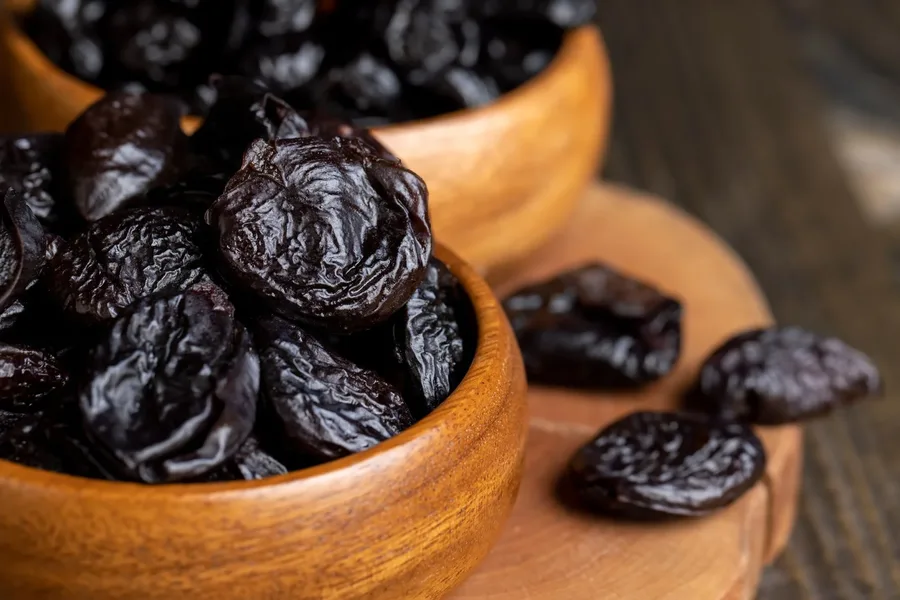
A one-year randomized trial found that daily prune supplementation did not improve total or lumbar spine bone mineral density in older men susceptible to, or with, osteopenia. Although some bone turnover biomarkers differed between prune and control groups, these changes did not translate into measurable bone density benefits beyond calcium and vitamin D3 supplementation.
The prevalence of osteoporosis is increasing worldwide as populations age, creating a growing clinical burden of fragility fractures and highlighting limitations of current antiresorptive therapies. Conventional agents such as bisphosphonates and denosumab effectively reduce fracture risk but suppress osteoclast number and activity indiscriminately, potentially impairing bone remodeling dynamics …
Osteoporosis, a prevalent systemic skeletal disorder, poses a significant health risk to the elderly population, arising from a multitude of factors that disrupt bone homeostasis. This delicate balance is primarily regulated by the dynamic interplay between osteoblasts and osteoclasts. When this equilibrium is perturbed, osteoporosis can ensue. Traditional Chinese Medicine (TCM) posits that the k…
Scientific Reports, Published online: 22 May 2026; doi:10.1038/s41598-026-54616-8 Association between body composition, knee synovial effusion, and serum glutamate in middle-aged women with knee osteoarthritis: a cross-sectional study


 research.io