number-theory
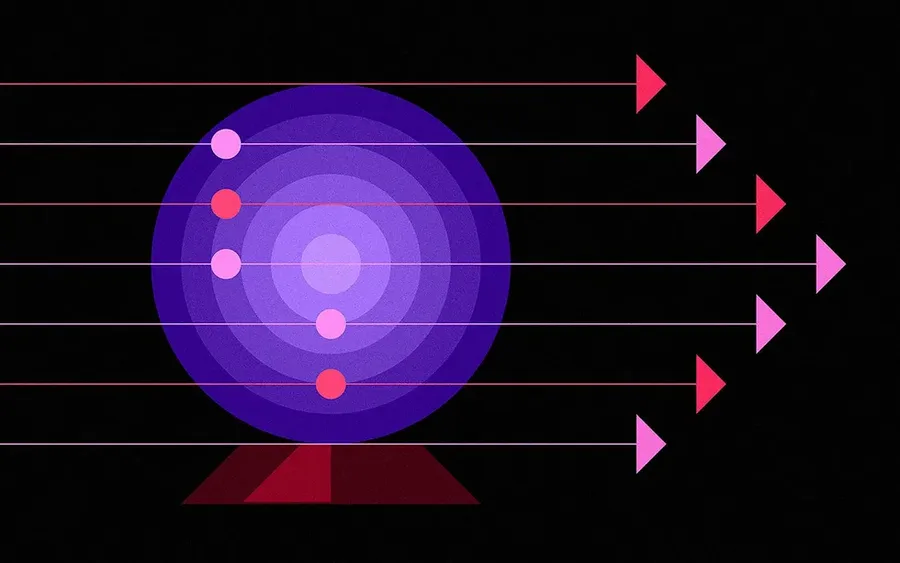
This paper isolates a common spectral grammar behind three Millennium Problems which, in their classical formulations, appear to belong to different worlds. Each problem is associated with a shadow-symmetric spectral datum: a Hilbert space, an involution exchanging two spectral half-planes, and a fixed self-dual interface. For the Riemann zeta-function the interface is the critical line Re(s) = 1…

This is a question I have been working on for awhile with limited progress. For $0 < \alpha < 1$, let $C_\alpha$ be the middle-$\alpha$ Cantor set, obtained by starting from $[0, 1]$ and ...

We all know Fermat’s Last Theorem and its long history. It states that for any integer n > 2, the equation $$ a^n + b^n = c^n $$ has no solutions in positive integers. I wonder: for positive ...

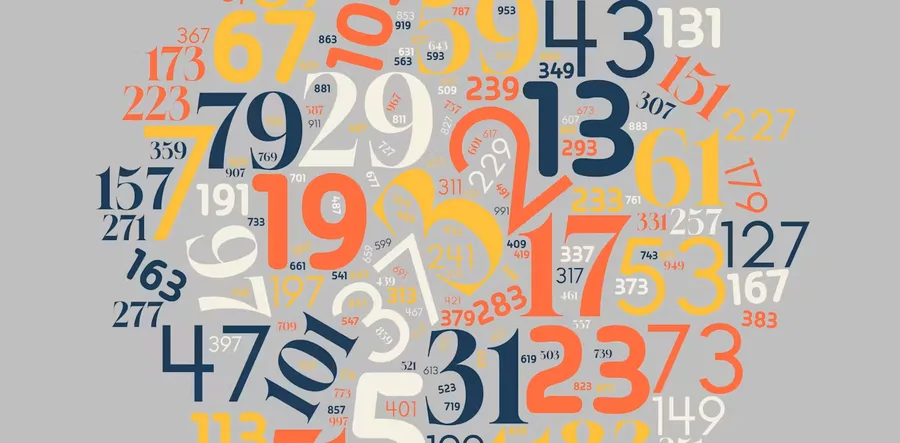
Starting point. Let $P\subseteq\mathbb{N}$ be the set of primes. By just "looking at" how the first primes are distribute, there is a lot going for the following statement makes a lot of ...
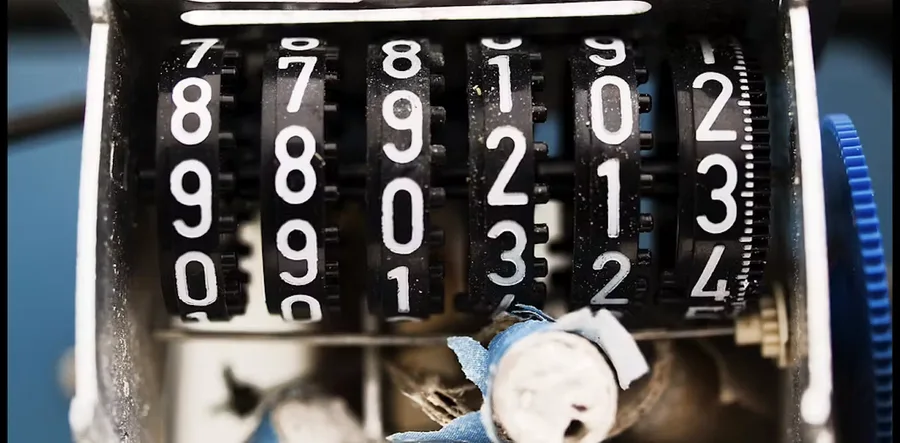
This paper develops an ontological reading of decimal structure. It argues that decimal notation contains two simultaneous logics: linear increase in value and cyclical recurrence in symbolic form. Zero returns at each decade boundary, digits repeat across magnitudes, and place value records accumulation through structured repetition. Interpreted through the image of the lemniscate, decimal repre…

Let $a(n)$ be A022493, i.e., an integer sequence known as Fishburn numbers: number of linearized chord diagrams of degree $n$; also number of nonisomorphic interval orders on $n$ unlabeled points. ...

In one famous episode of The Simpsons , Homer finds a counterexample to Fermat’s last theorem
The arithmetic crosscorrelation of pseudorandom sequences is a fundamental measure of their suitability for applications in cryptography and communications. While prior works have studied this quantity for binary sequences, the non-binary setting has remained largely open. In this paper, we initiate a systematic study of arithmetic crosscorrelation for non-binary pseudorandom sequences constr…

Let $a(n)$ be an arbitrary sequence with exponential generating function $A(x)$ such that $a(1)=1$. $\alpha(x)$ denotes $\operatorname{SeriesReversion}(A(x))$. $b(n)$ be a sequence with exponential ...

Given 20 distinct positive integers not greater than 99. Show that among their pairwise differences, at least four are equal, or find the counterexample. So the problem is simliar to Given 20 distinct ...

Arithmetic correlation is an important metric for measuring feedback with carry shift register (FCSR) sequences, and its value should be as small as possible. For binary FCSR sequences with a prime connection integer $p$ and for which $\operatorname{ord}_p(2)$ is odd, where $\operatorname{ord}_p(2)$ is the order of $2$ modulo $p$, the arithmetic correlation can be expressed as the difference bet…

When the number field sieve (NFS) is applied to integer factorization, there is a crystal clear reason you need two number fields. We need $$X^2 \equiv Y^2 \bmod N$$ where e.g. $$X^2 \equiv ...

If you’ve spent any time in a math class or browsing the internet, you’ve probably seen this statement before: 0.999… equals 1. Wait, what? At first glance, this feels wrong. How can something that “looks less than 1” actually be equal to 1? Let’s break it down in a way that’s easy to understand. When we write 0.999… , the “…” means the 9s go on forever. This is called a repeating decimal . So, i…
I am putting together a presentation for my proofs class where I prove $$ \sum_{n=1}^{\infty} \frac{1}{n^{2}} = \frac{\pi^{2}}{6}. $$ This proof from Proofs from the Book utilizes an evaluation of ...
Let $R$ be a commutative ring (with unit) and let $A := R[[x_1,x_2,x_3,\ldots]]$ be the formal power series ring over $R$ with a countably infinite set of commuting indeterminates. Let $B$ be the ...
Abstract: This paper reports a series of new structures discovered in the iterative process of the Collatz conjecture (3x+1 problem). Based on the philosophical framework of "Energy Primordialism" previously proposed by the author, we identify, through manual computation and data analysis, eight special "survivor" residue classes modulo 64: 7, 15, 27, 31, 39, 47, 59, 63. These numbers exhibit exc…
What if the Riemann Hypothesis is not merely unsolved, but structurally beyond final resolution? In The Meta-theory of the Riemann Hypothesis, Parker Emmerson and Ryan J. Buchanan advance a bold and far-reaching claim: that the classical Riemann Hypothesis is formally irresolvable. This is not presented as a casual philosophical suggestion, nor as a narrow appeal to Gödelian independence, but as …
It is well known that Dirichlet proved that the curve $x^5+y^5=z^5$ has no non-trivial rational points, by using properties of the norm-euclidean field $Q(\sqrt{5})$. It is natural to ask then, ...
Simon Singh's exploration of mathematical proof – in particular Pierre de Fermat's last theorem – remains an absolute treasure, almost three decades after it was first published
research.ioSign up to keep scrolling
Create your feed subscriptions, save articles, keep scrolling.